
At dawn in Tallinn, I once watched a bakery window fog up while the first tram rattled past the old stone walls. That single moment said more about the Baltics than any climate chart ever could.
The best time to visit the Baltic States isn't just about weather. It's about the version of Estonia, Latvia, and Lithuania you want to meet.
Table of Contents
- Discovering the Soul of the Baltics
- The Four Seasons of the Baltics A Traveler's Guide
- Summer's Embrace The Peak Season and Its Secrets
- Winter's Charm Christmas Markets and Cozy Retreats
- For the Discerning Traveler Finding Your Perfect Window
- A Tale of Three Countries Nuances Between Estonia Latvia and Lithuania
- Your Baltic Journey Awaits
Discovering the Soul of the Baltics
Estonia, Latvia, and Lithuania are often bundled together on maps, but they don't feel interchangeable in person. Estonia feels crisp and subtly inventive. Latvia has a lyrical, elegant pulse. Lithuania carries a deeper, more baroque gravity, the kind that lingers in church bells, courtyards, and amber light.
That's why asking for the best time to visit Baltic States is really asking a more intimate question. Do you want Tallinn under pale summer skies, when evenings seem to refuse to end? Do you want Riga when the streets feel hushed and the façades glow in cold air? Or do you want Vilnius in that tender in-between season, when café tables reappear and the city starts stretching back toward warmth?
A Baltic trip rewards travelers who choose with intention. The region changes character dramatically across the year. In summer, life spills outdoors. In autumn, forests and old towns take on a reflective, almost cinematic mood. Winter strips everything back and lets texture, ritual, and candlelight take over. Spring feels like a private awakening.
The right season doesn't just shape what you see. It shapes how deeply you feel the place.
If you're still deciding whether this region belongs on your list at all, a well-curated look at the Baltic States makes one thing clear. These countries reward travelers who care about atmosphere, culture, and nuance, not just checklists.
My strongest advice is simple. Don't chase a generic “good time.” Choose the season that matches your appetite. The Baltics are at their best when your timing and your temperament line up.
The Four Seasons of the Baltics A Traveler's Guide
I once watched Tallinn wake up on a May morning with almost no one around. Café chairs were still damp from overnight rain, church bells carried across the old town, and the city felt like it belonged to the handful of people willing to arrive before summer claimed it. That is the mistake many Baltic guides make. They chase the warmest weeks and miss the most interesting ones.
Here is the clear recommendation. If you want the widest range of good conditions, aim for mid-June through early September. Climate overviews for Tallinn, Riga, and Vilnius from the Finnish Meteorological Institute's travel and weather resources support that broad pattern of milder temperatures and longer daylight across the region. But weather alone is not how I would choose.
Choose your season by temperament. In the Baltics, that changes everything.
Spring
Spring feels intimate. The cities are waking up, but they have not handed themselves over to summer crowds yet. Vilnius is especially beautiful then, with courtyards opening, market stalls returning, and the whole city carrying that first-breath energy after winter.
This is the right season for travelers who care about mood, architecture, museums, and long walks more than beach days. Late May and early June are especially smart. You get freshness, lower pressure on hotels, and streets that still feel local.
Spring suits travelers who want:
- Old towns with space to wander
- Cool-weather city breaks built around culture
- Green parks, river walks, and café afternoons
- A calmer, more personal first impression of the Baltics
Bring a light waterproof layer and accept a little unpredictability. The reward is atmosphere.
Summer
Summer is the broad favorite because it earns that status. The Baltics open outward. Ferries run, beaches matter, islands feel reachable, and dinner can slide into a bright evening that barely seems to end.
This is the easiest season for first-time visitors. Everything is more available, more social, and more outwardly beautiful. If your trip includes the coast, national parks, open-air events, or a classic multi-country route, summer gives you the least resistance and the most daylight.
Still, I would not tell every traveler to book July and call it done. Peak summer brings higher prices and more competition for the best rooms. The next section covers the smartest part of summer in more detail, but the short version is this. You do not need the busiest weeks to get the magic.
Autumn
Autumn is the season I recommend to travelers with strong appetites and high standards. The light softens. Dining rooms feel warmer. Riga and Vilnius settle into themselves in a way that feels more elegant than performative.
Early autumn is also one of the Baltics' best overlooked windows for luxury food travel. I think of it as the reverse shoulder season. Everyone else is mourning the end of summer. You are arriving just as the region becomes richer, quieter, and more exclusive. Tasting menus feel unhurried. Boutique hotels relax. Old towns regain their dignity.
Come in September if you want cultural depth with comfort. Come in October if you want mood, texture, and fewer people in your frame.
If you want balance, choose the edges of the season, not the center.
Autumn works best for food-focused travelers, design lovers, repeat visitors, and anyone who prefers candlelight to beach towels.
Winter
Winter strips the Baltics back to their bones, and that is exactly why it can be extraordinary. Snow on medieval rooftops, mulled wine in market squares, the glow from restaurant windows, the quiet after dark. The region stops performing for visitors and starts showing its inner life.
There are really two winter windows worth knowing. The first is the obvious one: festive December, especially around Christmas markets. The second is the one hardly anyone talks about, and it deserves more attention. January and February are excellent for a Winter Corporate Retreat. Small leadership groups, creative teams, and founders who need focus do very well here. The cold sharpens attention. The cities feel distraction-free. Spa hotels, private dining rooms, and atmospheric meeting spaces make serious conversation feel surprisingly luxurious.
Here's the quick guide.
| Season | Months | Vibe & Atmosphere | Best For |
|---|---|---|---|
| Spring | May to early June | Fresh, intimate, green, lightly unpredictable | City breaks, museums, walking trips, quieter sightseeing |
| Summer | Mid-June to early September | Bright, social, open-air, energetic | First visits, coastlines, islands, festivals, classic itineraries |
| Autumn | September to October | Golden, elegant, cozy, more exclusive | Food travel, boutique stays, culture, scenic wandering |
| Winter | Late November to February | Festive in December, hushed and focused after New Year | Christmas markets, spa stays, Winter Corporate Retreats, slow travel |
My strongest advice is blunt. Do not ask only when the weather is best. Ask when the Baltics will feel most like yours. That answer is often found just outside the obvious peak.
Summer's Embrace The Peak Season and Its Secrets
Summer is the season most travelers imagine first, and they're not wrong. This is when the Baltics feel radiant. The cities stay awake longer. The coastline becomes part of the trip rather than a theoretical possibility. Outdoor dinners drift into bright evenings, and the whole region seems to exhale.
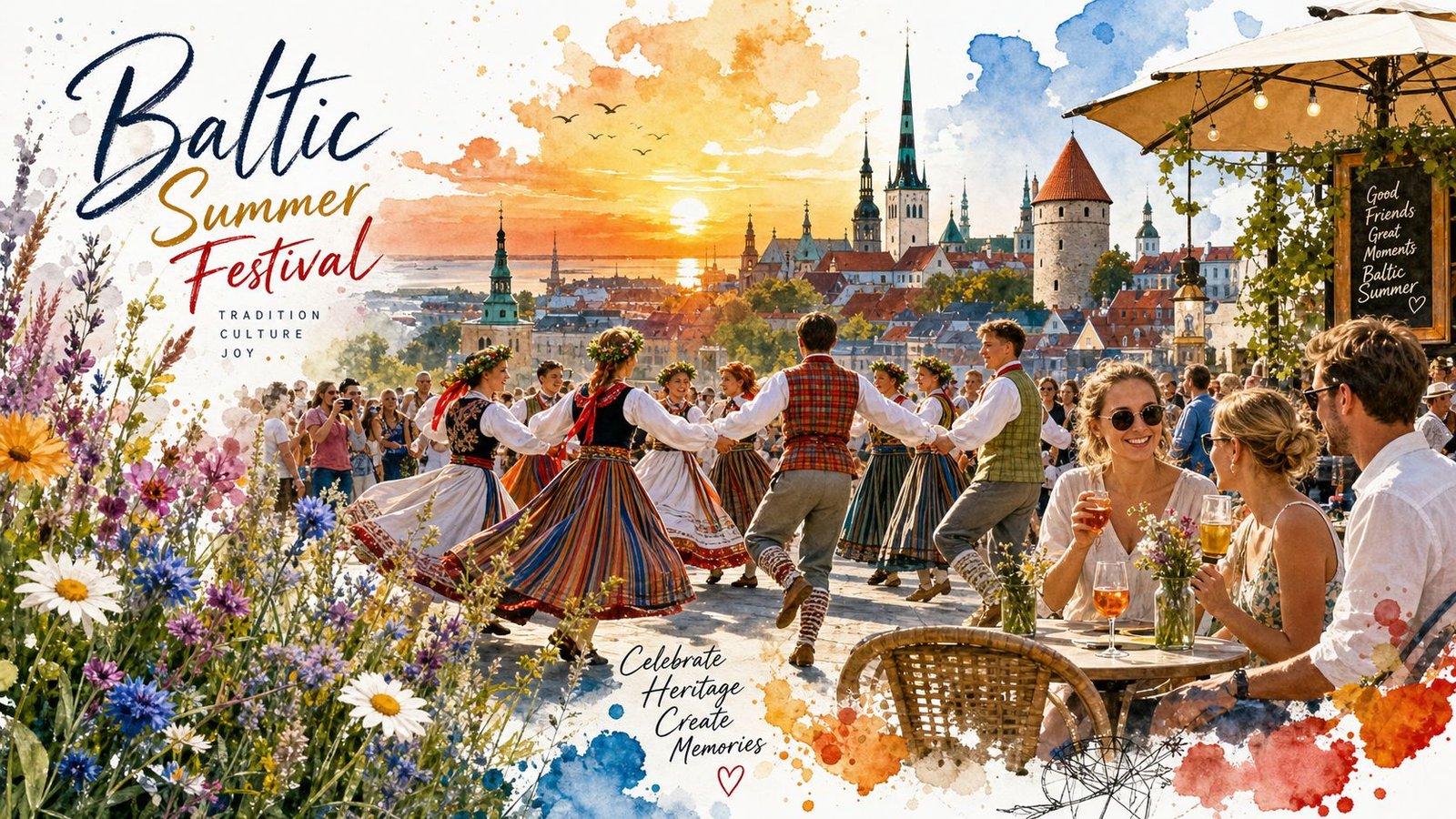
Summer also carries a cultural charge that many first-time visitors underestimate. The festival season runs from June to August, and that matters because the Baltics aren't just beautiful in summer. They're communal in summer. Song, dance, bonfires, village traditions, and city celebrations all make the region feel more open and more personal. A useful insider detail from TrovaTrip's Baltics destination guide is that the end of June can be less crowded in cities, because many locals head toward coastal towns for holidays.
That small timing shift creates one of my favorite Baltic travel windows.
Why late June is smarter than most people realize
If you want summer energy without full summer pressure, aim for the end of June. You still get the season's lightness and outdoor ease, but city centers can briefly feel less congested. For corporate groups, that means smoother movement, easier dinners, and a more graceful experience in historic cores.
For leisure travelers, it means something simpler. You can still feel the season without spending every day negotiating crowds.
How to enjoy peak season without getting trapped by it
Summer rewards travelers who commit. It punishes those who leave everything loose.
Use these rules:
- Book transport early: In peak weeks, buses can fill quickly, especially on popular routes.
- Choose your base carefully: Staying central sounds tempting, but a well-placed hotel just outside the busiest old-town core often gives you a calmer, more refined experience.
- Mix coast and city: Don't spend your whole trip in capitals. Summer is when the Baltic shoreline earns its place in the itinerary.
Summer in the Baltics isn't only about warmth. It's about access. The sea, the islands, the open-air culture, the late light. That's what you're really paying for.
If your priority is beach days, islands, festivals, and long evenings outdoors, summer wins. If you want the same cities with more intimacy, another season may suit you better.
Winter's Charm Christmas Markets and Cozy Retreats
Winter has a reputation problem in the Baltics. People reduce it to cold and darkness, then move on. That's lazy advice. Winter is one of the most atmospheric times to be here, especially if you care about old towns, ritual, and that deep northern sense of coziness that feels earned rather than staged.
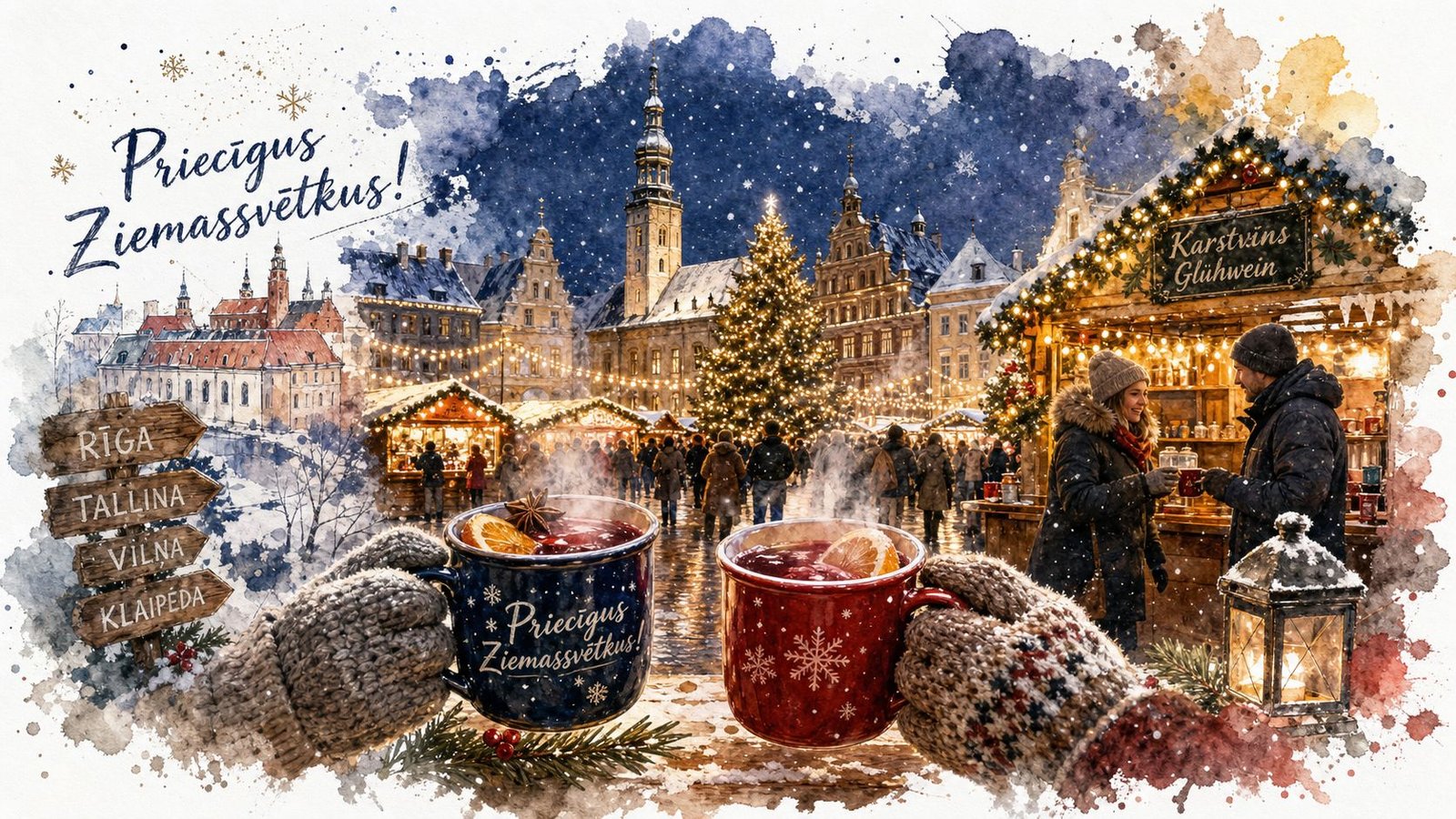
Why winter deserves your attention
Tallinn, Riga, and Vilnius all wear winter well. Snow isn't guaranteed on command, of course, but when the streets frost over and the lights come on early, the region becomes intimate in a way summer never can. You stop rushing. You linger over hot drinks. You notice carved doors, church interiors, market stalls, and candlelit windows.
Winter also changes the rhythm of a trip. You don't plan around long outdoor days. You plan around mood. A museum in the afternoon. A warm restaurant at dusk. A market square in the evening. It's slower and, for the right traveler, richer.
When to go for the best festive atmosphere
The strongest festive period is the Christmas market season from late November through early January, with the most atmospheric stretch between December 1 and December 24, according to the earlier-cited Baltic seasonal guidance. Markets are historically open daily from around 11:00 am to 10:00 pm, which gives structure to a winter itinerary without making it rigid.
That timing is ideal for travelers who want a short but memorable cultural trip. You can build a day naturally around the market hours, then add concerts, churches, restaurants, or private evening experiences around them.
A glimpse of that mood helps.
Go in December if you want enchantment. Go later in winter if you want silence.
There's another reason I like winter more than most guides do. It invites depth. Instead of trying to do everything, you choose a few things and do them well. That's a much better way to experience the Baltics than racing from sight to sight.
If Christmas markets are your anchor, and you're building a wider winter travel calendar, this roundup of the best places to visit in January can help you pair the Baltics with another cold-season destination in a way that feels intentional rather than random.
For the Discerning Traveler Finding Your Perfect Window
A Baltic trip can feel wildly different depending on when you go. Choose the right window and the region feels intimate, polished, and uniquely yours. Choose the default answer and you get decent weather with a far less memorable experience.
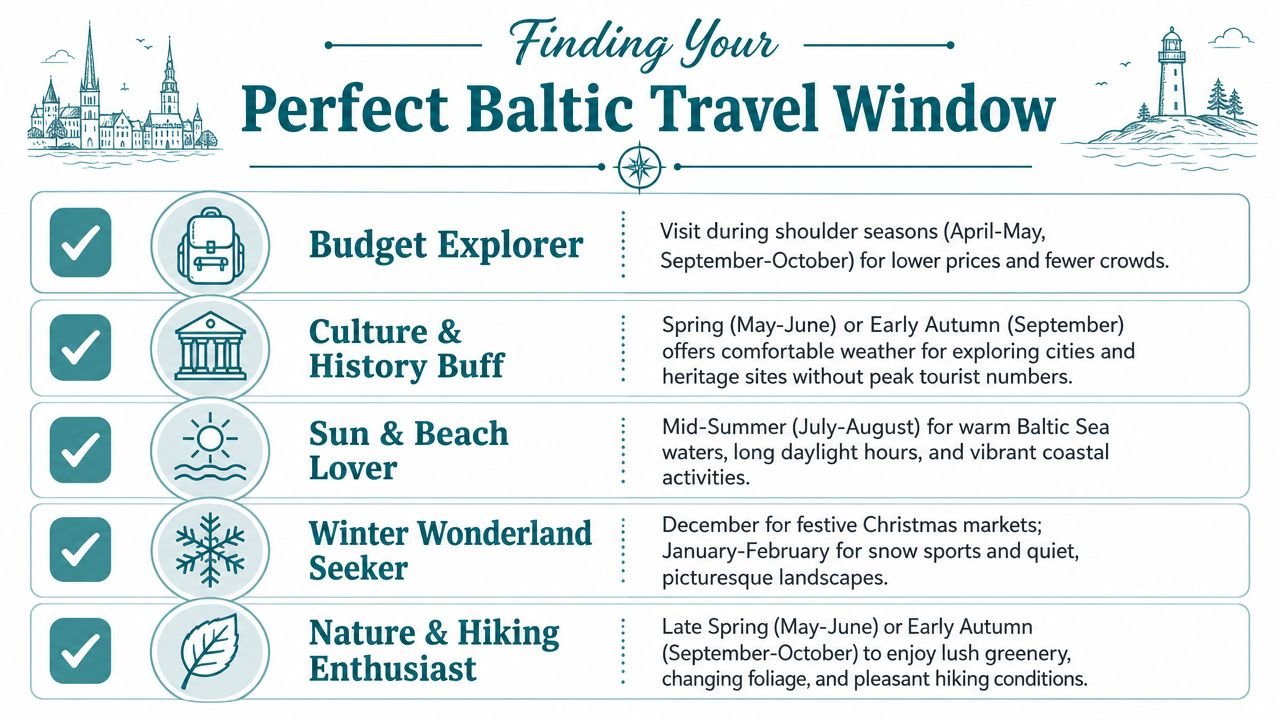
This guide moves beyond generic advice by focusing on specific travelers. Two windows deserve far more attention than they get. The first is the Reverse Shoulder Season for travelers who want beauty without performance. The second is the Winter Corporate Retreat for groups that need focus, privacy, and a setting with character.
Culture and food lovers
If you travel for long lunches, candlelit dining rooms, thoughtful hotels, and the quiet thrill of getting access before everyone else does, target the Reverse Shoulder Season. I recommend late April and mid-November.
These weeks are special for a reason. The cities breathe differently. Staff have more time. Dining rooms feel composed instead of crowded. You notice the linen, the glassware, the pacing of a tasting menu, the way a museum gallery sounds when it is not filled with tour groups.
Minimalist Journeys notes that these periods can bring lower luxury accommodation rates. More notably, they change the feel of the trip. Late April carries a cool, silvery freshness. Mid-November feels moody and refined, with old towns, warm interiors, and a kind of stripped-back elegance that suits travelers with sharp taste.
Choose these windows if you want:
- Food-first itineraries: Better reservations, calmer service, and meals that feel personal
- Private-feeling luxury: Hotels, spas, and cultural venues have room to breathe
- Cultural depth: You can linger instead of queue, and conversations feel less rushed
- A stronger sense of discovery: The Baltics feel lived-in, not staged for peak-season visitors
Vilnius is especially rewarding in this rhythm. Use this guide to the best things to do in Vilnius, Lithuania if you want to build a food-and-culture trip around Lithuania's most atmospheric capital.
Corporate and group travel
I strongly recommend winter for the right group.
The Winter Corporate Retreat is one of the smartest underused ideas in Baltic travel. Teams that need concentration, strong conversation, and memorable evenings do better here in winter than in summer. The season removes distraction. It sharpens the program.
Short days help. People stay present. Agendas become tighter, dinners become more intentional, and private cultural experiences feel richer after dark. A well-planned Riga, Tallinn, or Vilnius winter program can include design-forward hotels, excellent restaurants, concert halls, museums, and warm gathering spaces that make the trip feel distinguished rather than routine.
This window works best for leadership off-sites, client retreats, board gatherings, and creative teams that need real discussion time. Skip sprawling outdoor plans. Build around strong interiors, great hospitality, and evenings with texture.
Editorial take: If your group needs focus and wants a trip people will remember, choose winter.
Adventure seekers and quiet luxury travelers
Adventure travelers need to match the season to the activity. Summer is still the clear choice for kayaking, island-hopping, and long daylight hours. The shoulder months are better for hiking, national parks, and heritage sites when you want movement without crowds. Winter suits travelers who love austere coastlines, snowy forests, and silence.
Quiet luxury travelers should be just as selective. Peak season gives you energy and easy weather, but it rarely gives you exclusivity. Off-peak windows often feel more refined because the Baltics stop performing and start revealing their real texture.
Here is the short version:
- Budget Explorer: April to May, or September to October, for softer prices and lighter crowds
- Culture and History Buff: May to June, or September, for comfortable city days and strong museum time
- Sun and Beach Lover: July to August for the Baltic coast at its liveliest
- Winter Wonderland Seeker: December for festive atmosphere, or January to February for quiet snow-filled cities
- Nature and Hiking Enthusiast: May to June, or September to October, for trails, forests, and early autumn color
The smart choice is not the warmest month. It is the month that fits the trip you want.
A Tale of Three Countries Nuances Between Estonia Latvia and Lithuania
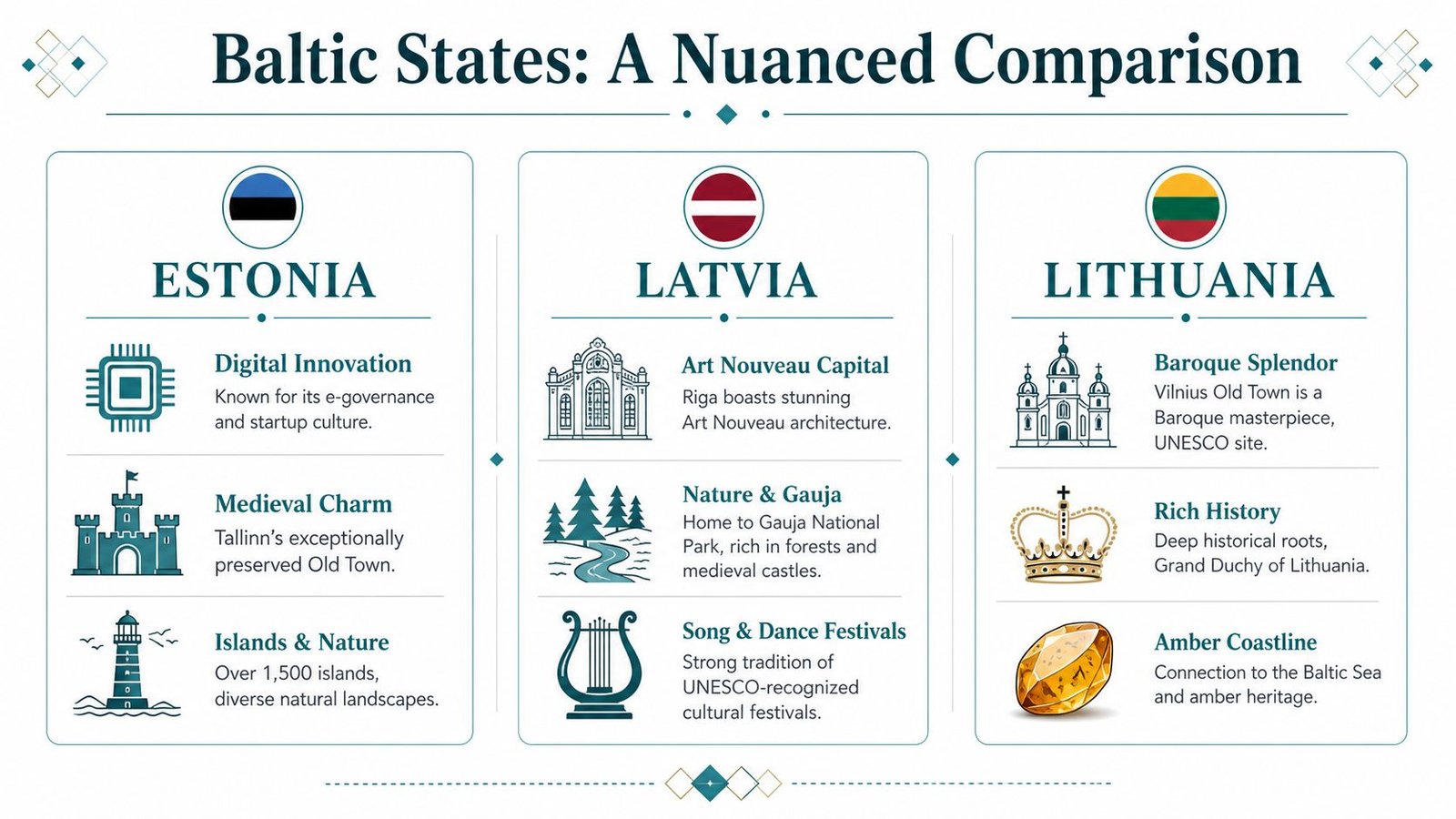
The Baltics are not a single mood. They're a trio. If you treat them as one blended destination, you'll miss what makes each country memorable.
Estonia
Estonia feels the most Nordic of the three. Tallinn is polished but still atmospheric, and outside the capital the country opens into islands, forests, and wind-shaped coastlines. If your dream Baltic trip includes silence, design-minded hotels, sauna culture, and maritime scenery, Estonia usually ends up being your favorite.
For outdoor exploration, timing matters. The strongest period for broad outdoor travel across the region is mid-June to mid-September, with up to 18+ hours of daylight in late June, which is especially useful for Estonia's coastline and islands, according to this Baltic travel discussion summarizing seasonal conditions.
Latvia
Latvia sits beautifully in the middle, geographically and emotionally. Riga is the grand urban heart of the region, full of Art Nouveau façades, market life, music, and a certain cosmopolitan ease. It's often the surprise favorite for travelers who expected to pass through.
Outside Riga, Latvia feels earthy and spacious. Forests, river valleys, castle ruins, and quiet towns give the country a balance that works especially well for travelers who want both culture and nature in one itinerary.
Riga has polish. The Latvian countryside has soul. Together they make a very convincing case for slowing down.
Lithuania
Lithuania has the deepest historical gravity. Vilnius is layered, baroque, and human in scale. It's a city of courtyards, churches, worn stone, and neighborhoods that reveal themselves slowly. For travelers who want history to feel lived rather than displayed, Lithuania often lands hardest.
It also offers remarkable range. You can combine Vilnius with lakeside history, smaller towns, and the coast for a trip that feels varied without feeling scattered. If Lithuania is your anchor, this guide to what to do in Vilnius, Lithuania is a useful place to start shaping the city portion properly.
If you're visiting all three countries, I'd choose your timing based on your dominant interest. Estonia rewards long summer light. Latvia thrives in almost any thoughtful itinerary. Lithuania is compelling year-round, but especially strong for travelers who love layered culture and reflective pacing.
Your Baltic Journey Awaits
The best time to visit the Baltic States depends on the feeling you're chasing. If you want long days, coastal access, and festival energy, go in summer. If you want composure, softer crowds, and a more reflective pace, choose the shoulder season. If you want candlelight, markets, and old towns that feel almost cinematic, winter is far better than its reputation.
That's the secret. There isn't one correct answer. There's the right season for your story.
Some travelers want to stand in a bright city square after dinner and realize it's still light outside. Others want to hear their footsteps on a snowy street in Vilnius, or spend a gray November afternoon moving from one exceptional meal to the next. Both are right. Both are the Baltics.
Travel here rewards discernment. It rewards people who care about timing, texture, and emotional fit. Choose with intention, and Estonia, Latvia, and Lithuania won't just look beautiful. They'll feel personal.
If you're ready to stop scrolling and start shaping a journey that fits your taste, La Sirena Vacations can craft a private, highly personal Baltic itinerary with the kind of care that turns a good trip into a meaningful one.