
You're probably doing what almost everyone does at the start. One tab has flights to Paris. Another has a “10 countries in 12 days” itinerary that already feels exhausting. You've saved boutique hotels in Spain, Baltic old towns, a vineyard outside Valencia, and three restaurant lists you'll never find again. Europe still feels romantic. Planning it feels like admin.
That tension is real. The dream is easy. The assembly is what drains people. Too much advice is built like a checklist, not a journey. It tells you how to cover ground, not how to create a trip you'll still be talking about years later.
The better approach is simpler and more demanding at the same time. Choose with intention. Cut what doesn't matter. Leave room for long lunches, unplanned streets, and conversations that don't fit neatly in a spreadsheet. If you're torn between famous capitals and something quieter, that instinct is often worth following. A slower route through places with texture often gives you more than a sprint through landmarks. If the Baltics are calling you, this guide to the best time to visit the Baltic States is a good example of how timing changes the entire feeling of a trip.
Table of Contents
- Dreaming of Europe From Overwhelm to Inspiration
- Laying the Foundation Your European Blueprint
- Crafting Your Perfect Route From Pins to a Path
- Booking the Cornerstones Flights and Stays
- Adding the Soul Curated Experiences and Details
- The Final Countdown and Traveling with Heart
Dreaming of Europe From Overwhelm to Inspiration
A good Europe trip doesn't start with booking. It starts with honesty. What do you want from this trip? Rest, beauty, food, history, celebration, reconnection, inspiration. Travelers often skip that question and go straight to logistics. That's how they end up in beautiful places feeling strangely rushed.
I've seen the same pattern over and over. Someone begins with a dream of Europe and slowly turns it into a test of endurance. Too many cities. Too many hotel changes. Too many “must-sees” chosen because everyone else says they matter. The trip becomes efficient and forgettable.
Go where your curiosity feels specific. “I want Europe” is too vague. “I want morning markets, old streets, and a city where dinner still starts late” is useful.
The trip with soul usually has a clear center. Maybe it's food. Maybe it's architecture. Maybe it's time together as a family without everybody looking at their phones. Once you know the center, decisions get easier. You stop asking, “What should we see?” and start asking, “What belongs in this story?”
That shift changes everything:
- You plan around feeling, not pressure
- You choose fewer places, and remember them more profoundly
- You leave space for the moments nobody can pre-book
Europe rewards travelers who pay attention. It gives plenty to the fast traveler, but it gives more to the one who lingers.
Laying the Foundation Your European Blueprint
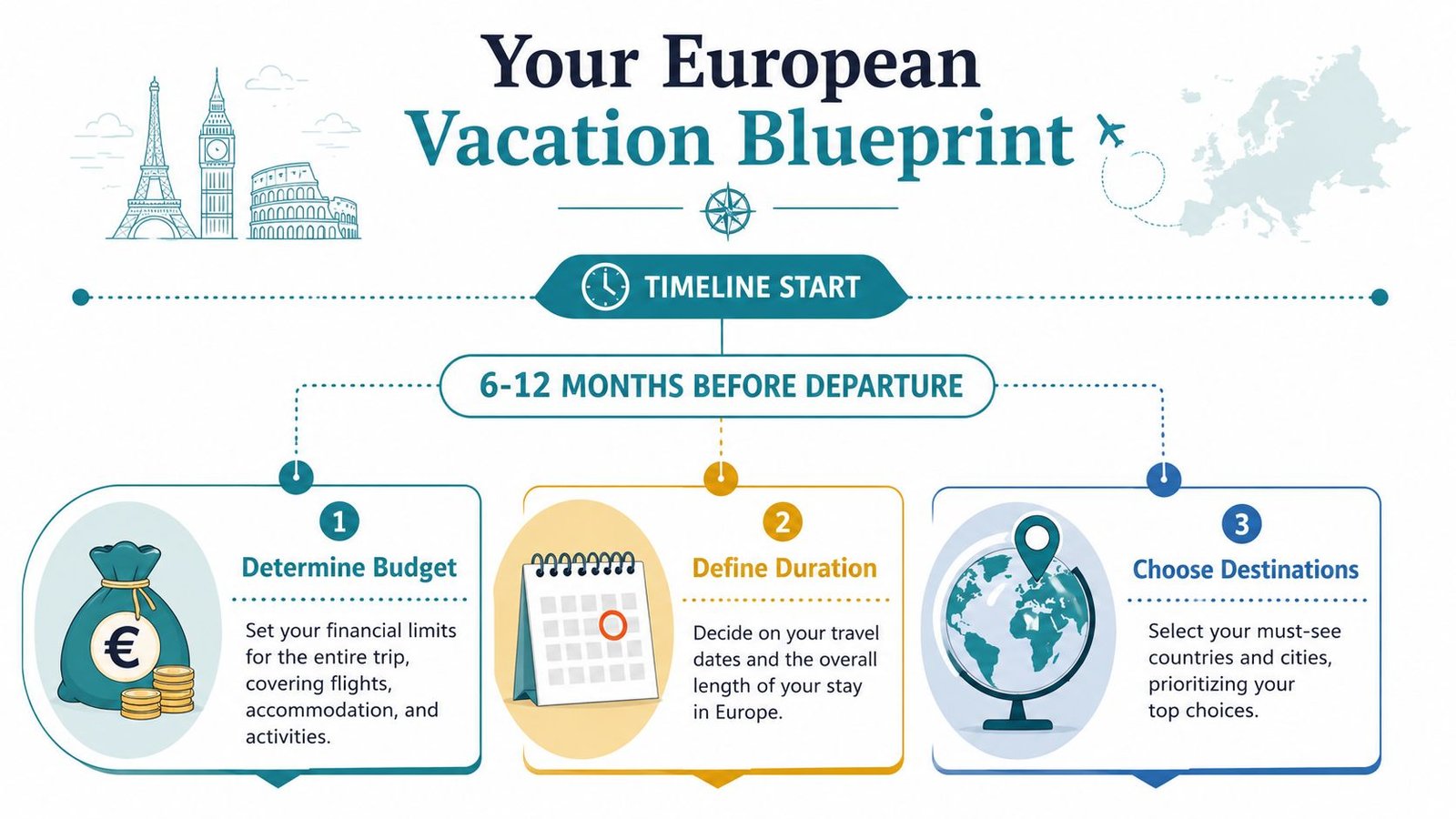
A beautiful Europe trip is decided long before you compare hotels. It is decided when you set the terms. When will you go, how long can you stay, and what can you spend without turning every dinner into a math problem?
Pick the season before you pick the city
Season comes first because it shapes the mood of the entire trip. August in southern Europe feels completely different from October. One gives you long, lively nights and packed squares. The other gives you softer light, easier reservations, and room to notice where you are.
Rick Steves' guidance on timing a Europe trip makes the tradeoff plain. Summer brings the broadest access and the biggest crowds. Winter often brings lower prices, but also shorter days and reduced hours. That is not a small detail. It changes how a place feels.
My advice is simple. Choose shoulder season unless your trip depends on summer weather or maximum daylight. April through June and September through October are often the sweet spot for travelers who want beauty without the crush. Save peak summer for places where light and weather are part of the experience, especially Scandinavia, Britain, and Ireland.
A city should fit the season. If you are drawn to Spain, skip the obvious and build in neighborhoods and quieter rituals, not just headline sights. A guide to Valencia's hidden gems and local spots will tell you more about whether a place suits your style than another list of top attractions.
Pick the season that supports the trip you actually want. Cheap flights mean nothing if the trip feels shut down, cold, or joyless.
Set a trip length that respects your energy
The best itinerary is the one you can live inside comfortably.
Analysts at the European Travel Commission's spring-summer 2025 travel outlook found that many travelers are choosing trips in the one-to-two-week range and setting budgets that allow for comfort, not pure survival mode. That tracks with what works in real life. Europe rewards travelers who stay long enough to settle into a rhythm.
Use a tighter framework than the internet usually gives you:
| Trip length | Best scope |
|---|---|
| 7 to 10 days | 1 to 2 regions or cities, with time to arrive and exhale |
| 10 to 14 days | 2 to 3 stops, if the route is close and logical |
| Any length | Give each base at least two full days, preferably more |
Many vacations are undermined by a common oversight. Travelers count countries instead of counting transitions. Every move costs time, focus, and energy. A shorter trip with fewer hotel changes almost always feels richer than an ambitious route that turns Europe into a transport puzzle.
Build a budget with room for pleasure
A good budget does not make a trip smaller. It makes better choices obvious.
Start with your total number. Then protect the parts of the trip you will remember most. Maybe that is a special hotel for two nights, a private food tour, front-row concert seats, or one unforgettable lunch that stretches into the afternoon. Fund those first. Let the less meaningful pieces adjust around them.
Leave breathing room. A Europe trip always presents one more worthy temptation. A market you want to linger in. A bottle of wine sent by the owner. A last-minute boat ride at sunset. If every euro is pre-assigned, the trip starts to feel rigid.
If you are still saving, skip fake precision. The useful question is not how cheaply you can do Europe. The useful question is how much lets you travel with ease, generosity, and a little spontaneity.
Answer these three questions with honesty:
- What season fits the feeling I want
- How many days can I enjoy without rushing
- What budget lets me say yes to the right things
Get those right, and the trip begins to take shape with clarity instead of noise.
Crafting Your Perfect Route From Pins to a Path
A traveler lands in Paris, races to Brussels, squeezes in Amsterdam, jumps to Prague, and comes home with 600 photos and one clear memory. Trains, hotel lobbies, and tired dinners. That is what happens when a route is built to impress instead of to be felt.
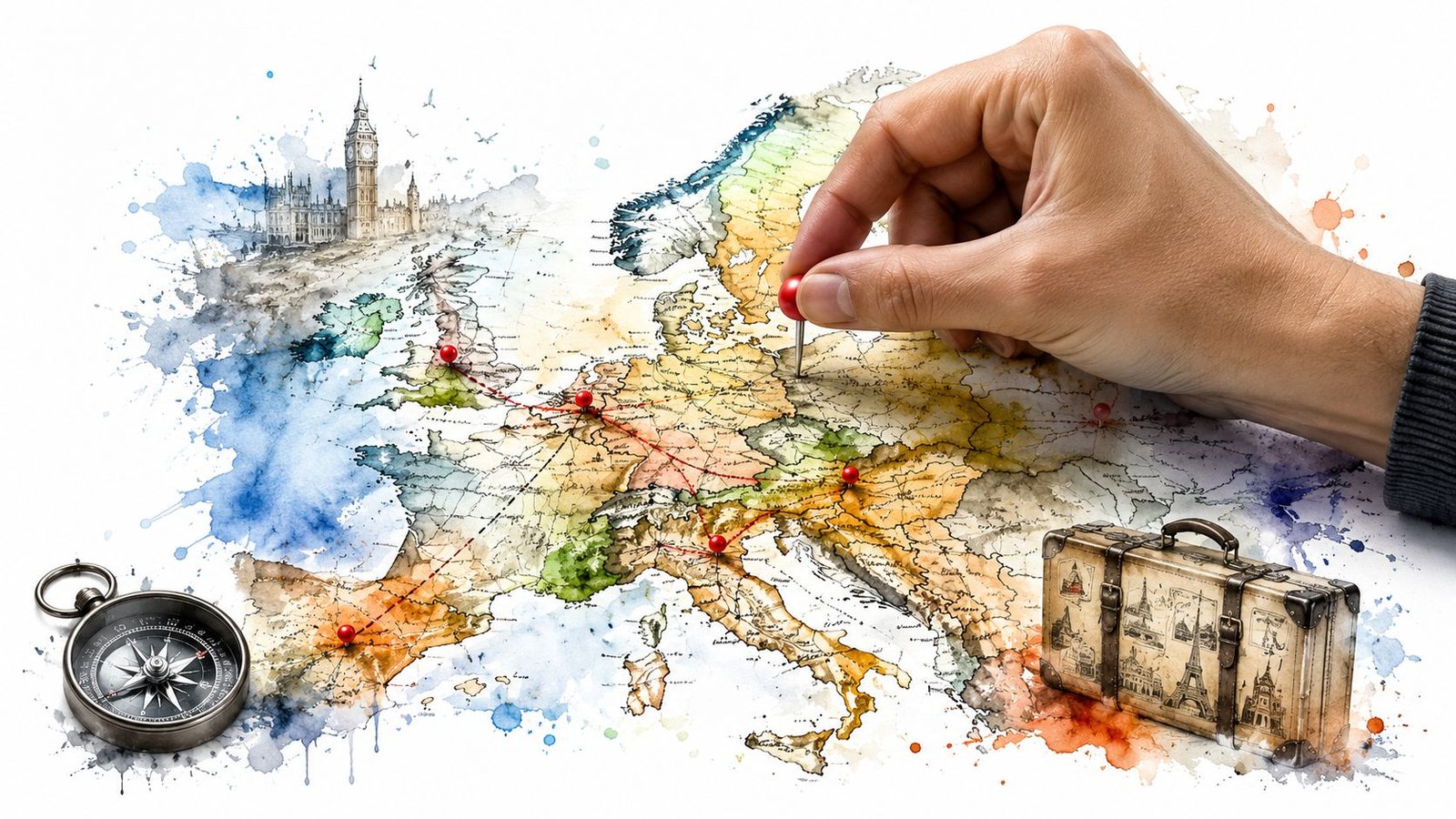
Stop collecting dots on a map
A good itinerary has shape. It has pauses, contrast, and enough time in each place for your senses to catch up with your body.
Analysts at Berkshire Hathaway Travel Protection's Europe planning guide warn against destination overload, especially for first-time visitors. Their advice is sensible. Keep the route restrained, especially on shorter trips, and protect the quality of your time.
I tell clients to stop asking, “How much can we fit in?” Ask, “What kind of days do we want to have?”
That question changes everything.
Choose places by personality
Build the route around mood and texture. Pick places that belong together emotionally, not just geographically.
If you want grand history, café culture, and polished cities, shape the trip around capitals and rail connections. If you want craft, food, sea air, and a stronger sense of local life, choose a region and go deeper. Spain does this beautifully. A city like Valencia rewards curiosity, especially if you use a guide to Valencia's hidden gems where locals actually go instead of repeating the same crowded stops everyone else posts.
Some pairings work almost automatically because the rhythm makes sense. City and coast. Capital and wine region. Art city and countryside retreat.
If you are forcing three very different places into one week, the route is wrong.
The Baltic States are a good example of a calm multi-stop trip. Estonia, Latvia, and Lithuania share enough cultural thread to feel coherent, and this Baltic States overview explains why crossing between them is relatively straightforward for many international travelers. That kind of practical ease matters. It gives the trip flow.
Map a route that flows
Once your places are chosen, draw the line between them with discipline. Enter in one city and leave from another when you can. Open-jaw flights usually cut wasted backtracking and give the trip a cleaner shape.
Then choose transport by what preserves energy, not by what looks romantic on paper.
| Route type | Best fit |
|---|---|
| Short, scenic, city-center to city-center hops | Train |
| Remote islands or long cross-continent jumps | Flight |
| Rural wine regions, villages, coastlines | Car, selectively |
Train travel shines when it saves you airport time and drops you into the heart of a city. A car earns its place in regions where the joy is in the small roads, the hill towns, and the freedom to stop for lunch because the view demands it. Flights are useful, but keep them for distances that would otherwise eat a full day.
Here is the standard I use. Every move should give you something in return. Better scenery, easier access, a meaningful shift in atmosphere. If a transfer only adds hassle, cut it.
The best routes feel inevitable once you see them. Simple, elegant, and full of room for the trip to become personal.
Booking the Cornerstones Flights and Stays
You land in Europe after an overnight flight, tired, hungry, and a little foggy. Your hotel is an hour from the center, check-in instructions are buried in an email, and your first afternoon disappears into logistics. That is bad planning, not bad luck.
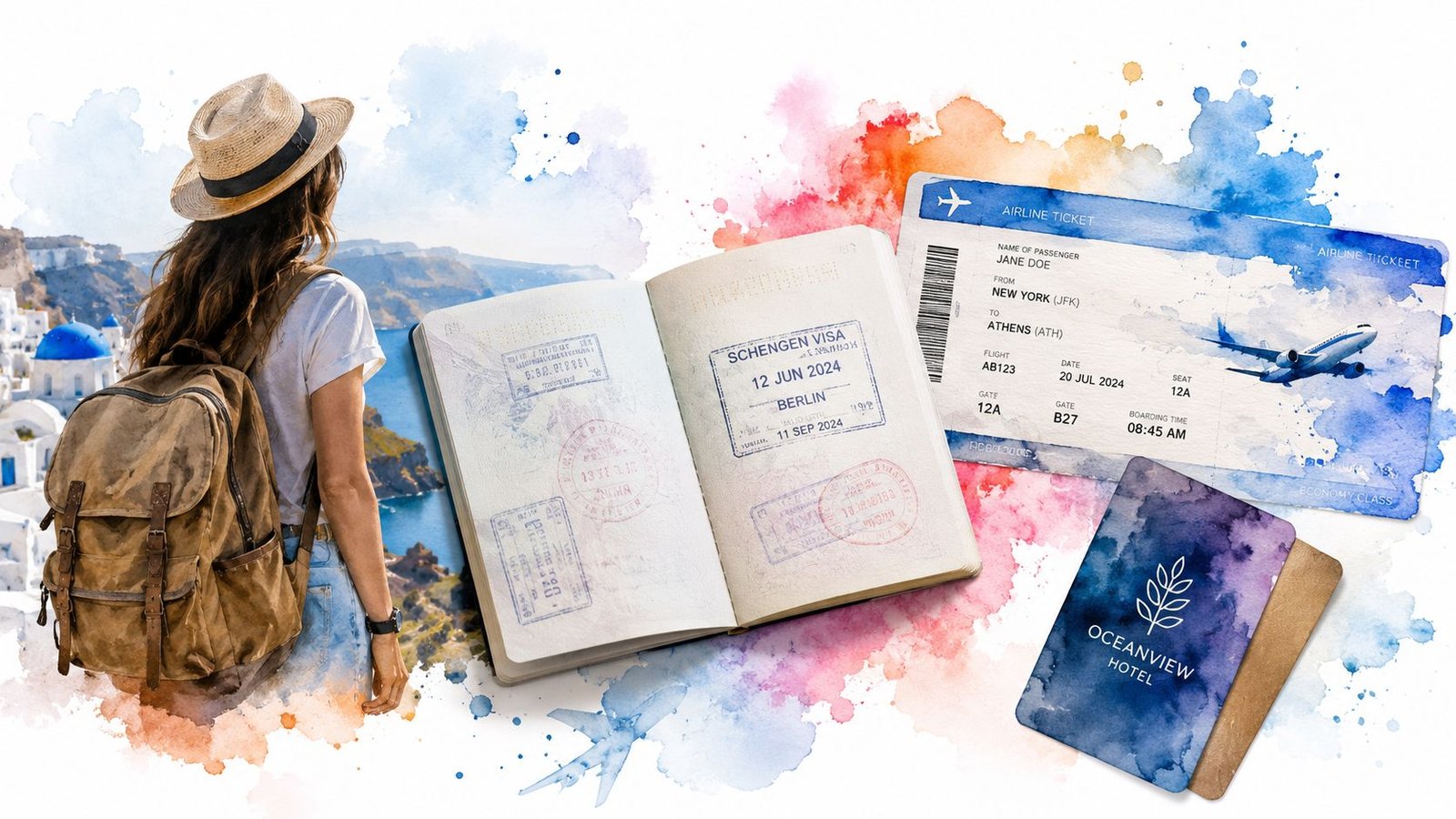
Book the flight first
Long-haul flights set the shape of the trip. Book them once your route is clear enough to trust, but before you start picking hotels room by room. As noted earlier, there is a smart booking window for Europe. The point is simple. Do not buy too early out of nerves, and do not wait until your best options are gone.
Then book in this order:
- International flights
- Your first two nights
- The rest of your stays
- Intercity transport after the stays are fixed
That second step deserves more respect. Your first hotel is not just a bed. It is recovery, orientation, and the first emotional impression of the trip.
Choose a place that is easy to reach, in a neighborhood you want to wake up in, with a front desk or clear check-in process. After a red-eye, charm matters less than competence.
Choose stays with character
A generic hotel drains personality from a trip. Stay in three of them in a row and cities start to blur together.
Book places that belong to their setting. A family-run pension in Lisbon. A small hotel in a restored palazzo in Florence. An apartment above a bakery in Paris, if you are staying long enough to settle in a little. The goal is not luxury for its own sake. The goal is atmosphere, rhythm, and a sense that you are somewhere specific.
Use this filter:
- Location first: Pick walkable neighborhoods that put cafés, transit, and evening strolls at your doorstep.
- Current reviews: Read the latest feedback, not the glowing comments from two years ago.
- Real character: If the photos could belong to any city on earth, skip it.
- Arrival ease: Late arrivals need simple check-in, clear directions, and no mystery.
This is also where it pays to match your stay to the reason you are going. If your trip is built around a major cultural moment, book around that energy. A city during festival season feels completely different, and planning for it early changes everything. If Valencia is on your list, this guide to Fallas in Valencia, Spain's festival of fire and art shows how a stay can become part of the story, not just a place to sleep.
For a little visual inspiration on the planning mindset, this video is worth a watch before you start locking things in.
Protect your arrival
Arrival day sets the tone. Treat it with care.
Book a stay that saves your energy. Know exactly how you are getting from the airport to your hotel. Confirm check-in times, door codes, and whether someone will be there if your flight is late.
Don't turn arrival day into a test of endurance. Use it to land, reset, and get your bearings.
If a cheaper room creates a miserable first day, it is not a smart saving. It is a bad trade.
Adding the Soul Curated Experiences and Details
This is the part generic guides handle badly. They tell you how to get to Europe. They rarely tell you how to make it feel personal once you're there.
Book fewer experiences and make them matter
A useful 2026 travel trend says travelers should “think quality of time, not quantity” and “go deep” rather than “go broad”, with slower itineraries and more exclusive experiences such as vineyard tastings or cultural workshops, according to this travel trend discussion. I agree completely.
That's the difference between a trip that looks full and one that feels rich.
Good planning here is selective. Book one or two anchor experiences in each place, not a packed grid of activities. That might mean a market visit with a cook in Spain, a private art-focused walk through an old town, or a hands-on workshop tied to local tradition. If you're heading to Valencia during festival season, this look at Fallas in Valencia, Spain's festival of fire and art is a perfect example of building a trip around something lived, not just seen.
A simple way to shape days:
- One anchor experience that gives the day its identity
- One light secondary plan such as a neighborhood, market, or museum
- Open hours for wandering, resting, and spontaneous choices
That structure keeps the trip generous instead of rigid.
Turn logistics into peace of mind
The soulful part of travel only works when the practical layer is handled. Check visa and entry requirements through official government sources before you book anything irreversible. Arrange travel insurance. Decide how you'll access money. Make sure your phone will work when you land.
If you want to be organized without becoming obsessive, keep one clean travel hub. I like an offline note or document with flight details, hotel addresses, confirmation numbers, transport plans, and key contacts. It's boring until your signal drops, and then it becomes the smartest thing you packed.
The best trips feel effortless because someone handled the details. If that someone is you, do it early and do it cleanly.
You don't need an itinerary stuffed with activity to create meaning. You need a few memorable choices, made well.
The Final Countdown and Traveling with Heart
The last month before departure should be calm. If it isn't, you waited too long for too many details.
Your last month checklist
Keep this part simple and exact. Confirm what matters, then stop fiddling.
- Check your documents: Make sure your passport is valid for your trip and verify entry requirements with official government sources.
- Reconfirm your bookings: Flights, first nights, transfers, and special experiences.
- Prepare your money setup: Bring at least two payment methods and know how you'll access funds abroad.
- Sort your phone plan: Decide whether you'll use roaming, an eSIM, or another setup before departure.
- Create an offline backup: Save confirmations, addresses, and tickets in a format you can access without signal.
- Pack lighter than you think: Europe is easier with one manageable suitcase and a proper day bag.
A light bag changes the whole trip. It makes trains easier, hotel changes less annoying, and old staircases less dramatic. Pack for the version of yourself who repeats outfits and walks a lot, not the fantasy version attending a different gala every night.
Travel well, not just efficiently
A great trip to Europe isn't a victory lap through famous names. It's a sequence of well-chosen days. Breakfast somewhere with regulars. An afternoon that wasn't overplanned. A dinner that runs long because the table is good and nobody wants to leave.
If you decide to work with a boutique travel provider, vet them properly. In Spain's Valencia region, checking that a company is listed in the autonomous community's travel agency registry matters. La Sirena Vacations, for example, lists registration CV-AVC002748-V, which signals the provider is legally licensed and insured under Valencian Community requirements, as noted on La Sirena Vacations' registry listing reference.
That kind of due diligence matters because trust matters. When someone is shaping a meaningful trip on your behalf, legitimacy and care aren't extras.
The best travelers I know have one thing in common. They don't try to win Europe. They enter it with attention. They leave room for beauty, appetite, and surprise. That's the plan worth making.
If you want help creating a Europe trip that feels personal instead of packaged, La Sirena Vacations is worth a look. They specialize in curated, high-touch journeys with private guided tours, customized cultural experiences, and thoughtful planning that goes beyond the standard checklist. If your ideal trip includes hidden corners, meaningful local encounters, and a route built around who you are, not what the internet says you should do, they can help shape something unforgettable.