
You land in Europe with a rough plan and a full heart. By breakfast, someone at the next table is urging you toward a perfect weekend in Barcelona, your phone is glowing with photos of Tallinn at sunset, and the trip you thought would feel simple already feels crowded. The actual challenge is rarely finding beautiful places. It is choosing a route that gives each day enough air to become a memory.
The best Europe trip itineraries leave space for small moments. A slow lunch in a Valencian neighborhood market. A conversation with a craftsperson in Vilnius. A walk through a medieval lane after the tour groups have gone home. Travelers often discover more when they stay a little longer and let one region open gradually, and that instinct shapes every journey in this collection.
This is the spirit behind the journeys we craft at La Sirena Vacations. These routes were shaped for travelers who want Europe at eye level, with more culture, more conversation, and fewer rushed hotel check-ins. Spain and the Baltic States are at the heart of that approach because both reward curiosity. If you want a glimpse of the kind of local texture that changes a trip, these hidden corners of Valencia where locals actually go offer a good place to start.
What follows is not a generic sweep through Europe's greatest hits. It is a set of hand-crafted journeys built around connection, with special attention to the soulful rhythms of Spain and the Baltic capitals and cultural centers that stay with you long after you return home.
Table of Contents
- 1. The Authentic Valencia Discovery
- 2. The Baltic Capitals Explorer
- 3. Spanish Heritage and Atlantic Coast
- 4. Barcelona Modern and Medieval
- 5. Vilnius and Kaunas Cultural Deep Dive
- 6. The Camino de Santiago Experience
- 6 European Itineraries Comparison
- Your Journey, Uniquely Crafted
1. The Authentic Valencia Discovery
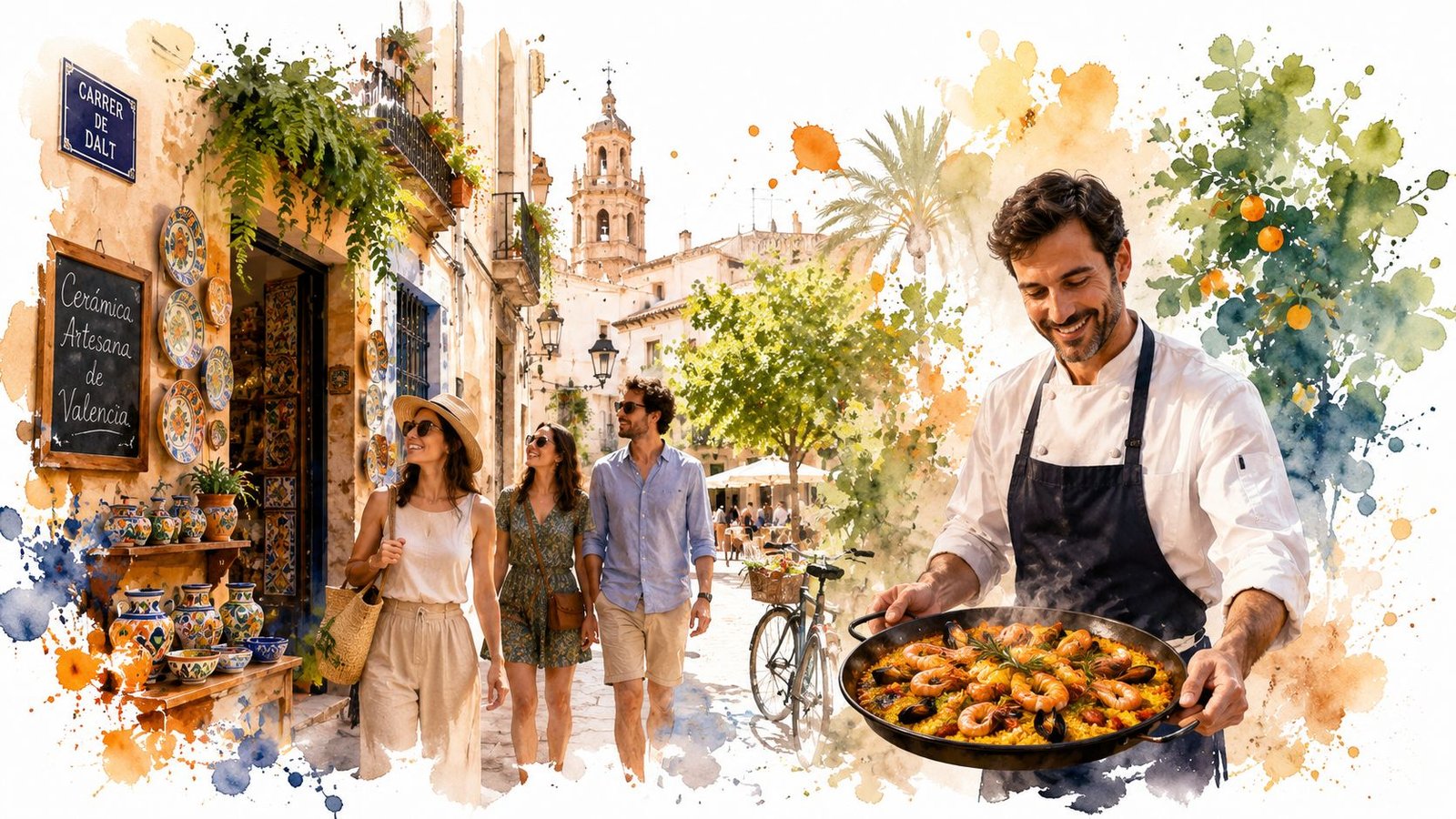
Valencia works best when you stop trying to conquer it. Start in the Old Town, where the streets fold into one another and a quiet plaza can feel more revealing than any landmark. Then move outward, toward the markets, the rice country, and the neighborhoods where people still greet shopkeepers by name.
A Europe trip itinerary offers a more human experience. One morning might begin early at Mercado Central, when the city still feels fresh and the stalls are all color and scent. Another might end in a cooking class where an executive team learns more about trust over saffron and stock than they ever could in a boardroom.
Where Valencia opens up
Paella belongs to this place, not just to restaurant menus. When you spend time near the rice paddies surrounding the city, the dish stops being a symbol and starts feeling rooted. Ruzafa adds another layer, with artist studios, café conversations, and the kind of creative energy that makes leadership retreats and design-minded groups come alive.
For families, Valencia can be wonderfully easy. Grandparents settle into long lunches. Younger travelers find energy in street life and gardens. The Turia Gardens, in particular, give everyone room to breathe.
Practical rule: Wear shoes you can walk in for hours. Valencia rewards the traveler who turns the corner just to see what's there.
A few timing choices make this journey smoother:
- Spring and early autumn shine: April, May, September, and October usually bring a gentler rhythm and more comfortable wandering.
- Seasonal culture adds texture: If your dates line up, seeing Fallas preparation offers a glimpse into local pride before the city turns celebratory.
- Local effort matters: A few Spanish phrases go a long way in family-run restaurants and neighborhood shops.
For travelers who want a more local side of the city, La Sirena's guide to Valencia's hidden gems where locals actually go is the kind of starting point that changes the whole tone of a stay.
Who it suits best
I've seen this route make sense for corporate groups that need creativity without stiffness, for multigenerational families who don't want an exhausting schedule, and for travelers who love Spain but want to feel it from the inside. Valencia doesn't demand performance. It invites participation.
2. The Baltic Capitals Explorer
Tallinn, Riga, and Vilnius don't blur together. That's the beauty of this route. The Baltic States are three distinct countries, all now members of the European Union, shaped by life along the Baltic Sea and by histories that still echo in architecture, language, and memory, as described in this overview of the Baltic States and their cultural setting.
Tallinn feels sharp, layered, and subtly futuristic. Riga carries elegance more visibly, with Art Nouveau facades and a river city softness. Vilnius is intimate, baroque, and emotionally deep.
Three countries, three moods
This route is especially powerful for groups. A tech company can arrive in Tallinn and immediately find useful conversation around innovation and civic design. A creative team in Riga can draw energy from architecture, jazz, and visual texture. A leadership group in Vilnius often ends up talking less about sightseeing and more about resilience, identity, and what cultural survival really looks like.
The mainstream web is still thin on practical, multi-country Baltic planning for groups. Much of the existing Europe trip itinerary content stays focused on first-time classics, while Baltic journeys remain underserved, especially for short, high-value group travel, as noted in this review of gaps in common Europe itinerary planning.
The Baltics reward travelers who linger long enough to feel the shift between countries.
How to travel it well
This is not a route to race. Give each capital emotional space. Let transit days stay light. Include forests, coastal stretches, or a village craft stop so the trip doesn't become a chain of hotel lobbies and city walks.
A few details help:
- June feels luminous: Long northern evenings can be magical, though more travelers arrive then.
- September is lovely: Clear weather and calmer streets make it easier to go deeper.
- Winter works too: Darkness changes the mood, but not for the worse. It can make the whole journey feel more contemplative.
If you're considering this region, La Sirena's article on why to visit the Baltic States and the best time to go offers a useful orientation before you shape the finer details.
3. Spanish Heritage and Atlantic Coast
On the first evening, the table is loud with saffron rice, grilled vegetables, and the kind of conversation that only happens when nobody is checking the time. A few days later, the mood has shifted. You are standing in Galicia under a soft gray sky, hearing church bells carry through stone streets while the Atlantic air turns cool on your skin. That change in atmosphere is the heart of this route.
La Sirena Vacations shapes this journey for travelers who want Spain in layers. Valencia brings orchard country, family cooking, and Mediterranean ease. The northwestern coast brings pilgrimage tradition, fishing towns, and a slower, older rhythm. Together, they create a Spain that feels lived in rather than staged.
From rice fields to pilgrimage roads
The beauty of this itinerary lies in the movement between worlds. One day might begin near Valencia's rice-growing areas, where a meal tells you as much about place as any monument can. Another might place you beside a Camino church or a quiet village square, listening to stories that have passed from pilgrims, innkeepers, and local families for generations.
Galicia leaves a different mark than Spain's headline cities. The hills feel softer. The seafood arrives with almost no distance between ocean and plate. In market towns and coastal villages, people often speak with a calm directness that invites real conversation. You do not need to walk the full Camino to feel its presence. It is there in the chapels, the weathered stone, and the shared sense that many people came here searching for something they could not name at the start.
Leave room for unplanned hours. Spain often becomes most memorable in the pauses.
A route with emotional range
This journey suits travelers who want more than a checklist. Family groups tracing roots often forge strong connections with the north. Creative teams tend to respond to the contrast between bright Mediterranean sociability and Galicia's introspective coast. Small private groups often love the way food, faith, and natural surroundings keep meeting each other without feeling forced into a theme.
A few choices shape the trip well:
- Use experienced drivers: Atlantic stretches can be long, and local route knowledge makes the days feel calmer.
- Pair sacred places with daily life: A sanctuary visit resonates more when it is balanced with a market stop, a seafood lunch, or time in a village café.
- Protect quiet time: Reflection does not need an agenda. A coastal walk or an hour in a stone plaza can do more than another guided explanation.
Spain draws enormous attention from travelers across Europe, as noted earlier. That is part of what makes this arc so satisfying. Instead of following the busiest current, you move toward regions where connection comes more easily and the country's inner life feels closer to the surface.
4. Barcelona Modern and Medieval
Barcelona can overwhelm people who arrive with only famous names in mind. Gaudí. Gothic Quarter. Las Ramblas. The city deserves better than that. It has the rare ability to feel theatrical and local at once, especially if you step away from the most obvious flow and enter the neighborhoods where daily life still sets the pace.
That's where this Europe trip itinerary becomes more than architecture-hopping. You begin to understand how design, politics, food, and neighborhood identity all live in the same city.
The city beyond the postcard
Yes, Gaudí matters. Park Güell and the great Modernist landmarks still have the power to stop conversation. But the more lasting memories often come elsewhere. In El Born, a small design shop might lead to a long lunch. In Montjuïc, a studio visit can shift a group's mood more than any museum queue ever could.
This route works beautifully for architecture firms, creative directors, and art-loving groups. Barcelona gives them visual abundance, but it also gives them a case study in reinvention. Medieval bones, modern ambition, and street-level texture all coexist here.
Make the famous parts feel personal
Timing changes everything in Barcelona. Early access, thoughtful guiding, and neighborhood-based meals can turn the city's biggest hits into intimate experiences.
A few habits help keep the city open rather than exhausting:
- Book major sites early: The most sought-after places often need advance planning.
- Use the metro often: It's practical, fast, and keeps you connected to the city's daily rhythm.
- Leave Las Ramblas quickly: Barcelona's true character emerges when you turn away from the obvious corridor.
Europe continues to dominate global tourism, accounting for 51% of the world's total tourism arrivals, and France, Spain, and Italy remain the continent's most visited countries, according to this roundup of Europe tourism statistics and travel behavior. Barcelona sits inside that larger magnetism, but the point isn't just to go. It's to enter well.
5. Vilnius and Kaunas Cultural Deep Dive
Vilnius doesn't shout. It draws you in slowly, through church bells, courtyards, layers of Jewish history, and streets that still feel lived in rather than staged. Kaunas adds a different current. More compact, more self-contained, and often more surprising, it gives this Lithuanian journey a second voice.
Together, the two cities offer one of the richest cultural pairings in Northern Europe for travelers who want substance. Not spectacle. Substance.
Lithuania at eye level
In Vilnius, baroque beauty and historical grief often sit side by side. A morning in the old center can feel light-filled and musical. An afternoon focused on Jewish heritage can turn the entire city inward. That's part of why this route resonates so strongly with educational groups and organizations interested in identity, memory, and recovery.
Kaunas changes the pace. The city feels more intimate, but not smaller in spirit. Its creative energy, civic pride, and independent streak make it a compelling counterpoint to Vilnius.
Some cities impress you immediately. Lithuania's cities tend to stay with you afterward.
Why this route lingers
This itinerary suits travelers who ask good questions. Art and culture groups often love the underrated contemporary scene. History-focused travelers appreciate the moral seriousness required by certain sites. Leadership teams sometimes find that Lithuania opens conversations about endurance, culture, and language in a way flashier destinations don't.
What makes this route work is balance:
- Use Lithuanian guides: Personal family history often adds dimensions no placard can.
- Take live culture seriously: Music and performance can reveal as much as museums.
- Give history proper time: Vilnius asks for attention, not speed.
For travelers who are especially drawn to under-served, more original routes, Lithuania also benefits from the broader Baltic planning gap noted earlier. It still feels like discovery without feeling inaccessible.
6. The Camino de Santiago Experience
The Camino strips things down fast. You wake up, lace your boots, walk, eat, talk a little, and sleep. Repeat that for several days and something in your mind starts to unclench. That's why this route is so effective for people in transition, for leadership groups, and for anyone who has been carrying too much noise.
You don't need to commit to the full pilgrimage to feel its force. A shorter Camino experience can still create that steady rhythm of movement and reflection.
Walking changes the conversation
I've watched teams start this route talking about logistics and finish it talking about meaning. Walking does that. It softens formality and gives people time to think before they speak. Communal meals, simple accommodations, and the presence of other pilgrims make connection easier because nobody is trying to perform.
For a business group, that can be profoundly beneficial in a practical sense. Shared effort builds trust. Silence helps people hear themselves again.
Pace matters here
This is the itinerary where overplanning does the most damage. Rick Steves advises travelers to build in "one day of slack per week" and to avoid too many one-night stays in order to reduce fatigue, in his guidance on smarter itinerary pacing and trip planning. On the Camino, that advice feels especially wise.
Travelers are also becoming more open to AI-supported planning. Over half of global travel companies now use generative AI to recommend activities or venues, and travelers increasingly use AI to create itineraries customized for personal interests, according to the European Travel Commission's travel trends update. Even so, this route still depends on a very human judgment call. How much walking is enough, and how much is too much for your group?
A few principles matter:
- Train before arrival: Daily walking is harder than many people expect.
- Pack less than you think: The Camino teaches this quickly.
- Protect quiet space: Some of the best stretches are the ones you don't fill with chatter.
If you want to start broad and then narrow into a route with more emotional texture, La Sirena's guide on how to plan a vacation to Europe is a helpful first step.
6 European Itineraries Comparison
Some travelers come back talking about a single meal in a Valencian family kitchen. Others remember the hush of a Baltic old town at dusk, or the steady rhythm of boots on the Camino. That difference matters. La Sirena Vacations curates these journeys for travelers who want to feel rooted in a place, whether that means sharing tapas in Spain or tracing layered histories across the Baltic States.
| Journey | 🔄 Planning Complexity | ⚡ Time and Resources | 📊 What You Can Expect | 💡 Best For | ⭐ Standout Strengths |
|---|---|---|---|---|---|
| The Authentic Valencia Discovery: 5 Days of Culture, Cuisine & Coast | Moderate. Custom small-group coordination and seasonal local experiences | 5 days. Private guides, family kitchens, local hosts, small-group transport | Deep cultural immersion and memorable local connection (⭐⭐⭐⭐) | Corporate bonding, families, cultural travelers | Genuine local access, hands-on cuisine, strong support for local businesses |
| The Baltic Capitals Explorer: 10 Days Through Estonia, Latvia & Lithuania | High. Multi-country coordination and transit between capitals | 10 days. Inter-city transport, private guides, varied accommodations | A wide cultural and nature-filled view across three distinct nations (⭐⭐⭐⭐) | Tech and creative teams, educational groups, wellness retreats | Three-country variety, strong balance of city life and nature, excellent value |
| Spanish Heritage & Atlantic Coast: 7 Days from Valencia to Galicia | Moderate to high. Long coastal routing and spiritual site coordination | 7 days. Private drivers, coastal logistics, monastery visits | Quiet cultural insight, layered regional contrast, meaningful reflection (⭐⭐⭐⭐) | Groups seeking meaning, creative teams, families | Dramatic coastlines, spiritual depth, exceptional seafood |
| Barcelona Modern & Medieval: 5 Days of Architecture, Art & Neighborhood Life | Moderate. Urban reservations and private-site access | 5 days. Early-access bookings, expert guides, higher budget | Strong design inspiration and easy urban exploration (⭐⭐⭐⭐) | Design firms, marketing teams, art-focused groups | Iconic architecture, walkable neighborhoods, rich food scene |
| Vilnius & Kaunas Cultural Deep Dive: 6 Days of Lithuanian Soul & Contemporary Life | Moderate. Historical themes need thoughtful curation | 6 days. Specialist guides, gallery and studio access, workshops | Intellectual depth, contemporary art exposure, and rich historical context (⭐⭐⭐⭐) | Educational groups, art enthusiasts, resilience-focused teams | Under-the-radar authenticity, powerful contemporary art, excellent value |
| The Camino de Santiago Experience: 7 Days Walking, Reflecting & Connecting | Moderate. Daily walking plans and pilgrim accommodations | 7 days. Guided daily walks (15 to 20 km), communal lodgings, light luggage | Profound group bonding, physical renewal, and reflective time (⭐⭐⭐⭐) | Leadership retreats, teams seeking shared challenge, individuals in transition | Physical simplicity encourages connection, shared rhythm, and space to reflect |
The quickest way to choose is to start with the kind of story you want to live inside. Valencia and Barcelona bring Spain through food, conversation, and neighborhood life. The Baltic routes invite a slower kind of curiosity, shaped by memory, creativity, and surprising warmth. The Camino and the Atlantic Coast itinerary speak to travelers who want space to think, walk, and return home changed by what they noticed along the way.
Your Journey, Uniquely Crafted
A week in Europe can feel completely different depending on how you travel. One couple spends their evenings in Valencia lingering over grilled fish in a neighborhood restaurant where the owner remembers their names by night two. Another traveler wakes in Vilnius to church bells, walks through a quiet courtyard into a contemporary gallery, and ends the day in a candlelit cellar tasting black bread and local beer while listening to stories about the city's long memory. Both journeys are right. They ask for different rhythms.
The strongest Europe trip itinerary follows that rhythm. It leaves room for a late lunch that turns into conversation, a market stop that shifts the whole afternoon, or a walk through an old quarter that matters more than racing to the next landmark. Spain gives many travelers warmth, sociability, and the pleasure of living outdoors. The Baltic States offer a more introspective kind of beauty, shaped by resilience, creativity, and a sense of discovery that still feels personal.
Travel planning has changed, and so have traveler expectations. Analysts following the Europe online travel market and personalization trend describe a growing appetite for more customized trips instead of fixed booking paths. Technology helps, of course, but a memorable route still depends on human judgment. Someone has to know when three cities in six days will feel thin, when a coastal detour is worth the extra drive, and when a family or small group will get more from one meaningful local encounter than from another crowded monument.
That is why these itineraries were shaped as hand-crafted journeys rather than generic loops across a map. La Sirena Vacations plans custom travel in Spain and the Baltic States with a clear focus on cultural immersion, group fit, and pacing. For a family marking a milestone, a leadership team trying to reconnect, or curious travelers who care more about place than checklists, that difference shows up in the details. The right guide, the right neighborhood, the right amount of free time.
Some trips fill a camera roll. The best ones leave behind a stronger feeling than that.
You come home remembering the sound of plates in a Valencia market bar, the sea air along Spain's northern coast, the soft light on medieval stones in Riga, the hush of a chapel on the Camino. A carefully crafted journey does more than carry you through Europe. It lets Europe meet you back.