
A bandoneón floated out of an upstairs window in San Telmo just as a waiter set down a glass of Malbec and a plate of still-warm empanadas. In that small moment, Buenos Aires stopped feeling like a destination and started feeling like a living conversation.
Buenos Aires is more than a city. It's the melancholic strain of tango, the smoke of a parrilla, the long dinner that becomes midnight without anyone noticing. At La Sirena Vacations, travel begins with listening. Not to trends or generic must-see lists, but to what moves you. The best things to do in Buenos Aires aren't always the loudest or most photographed. Often, they're the ones that bring you into a studio, a kitchen, a rehearsal room, a vineyard, or a neighborhood café where someone generous shares a story that changes how you see the city.
That matters even more here, because Buenos Aires rewards depth. Research on urban tourism across several Latin American capitals found that Buenos Aires visitors fall into three distinct groups, including a 35% segment drawn to the city's full cultural range, from museums and historical sites to nightlife, with strong overlap between that segment and business travel and conventions, according to this urban tourism study. In practice, that means cultural places like Teatro Colón, MALBA, and Recoleta aren't side trips for corporate groups. They're often the reason a trip becomes memorable.
So this isn't a race through landmarks. It's a collection of encounters with artists, chefs, historians, ranch owners, and educators. For things to do in Buenos Aires that feel personal, generous, and rooted in real life, start here.
Table of Contents
- 1. Tango Immersion Private Lessons and Milonga Social Nights
- 2. Wine and Culinary Immersion in Mendoza's Premier Vineyards
- 3. Street Art and Social History Walking Tour with Local Muralists
- 4. Exclusive MALBA Museum Experience with Art Historian Curators
- 5. Teatro Colón Behind-the-Scenes Tour with Restoration Experts
- 6. Gaucho Heritage Experience at an Estancia with Working Ranch Owners
- 7. Jewish Buenos Aires Heritage Tour with Community Historians and Synagogues
- 8. Literary Buenos Aires Borges, Cortázar, and Intellectual History Walking Tour
- 9. Private Cooking Classes with Buenos Aires Chef-Scholars in Home Kitchens
- 10. Human Rights and Memory Preservation ESMA and Nunca Más Tours with Educators
- Top 10 Buenos Aires Experiences Comparison
- Crafting Your Personal Buenos Aires Story
1. Tango Immersion Private Lessons and Milonga Social Nights
Tango makes more sense once you stop treating it like a performance and start feeling it as a language. In a quiet San Telmo studio, a skilled teacher will correct the angle of your walk, the softness of your embrace, the pause before a turn. Then later that night, those same ideas return in a milonga, where the room moves with restraint, elegance, and an intimacy that isn't theatrical at all.
For couples, this can become the emotional center of a trip. For corporate groups, it often becomes a surprisingly effective form of team-building. One group from Valencia might spend an afternoon laughing through footwork drills, then leave a few sessions later with enough confidence to dance together at a farewell dinner. That kind of progression feels human. It doesn't feel staged.
Here's a glimpse of the atmosphere many travelers fall in love with:
Why private tango changes everything
Private lessons let you ask the good questions. Why does the walk matter so much? What makes one orchestra feel playful and another devastating? What did your teacher learn in their first milonga, and what mistakes do they still remember? Those stories are often a genuine gift.
Argentina also places real value on qualified instruction. One claim often repeated in travel material says private tango schools in Buenos Aires must use instructors certified by the National Dance Institute across more than 120 registered schools, but the linked reference doesn't support that clearly enough to treat it as reliable fact. So the practical advice is simple. Book with a trusted curator who knows the teachers personally and can match style, level, and personality.
Practical rule: Book your lessons early in the trip. You'll enjoy every dance night more once the basic walk, embrace, and etiquette start to settle into your body.
If your wider itinerary includes cross-border highlights, some travelers pair city culture with a dramatic nature extension such as this private Brazil and Argentina waterfalls journey.
How to enter a milonga gracefully
Milongas have codes, but they're easy to learn when someone explains them with kindness. Arrive in the first hour, when the room is calmer and beginners can observe without pressure. Dress well, but don't costume yourself. Buenos Aires elegance is usually understated.
- Wear the right shoes: Soft-soled shoes help you pivot and feel the floor. Comfort matters more than showiness.
- Read the room first: Men traditionally invite with eye contact, called cabeceo, though modern milongas are more flexible and women often initiate too.
- Decline directly: A polite “gracias, no” is enough. No one expects a long explanation.
- Stay present: Don't drink too much. Tango asks for awareness, courtesy, and respect for the people sharing the floor.
For a week-long stay, one milonga is the minimum. Three or four lessons of about 90 minutes each give the dance enough space to move from awkwardness into pleasure.
2. Wine and Culinary Immersion in Mendoza's Premier Vineyards
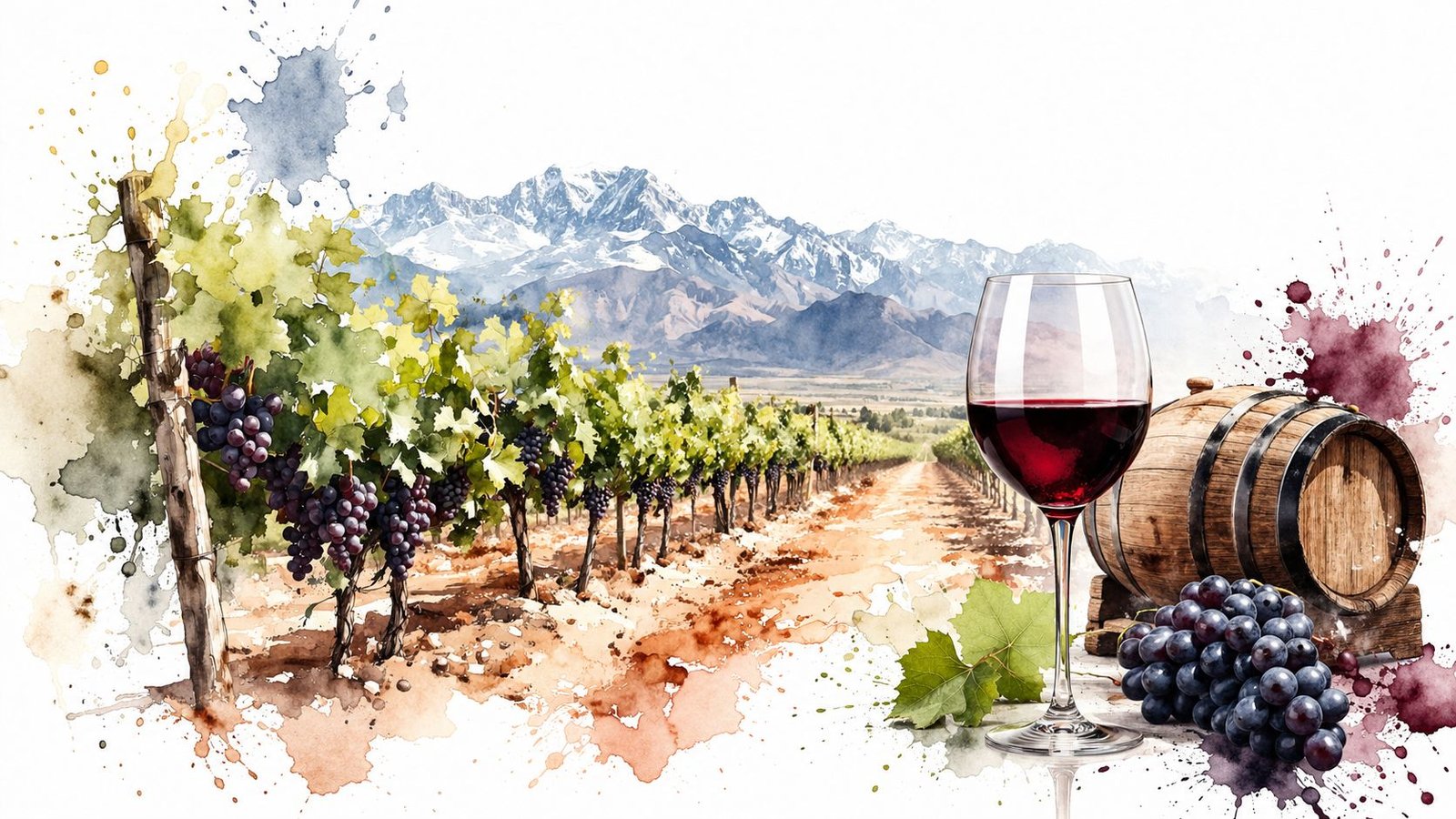
Some of the most memorable things to do in Buenos Aires involve leaving it briefly. Mendoza does that beautifully. You trade broad avenues and Belle Époque facades for rows of vines, mountain light, and long lunches where each glass seems to explain the surroundings a little better.
Luxury travelers often want this extension for a reason. One verified travel claim states that 85% of luxury travelers in Buenos Aires seek vineyard experiences in the Mendoza region that require pre-booked appointments with certified sommeliers, according to this referenced post. Even if you take that figure as directional rather than definitive, the planning truth is solid. The best vineyard days don't happen casually. They happen because someone reserved the right tables, the right tastings, and the right conversations.
Why Mendoza belongs in a Buenos Aires itinerary
A food and wine group might spend several days focused on private tastings, barrel rooms, and chef-led lunches before returning to Buenos Aires for theater and museums. A corporate team might choose a harvest-style activity because it gets people working with their hands, outdoors, talking differently than they do in a conference room. The shift in pace is part of the reward.
One spending insight from Buenos Aires also helps explain why these experiences matter. The city's Tourism Observatory says newer methods estimate total visitor spending at 28% higher than older calculations, driven by better tracking of card and cash expenditures outside hotel costs, as described in this Observatory video reference. That reinforces something good curators already know. Dining, tastings, and exclusive cultural experiences create much of the value in a trip.
If wine is calling, it also makes sense to compare Mendoza with northern Argentina and Cafayate's wine landscapes on this Salta full-day tour.
What makes a vineyard day feel personal
A great vineyard visit isn't just a tasting flight. It's the moment a sommelier opens a bottle and explains what the desert climate does to the grape. It's the chef adjusting lunch to a vegetarian guest without making the meal feel like a compromise. It's the view from the table when the Andes catch late afternoon light.
Go in shoulder season if you can. The weather is often gentler, the pace is calmer, and conversations tend to feel less rushed.
- Ask about sustainability: Many wineries are proud of organic or biodynamic practices and enjoy discussing them.
- Bring sun protection: Mountain light can be intense even on cool days.
- Arrange transport ahead: A private driver removes all stress and lets the day unfold without clock-watching.
3. Street Art and Social History Walking Tour with Local Muralists
Buenos Aires writes on its walls. Not casually, and not only for decoration. Murals here can hold grief, humor, protest, neighborhood pride, and memory all at once. Walking with a muralist or local art guide changes everything, because you're no longer looking at color. You're reading public thought.
This is one of the best things to do in Buenos Aires for photographers, designers, students, and teams who want the city explained through images rather than monuments. In Palermo, a wall might tell you about style and reinvention. In La Boca, another might lead into labor history and migration. In neighborhoods that don't make standard itineraries, the art often becomes even more revealing.
Read the walls with the people who paint them
The strongest version of this experience includes time with active artists. They can explain process, commission constraints, political references, neighborhood reactions, and the practical realities of painting at scale. That turns a walk into an exchange.
A corporate group might use this kind of tour to talk about resilience and public expression. An artist visiting from Europe might ask about local influences and techniques. A history enthusiast might want the visual language of the years after dictatorship explained through symbols that a casual visitor would miss entirely.
Neighborhoods that reward context
One useful contrarian angle involves neighborhood choice. A verified brief notes that traveler sentiment from recent years increasingly flags La Boca for petty crime and tourist traps after dusk, while places like Montserrat and Belgrano are less frequently covered despite offering authentic milongas, art markets, and more local dining, as discussed in this travel commentary. That's not a reason to erase La Boca. It's a reason to visit it with context, at the right time of day, and without assuming postcard Buenos Aires is the whole story.
- Wear walking shoes: You'll cover real ground.
- Bring a camera: Artists usually understand that visitors want to document the work.
- Ask process questions: “How long did this take?” and “Who asked for it?” often reveal better stories than “What does it mean?”
- See art in different light: Day and early evening can make the same wall feel like two different works.
4. Exclusive MALBA Museum Experience with Art Historian Curators
At MALBA, a good curator doesn't give you more facts. They give you better eyesight. A painting you've glanced at in thirty seconds suddenly becomes a dense conversation about power, identity, exile, modernism, satire, or desire. The museum is already excellent. The right guide makes it intimate.
This matters in Buenos Aires because culture here isn't ornamental. It's part of how people think in public. Business travelers often discover that a museum visit becomes one of the most energizing parts of an itinerary, especially when the conversation moves beyond labels and into interpretation.
See more than the label
Ask for a curator or art historian whose expertise matches your interests. Some visitors want a path through Latin American modernism. Others want surrealism, political art, or contemporary voices. The best tours feel less like lectures and more like dialogue.
An art history traveler from Europe might use MALBA to deepen their understanding of regional movements they haven't studied in depth. A creative team might come for inspiration and leave talking about color, memory, and visual storytelling over dinner. Artists often appreciate hearing how conservation, exhibition design, and institutional choices shape what the public sees.
A meaningful MALBA visit needs time. Two or three hours is usually the minimum if you want conversation, not just coverage.
Pair MALBA with a slower Palermo afternoon
MALBA works beautifully when paired with nearby galleries, a thoughtful lunch, and unhurried walking in Palermo. That combination lets the museum breathe. You aren't rushing from one checkbox to the next. You're letting one image lead into another.
Because Buenos Aires draws a substantial segment of visitors toward its full spectrum of cultural assets, as noted earlier, MALBA belongs near the center of a curated itinerary rather than at the edge of it. If you're choosing among things to do in Buenos Aires, place this one on a day when you can stay mentally open afterward. Museums deserve some silence after the final room.
5. Teatro Colón Behind-the-Scenes Tour with Restoration Experts
Even people who don't think of themselves as opera lovers often fall quiet inside Teatro Colón. The scale does part of the work. So does the craftsmanship. But the deepest appreciation usually comes backstage, where the theater reveals itself not as a monument, but as a machine built by artisans.
A behind-the-scenes visit with a restoration specialist, historian, or architecture-minded guide turns decorative grandeur into technical intelligence. Suddenly you're not only admiring the hall. You're thinking about acoustics, restoration choices, workshop labor, stage logistics, and the long life of a cultural institution.
Go backstage, not just into the auditorium
This experience is especially powerful for architects, designers, musicians, and performing artists. A design professional may focus on materials and structural choices. A singer may care more about rehearsal life and the relationship between stage and audience. A corporate incentive group might be moved by how many hands it takes to preserve beauty over time.
The urban tourism research cited earlier also singled out Teatro Colón as one of the cultural anchors that matter for the city's attraction profile. That rings true on the ground. Visitors who thought they were only coming for dinner and tango often leave talking about the theater's backstage corridors and restoration stories.
Make the day last into the evening
If possible, time your visit for late afternoon and stay for a performance later that night. Seeing the building in use completes the experience. The theater stops being historical and becomes immediate again.
- Book well ahead: Access can be limited and schedules change around rehearsals and performances.
- Ask specific questions: Set design, costumes, archives, and restoration each open different doors into the building.
- Give yourself margin: Don't wedge Teatro Colón between rushed appointments. It deserves unhurried attention.
One of the quiet joys of Buenos Aires is realizing that some of its best experiences are not loud at all. They are careful. Teatro Colón is one of them.
6. Gaucho Heritage Experience at an Estancia with Working Ranch Owners
The Pampas begin to recalibrate you almost immediately. The horizon stretches, the air dries out, horses replace traffic, and conversation slows to a rhythm that city visitors often don't realize they've been missing. An estancia day, or better yet an overnight stay, offers one of the richest counterpoints to urban Buenos Aires.
The most rewarding version isn't a staged folklore show on a tight schedule. It's time with ranch owners and workers whose lives are still shaped by land, weather, animals, tools, and inherited routine. You come for horsemanship and asado. You stay for the stories.

Trade city rhythm for Pampas time
Families often love estancias because everyone finds an entry point. Children remember the horses and open space. Adults remember the meal and the generosity. Corporate groups often do especially well here because shared outdoor activity changes group dynamics. People become less formal once they're learning to ride, watching ranch work, or taking mate on a shaded porch.
If you're still deciding when to travel, this broader guide on the best time to visit Argentina can help place an estancia stay within a larger itinerary.
What to ask once you arrive
The best questions are personal and practical. Ask how the family came to the land. Ask what changed between one generation and the next. Ask what a beginner should understand about horses before mounting. Ask what gaucho identity means today, not only what it meant in textbooks.
- Dress for the setting: Long pants and sturdy closed-toe shoes make the day more comfortable.
- Plan enough time: A few hours is the minimum. Overnight is better if it's available.
- Match the riding level: Good hosts can adapt from complete beginners to experienced riders.
- Respect the work: Even if the day feels leisurely, you're stepping into a place where animals and labor still structure daily life.
For travelers searching for things to do in Buenos Aires that go beyond the city without losing cultural depth, this is one of the strongest choices.
7. Jewish Buenos Aires Heritage Tour with Community Historians and Synagogues
Buenos Aires holds one of the most layered Jewish histories in the Americas, and the most meaningful way to encounter it is with people who belong to that story. Community historians, educators, and preservation leaders can connect immigration, neighborhood life, worship, politics, literature, and contemporary identity in a way no self-guided route can.
The emotional tone of these visits varies. Some moments feel scholarly. Others feel intimate. A guide may point out a building facade, then tell a family story that turns an ordinary street into a record of arrival and adaptation.
A story of arrival, memory, and daily life
This experience resonates strongly with travelers exploring their own heritage, but it isn't limited to them. Historians, interfaith groups, academics, and culturally curious visitors often find it one of the most subtly affecting things to do in Buenos Aires.
A well-shaped route might include synagogues, cultural institutions, old commercial streets, and places tied to intellectual life. The best guides also speak about the present tense. Not only who came, but who is here now. Not only memory, but continuity.
Visit with respect and curiosity
Religious and communal spaces ask something from visitors. Modest dress matters. Timing matters too, especially around Shabbat or major holidays. If a curator arranges access, follow their guidance closely. They know when a place is open for visitors and when it should be left in peace.
Ask about contemporary Jewish Argentine life, not only the past. Communities don't want to be treated as museum exhibits.
A thoughtful heritage tour can also pair beautifully with literary or architectural interests, because Jewish life in Buenos Aires has intersected with publishing, debate, education, and the broader cultural life of the city for generations.
8. Literary Buenos Aires Borges, Cortázar, and Intellectual History Walking Tour
Some cities are best understood through buildings. Buenos Aires can also be understood through sentences. Cafés, bookstores, libraries, editorial houses, and old apartment blocks hold the atmosphere that shaped writers such as Borges and Cortázar, along with generations of essayists, poets, translators, and editors.
A literary walk gives you a different city map. You're no longer moving by neighborhood prestige or landmark photography. You're following ideas. A corner matters because of who argued there, who wrote nearby, who returned in fiction, who never entirely left.
Walk the city like a reader
This is a wonderful choice for university groups, teachers, writers, and travelers who prefer conversation to spectacle. Read before you come if you can. Borges deepens a city of mirrors, libraries, and doubles. Cortázar changes your sense of play, movement, and urban possibility.
A scholar-led walk can bring in politics, publishing history, exile, translation, and the role of cafés in Argentine intellectual life. A writer visiting for inspiration may value something simpler. Time to sit at a table, annotate a page, and feel the city collecting around them.
Build your own literary afternoon
The ideal version of this experience isn't hurried. It includes browsing in a serious bookstore, taking coffee somewhere storied, and allowing enough free time to keep reading after the guide has left.
- Choose your guide carefully: A Borges specialist and a contemporary fiction specialist will build very different walks.
- Visit early in the trip: Literary context enriches everything else you do afterward.
- Ask about living writers too: Buenos Aires isn't only a city of canonical ghosts. Its literary scene is current and argumentative in the best way.
Among the many things to do in Buenos Aires, this one changes your internal tempo. It makes the city feel less consumed and more inhabited.
9. Private Cooking Classes with Buenos Aires Chef-Scholars in Home Kitchens
Restaurants tell you what a city serves. Home kitchens tell you what it remembers. A private cooking class in Buenos Aires can be wonderfully unpolished in the best sense. Aprons on, music playing softly, a bottle opened, ingredients laid out, someone explaining not only how to fold an empanada but why their grandmother insisted on doing it that way.
Chef-scholars are especially compelling hosts because they connect technique with culture. They can talk about regional differences, migration, class, ritual, beef cuts, wine pairing, and the place of certain dishes in family life. The meal becomes both lesson and conversation.
The kitchen is where the city softens
This works beautifully for couples, food-focused friend groups, and corporate teams who want something collaborative without being performative. Home cooks appreciate practical instruction they can use again. Serious food travelers enjoy the context. Everyone benefits from the intimacy of being invited into a lived space rather than a polished set.
One verified policy-oriented claim says registered boutique agencies in Argentina must ensure private guided tours include at least one authentic cultural experience verified by the Ministry of Culture, with full compliance among registered boutique agencies, according to this referenced Instagram page. Whatever the precise administrative framework, the underlying instinct is sound. Meaningful travel in Buenos Aires should include culture you can touch, taste, and participate in.
What you bring home besides recipes
You leave with more than notes on dough, chimichurri, or pairing. You leave with sensory memory. The smell of onions softening. The shape of a family table. The timing of lunch. The moment everyone sits down and the class turns into a meal.
- Ask for thematic focus: Vegetarian cooking, regional dishes, wine pairing, or market-led menus all create different experiences.
- Take photos during the class: They help later when you try to recreate the dish at home.
- Schedule for daytime: Morning or early afternoon classes often end in a shared lunch, which feels natural and unhurried.
A city reveals its character at the stove. Buenos Aires does too.
10. Human Rights and Memory Preservation ESMA and Nunca Más Tours with Educators
Not every meaningful travel experience is pleasurable in the ordinary sense. Some are necessary. A visit to ESMA and related memory sites belongs in that category. With a strong educator or survivor-centered guide, the experience becomes far more than a historical overview. It becomes an encounter with memory work as a living civic practice.
This is one of the most important things to do in Buenos Aires if you want to understand modern Argentina seriously. The years of dictatorship and their aftermath continue to shape public language, activism, education, art, and politics. A careful visit helps those connections come into focus.
Choose depth over speed
Give this experience time. Rushing through a site of trauma flattens it. The strongest guides contextualize the dictatorship, resistance, disappearances, trials, and the long work of truth and justice without reducing any of it to abstract history.
Students, educators, human rights professionals, and socially conscious travelers often find this visit a powerful experience. They come expecting information and leave thinking with greater thought about institutions, silence, testimony, and resilience.
Go prepared. Read background material beforehand and leave space afterward. This isn't a museum stop to sandwich between lunch and shopping.
Why this belongs on a meaningful itinerary
Buenos Aires is a city of pleasure, but it is also a city of memory. To experience only one side is to understand it partially. Sites connected to Nunca Más and to the broader struggle for justice show how citizens, families, educators, and activists keep history visible.
A thoughtful guide may suggest pairing this with Plaza de Mayo or with a literary and political history walk. That combination often works well. It shows how public space, writing, protest, and remembrance overlap in Argentine life.
One claimed policy note says the Buenos Aires City Government designates 27 hidden gem neighborhoods as priority zones for boutique operators with concierge access to private cultural venues, as described in this YouTube reference. Even if you treat that cautiously, the larger principle holds. The city opens most fully when knowledgeable local people guide you beyond generic circuits and into places where history is still being actively interpreted.
Top 10 Buenos Aires Experiences Comparison
| Experience | Implementation complexity 🔄 | Resource requirements ⚡ | Expected outcomes ⭐ | Ideal use cases 📊 | Key advantages & tips 💡 |
|---|---|---|---|---|---|
| Tango Immersion: Private Lessons and Milonga Social Nights | High, multiple private sessions + late-night milongas | Time & stamina intensive; premium pricing; English often available | Deep technical skill + authentic social confidence (⭐⭐⭐⭐) | Culture seekers, couples, team-building | One-on-one mastery; book early; wear soft-soled shoes; plan 3–4 sessions |
| Wine and Culinary Immersion in Mendoza's Premier Vineyards | Moderate, coordinated winery visits and transport | Significant cost; 2–3 days recommended; private driver advised | Strong oenological knowledge + gourmet experiences (⭐⭐⭐⭐⭐) | Food/wine enthusiasts, incentives, luxury travelers | Behind-the-scenes access; visit shoulder season; bring sun protection |
| Street Art and Social History Walking Tour with Local Muralists | Moderate, artist schedules and neighborhood logistics | Low–medium: guide, walking; small group limits | Authentic cultural exchange; visual inspiration (⭐⭐⭐⭐) | Photographers, designers, history enthusiasts | Direct artist access; wear comfortable shoes; bring camera |
| Exclusive MALBA Museum Experience with Art Historian Curators | Low, museum coordination and curator availability | Moderate: premium fee, 2–3 hours | Elevated art interpretation and insider context (⭐⭐⭐⭐) | Art historians, creative teams, informed travelers | Curator insight; request specialist focus; allow 2–3 hours |
| Teatro Colón Behind-the-Scenes Tour with Restoration Experts | High, restricted access, schedule-dependent | Moderate–high: advance booking (4–6 weeks), basic fitness for stairs | Deep architectural & performance appreciation (⭐⭐⭐⭐) | Architects, music lovers, cultural groups | Backstage access; ask about 2009–2010 restoration; attend an evening performance |
| Gaucho Heritage Experience at an Estancia with Working Ranch Owners | Moderate, coordination with working ranch schedule | Moderate: transport, appropriate clothing, half-day to overnight | Hands-on horsemanship & authentic rural culture (⭐⭐⭐⭐) | Adventure travelers, families, team-building groups | Participate in real ranch work; wear long pants/boots; plan 4–5 hours (or overnight) |
| Jewish Buenos Aires Heritage Tour with Community Historians and Synagogues | Moderate, appointments and respectful coordination | Low–medium: guide, possible access requests; modest dress | Deep historical understanding and community links (⭐⭐⭐⭐) | Diaspora visitors, academics, faith groups | Meet community historians; dress modestly; coordinate holidays/appointments |
| Literary Buenos Aires: Borges, Cortázar, and Intellectual History Walking Tour | Low, walking route and scholar guide | Low: walking stamina; preparatory reading recommended | Enriched literary context and site visits (⭐⭐⭐⭐) | Writers, students, intellectual travelers | Read key works beforehand; visit Ateneo early; request specialist guides |
| Private Cooking Classes with Buenos Aires Chef-Scholars in Home Kitchens | Moderate, small-group logistics + market visit | Low–medium: ingredients, active participation; book early | Practical skills + cultural culinary insight (⭐⭐⭐⭐) | Foodies, home cooks, small corporate groups | Hands-on recipes; bring closed-toe shoes; ask about ingredient sourcing |
| Human Rights and Memory Preservation: ESMA and Nunca Más Tours with Educators | Moderate–High, sensitive content requiring specialist guides | Moderate: 3+ hours, emotional preparation; language support useful | Profound historical and ethical understanding (⭐⭐⭐⭐⭐) | Educators, activists, university groups | Prepare emotionally; allow ample time; not recommended for young children |
Crafting Your Personal Buenos Aires Story
The best trips to Buenos Aires don't feel mass-produced. They feel composed. One traveler wants mornings with art historians and evenings at Teatro Colón. Another wants long lunches, chef-led cooking, and a detour into Mendoza. A corporate planner may need experiences that bring a group together without making anyone feel managed. A couple may want tango, one unforgettable dinner, and a single day in the Pampas that resets the pace of the whole trip.
That's why curation matters so much here.
Buenos Aires can easily overwhelm first-time visitors because it offers so many versions of itself at once. There is the grand, European-faced capital of boulevards and opera houses. There is the intimate city of bookstores, neighborhood parrillas, and late-night conversation. There is the politically conscious city, the immigrant city, the artistic city, the city that dances, remembers, cooks, argues, and reinvents itself constantly. A generic itinerary usually catches only one or two of those layers. A well-designed one lets them speak to each other.
The most satisfying things to do in Buenos Aires often share one quality. They involve a person, not just a place. A tango teacher who explains how to listen before you move. A muralist who decodes a wall. A curator who changes the way you see a painting. A ranch owner who speaks about horses and inheritance. A chef who teaches a recipe as family history. An educator who shows why memory work is part of the city's moral architecture.
That's the philosophy behind La Sirena Vacations. Not volume, but fit. Not crowded checklists, but well-matched encounters. As a boutique travel company based in Valencia, Spain, La Sirena Vacations specializes in personalized journeys, especially for private groups, corporate travel, and travelers who want more than standard sightseeing. The difference isn't only convenience, though that matters. The difference is access shaped by intention.
If you're planning a group incentive trip, you can build days that move naturally between culture, conversation, and celebration. If you're traveling for leisure, you can combine iconic experiences with the kind of hidden, human-scale moments that stay with you longest. If you're interested in history, food, literature, wine, or the arts, you don't need to force everything into one trip. You need a sequence that feels coherent and alive.
Buenos Aires rewards travelers who are willing to go a little deeper, stay a little longer in each place, and let local expertise guide the rhythm. That's where the city starts to open. That's where it stops being only impressive and becomes personal.
Your version of Buenos Aires might begin with a tango step, a museum conversation, a glass of wine, or a walk through a neighborhood you hadn't heard of before arriving. However it begins, the most memorable journey is the one that feels unmistakably yours.
If you're ready to plan a more personal version of Buenos Aires, La Sirena Vacations can help shape it with private guides, curated cultural access, and concierge-style support designed around your interests, your group, and the kind of memories you want to bring home.