
On my first evening in Vilnius, a local historian led a small private group through an Old Town courtyard most visitors pass without noticing. Laundry stirred above us, candlelight flickered behind arched windows, and someone in the group, a company director in town for a leadership retreat, stopped talking mid-sentence just to listen to the bells rolling across the rooftops. A few hours earlier, he had asked for “the main sights.” By dessert, he was asking about the families who had lived on that street, the monasteries behind the walls, and where he could return with his wife.
That shift happens often here.
Vilnius has baroque facades, grand churches, and the easy beauty people expect from a European capital, but the city stays with you for quieter reasons. A conversation with a scholar in a university courtyard. A baker explaining a recipe that survived decades of upheaval. A driver slowing near a memorial so the story has room to land. The best answer to what to do in Vilnius, Lithuania is rarely a checklist. It is a set of experiences chosen with care, shaped around your interests, your pace, and the kind of connection you want from the trip.
For some travelers, that means a privately arranged walk that turns a medieval street into a living archive. For corporate groups, it can mean cultural programming with enough depth to spark real conversation after the meetings end. For couples and families, it may be a farm-to-table lunch, a craft workshop, or time with a guide who knows which doors to open and which stories should be told slowly.
If you are still shaping your Baltic itinerary, our guide to the best time to visit the Baltic States helps place Vilnius in the wider rhythm of the region.
At La Sirena Vacations, we curate Vilnius through that boutique lens. Private, flexible, and culturally grounded. The city rewards travelers who want more than a quick look, and it gives groups something rarer still: shared experiences that feel personal.
Table of Contents
- 1. Old Town Exploration with Local Historians
- 2. Jewish Heritage Journey Memorials Stories and Remembrance
- 3. Contemporary Art and Street Culture Deep Dive
- 4. Lithuanian Culinary Traditions Farm-to-Table Cooking and Dining
- 5. Soviet Legacy and Modernist Architecture Tour
- 6. Vilnius University and Academic Culture Experience
- 7. Traditional Craftsmanship and Heritage Workshops
- 8. Music Dance and Performing Arts From Folk to Contemporary
- 9. Spiritual Journeys Pilgrimage Sites Sacred Spaces and Contemplative Experiences
- 10. Nature Sustainability and Regional Food Systems Eco-Cultural Tourism
- 10 Vilnius Experiences: Side-by-Side Comparison
- Crafting Your Perfect Vilnius Journey
1. Old Town Exploration with Local Historians
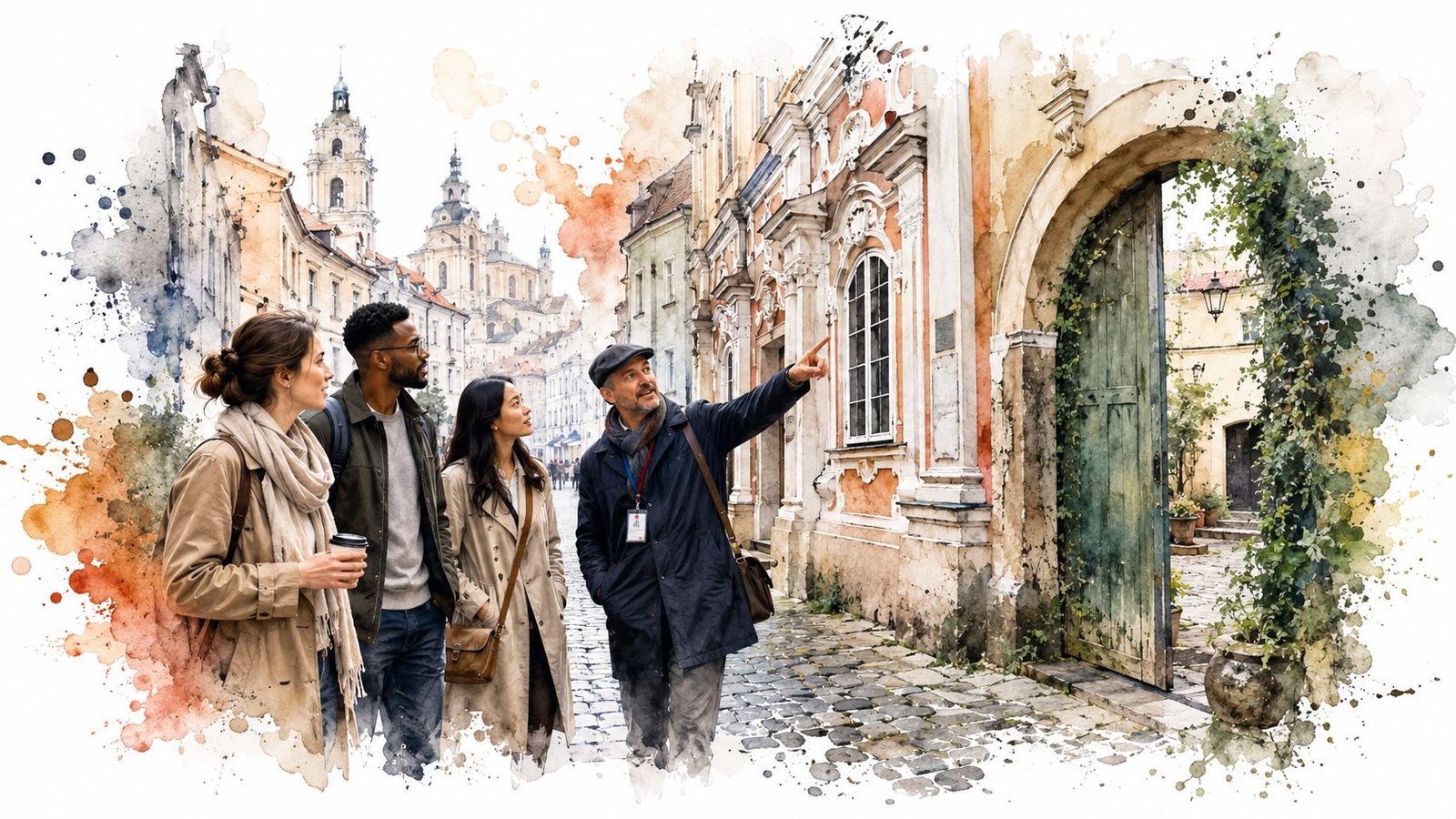
Some cities ask you to admire them from a distance. Vilnius asks you to walk. Its Old Town is one of the largest surviving medieval centres in Northern Europe and holds a place on the UNESCO World Heritage List, with pastel façades, cobbled lanes, and church spires shaping nearly every turn, as described by Along Dusty Roads on Lithuania.
A private walk with a local historian changes the experience completely. Instead of hearing a sequence of dates, you begin to understand how Lithuanian, Polish, Jewish, and Soviet-era stories overlap in the same few streets. One doorway becomes a former merchant's house. One courtyard becomes a place where generations worked, prayed, argued, and survived.
Why this walk feels different
The best guides don't rush. They pause under arches, point out worn stone details you'd never notice alone, and often introduce the human side of the city through family stories, neighborhood memory, and local shopkeepers who still shape Old Town life.
For corporate groups, this works surprisingly well as an opening experience. People relax while walking, and conversations come more naturally than they do around a formal table. For leisure travelers, it sets a foundation for everything else you'll see later, from memorials to museums to artisan studios.
Practical rule: Ask for a customized focus before you arrive. Jewish heritage, Renaissance architecture, baroque churches, and Soviet history each create a different walk.
A few details matter. Wear supportive shoes because medieval paving can be rough after a few hours. If your dates are flexible, La Sirena Vacations' guide to the best time to visit the Baltic States is a helpful starting point for choosing seasons that suit walking, culture, and smaller crowds.
2. Jewish Heritage Journey Memorials Stories and Remembrance
A meaningful Jewish heritage experience in Vilnius isn't about moving quickly from one site to another. It's about allowing the city's silences to speak, then placing those silences back into the context of community, scholarship, family life, and loss.
This is one of the most important things to do in Vilnius, Lithuania if you want to understand the city. A thoughtful private guide can shape the day around memorials, surviving religious spaces, museum visits, and the former Jewish quarter, but the primary value lies in interpretation. The stones matter. The names matter. The absences matter too.
How to approach it with care
The most powerful journeys create room for reflection rather than trying to be exhaustive. Some travelers choose to pair the historical route with a meal inspired by Lithuanian-Jewish traditions. That can be a respectful way to remember that this story is not only one of destruction, but also one of culture, ritual, language, food, music, and intellectual life.
For corporate or educational groups, this kind of day often shifts the tone of the whole trip. People tend to listen more carefully afterward. They ask better questions. They connect the city's past with broader themes of resilience, identity, and responsibility.
A few planning choices help:
- Share context early: Send your group the itinerary in advance so people arrive emotionally prepared.
- Protect quiet moments: Leave unscheduled time at memorials. Reflection can't be forced on a clock.
- Choose the right guide: Ask for someone with deep professional or personal connection to Jewish Vilnius.
Some experiences are meant to be remembered not because they were comfortable, but because they made the city feel more human.
3. Contemporary Art and Street Culture Deep Dive
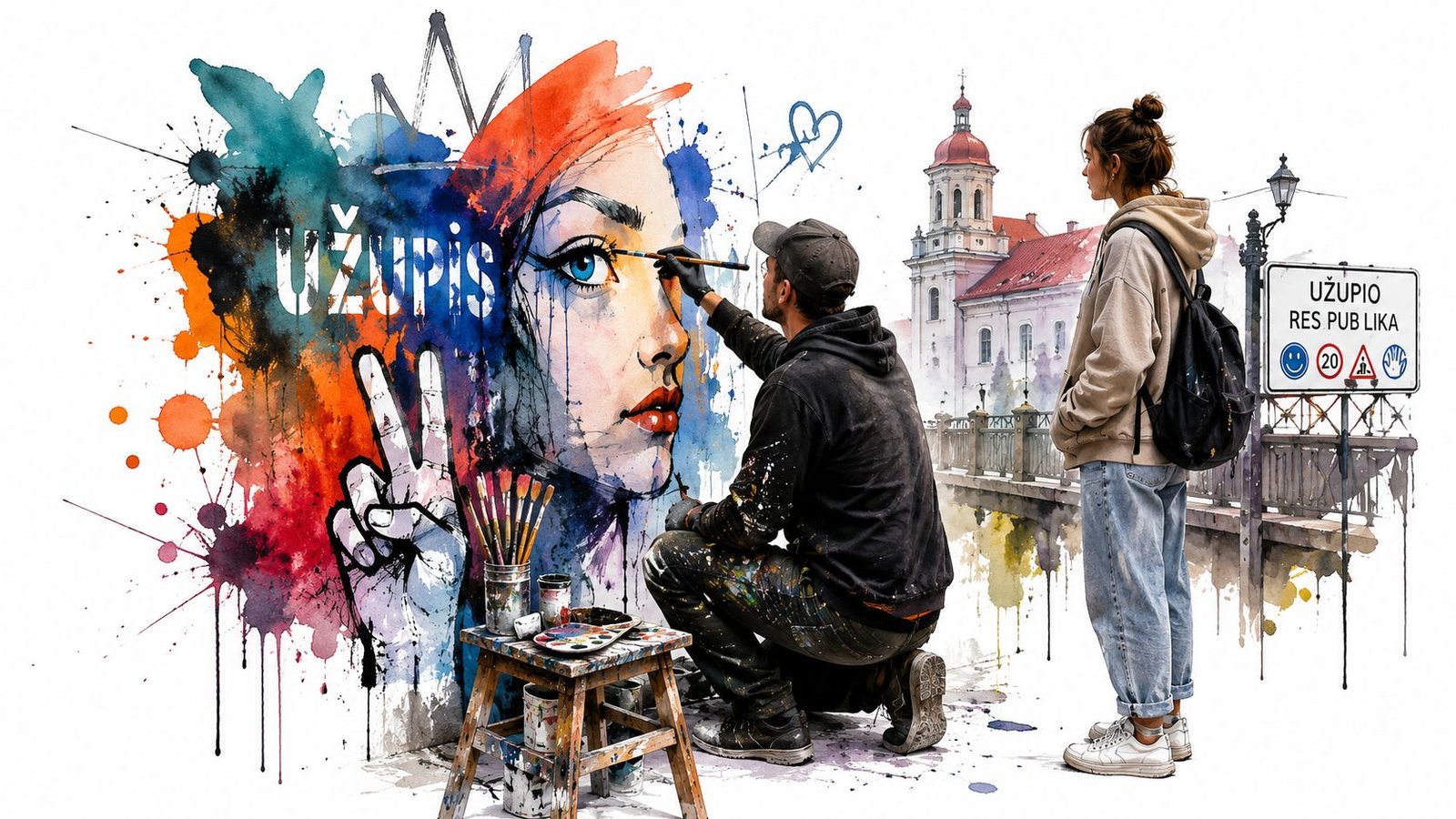
One of the most memorable Vilnius afternoons I've planned for a private group began with a quiet walk across the river into Užupis. A sculptor met us near the square, pointed to a weathered wall covered in layers of posters and paint, and explained how artists here learned to leave room for change. By the time we stepped into his studio courtyard, the neighborhood had stopped feeling quirky and started feeling personal.
That shift is a defining pleasure of Vilnius' contemporary art scene. The city reveals itself in fragments. A stencil on a side street. A gallery tucked behind a heavy wooden door. A ceramics workshop where the conversation turns from glaze and texture to independence, memory, rent, survival, and what it means to make art in a capital that is still rewriting its identity.
Užupis is often the natural starting point because its playful self-invention gives visitors an easy way in. Yet the most rewarding art days do not stay at the level of surface charm. A well-planned private experience can pair street works and public installations with artist meetings, curator-led visits, or access to smaller creative spaces that are easy to miss without local relationships.
For discerning travelers and corporate groups, this kind of day works best with a clear point of view. I usually shape it around the people behind the work. One route might focus on post-Soviet visual language and how younger artists respond to inherited symbols. Another might center on printmaking, photography, or design studios for teams who want conversation as much as sightseeing. The city gives you both.
The details stay with you. Fresh paint on a shutter. A designer explaining why a mural was welcomed on one block and resisted on the next. Coffee served at a shared table while a founder of an artist-run space describes the practical side of keeping culture alive. Those moments make Vilnius feel less like a destination and more like a living workshop.
Leave space in the schedule.
Some of the best discoveries happen between appointments, when your guide notices an open courtyard, an informal exhibition, or a small shop selling prints by a local illustrator. In Vilnius, street culture is not only something to photograph. It is something to listen to, ask about, and experience with people who know how the city's creative life works.
4. Lithuanian Culinary Traditions Farm-to-Table Cooking and Dining
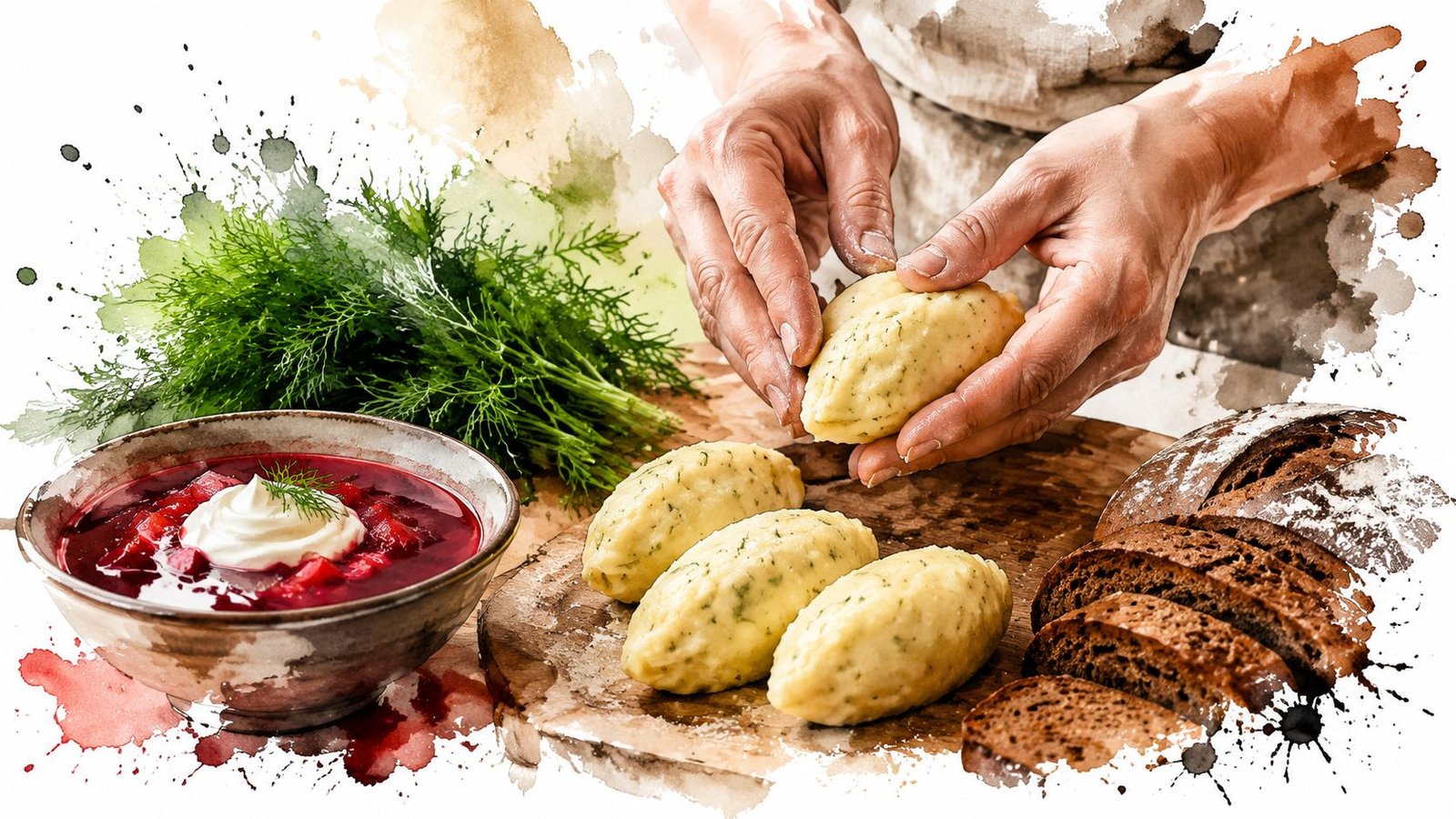
Lithuanian food tells you very quickly what kind of land shaped it. Potatoes, rye, mushrooms, dairy, berries, beets, and preserved ingredients all carry the rhythm of seasons and the memory of making something generous from what the climate gives. In Vilnius, food becomes more meaningful when it's shared with people who understand those traditions from the inside.
A curated culinary day can begin in the city with market browsing or a private tasting, then continue to a family farm, a countryside kitchen, or a heritage producer. The point isn't only to eat well. It's to understand hospitality as a cultural language. When a host shows you how to shape cepelinai or serve borscht with local bread, you're being invited into a lived tradition rather than a restaurant performance.
What stays with you after the meal
Cooking experiences are excellent for mixed groups because they bring everyone into the same rhythm. Someone chops herbs. Someone rolls dough. Someone asks about pickling, rye, or mushroom foraging. By the time the meal is served, people are already connected.
For luxury travelers, this can be enhanced with private transfers, sommelier-style drink pairings, or dining in restored estate settings. For corporate groups, it often becomes the most relaxed and memorable shared experience of the trip.
A few details make it smoother:
- State dietary needs early: Hosts are often accommodating, but advance notice matters.
- Dress for the setting: Farm kitchens, gardens, and outdoor tastings call for practical clothes.
- Write things down: Family recipes tend to come with stories worth keeping.
Food in Vilnius works best when it isn't rushed. Give the meal enough time to become a conversation.
5. Soviet Legacy and Modernist Architecture Tour
One client told me she finally understood Vilnius while standing in front of an austere government building on a gray afternoon. We had spent the morning in Baroque courtyards and candlelit churches. Then the city shifted. The lines became harder, the spaces wider, the mood more controlled. What had felt romantic a few hours earlier suddenly gained weight.
That change in atmosphere is the point of a well-curated Soviet legacy and modernist architecture tour. It shows Vilnius as a city that carries beauty and pressure in the same streets. For travelers who want more than a polished surface, this is often the experience that makes the city feel fully human.
The strongest versions of this tour are private and carefully paced. A knowledgeable guide can shape the route around architecture, political history, family memory, photography, or post-Soviet transition, depending on your interests. For corporate groups, it can become a thoughtful study in power, public space, and institutional identity. For design-minded travelers, it offers a close look at how ideology was expressed in concrete, scale, and planning.
Buildings do a lot of the talking here. Apartment blocks show how everyday life was organized. Civic structures reveal how authority wanted to be seen. Transport nodes and administrative buildings help explain how movement, routine, and control worked together. The story is never only about style. It is about the lives built inside those systems.
A museum stop often changes the emotional register of the day.
The Museum of Occupations and Freedom Fights, in the former KGB building, gives historical context that architecture alone cannot carry. Rooms, cells, and testimonies bring the human cost into focus. After that, even a plain facade can feel different. You stop seeing only form and start reading fear, endurance, compromise, and resistance.
That balance matters, especially on a subject like this. Some sites are visually striking. Their history is painful. The best guides handle both with care, giving enough context to deepen understanding without turning lived suffering into a backdrop.
This experience tends to stay with photographers, historians, and travelers who have already seen the postcard version of Vilnius and want the city's harder truths as well. It also works surprisingly well for executive groups. Shared reflection in these spaces often leads to better conversation than a standard sightseeing circuit.
Ask for a guide who can connect architecture with personal memory. A building becomes far more meaningful once you hear how people queued, worked, waited, or kept going inside it.
6. Vilnius University and Academic Culture Experience
In many cities, a university visit feels optional. In Vilnius, it feels central. The campus is threaded through the Old Town, so scholarship isn't hidden away from daily life. It lives among courtyards, chapels, passageways, and streets you're already walking.
That alone makes it one of the more rewarding answers to what to do in Vilnius, Lithuania. The intellectual history of the city isn't abstract. You can feel it in the scale of the spaces and the way study, faith, language, and public life have long intersected here.
Why scholars and business groups both love it
A private academic visit can include courtyards, library spaces, and conversations with faculty or students, depending on what's possible to arrange. For educational travelers, that's an obvious draw. For corporate groups, it creates a different kind of inspiration. The setting encourages curiosity, and discussion tends to become more reflective than transactional.
The best visits are customized. A research-driven business group might want discussion around innovation, regional change, or education. A family traveling with older students might prefer a cultural and architectural route with more emphasis on campus life. A literary or history-focused traveler may care most about the library atmosphere and the university's place in Lithuanian identity.
If you're planning far ahead, ask for options during the academic year. The campus feels fuller when students are moving through it, and the sense of continuity between past and present becomes easier to grasp.
7. Traditional Craftsmanship and Heritage Workshops
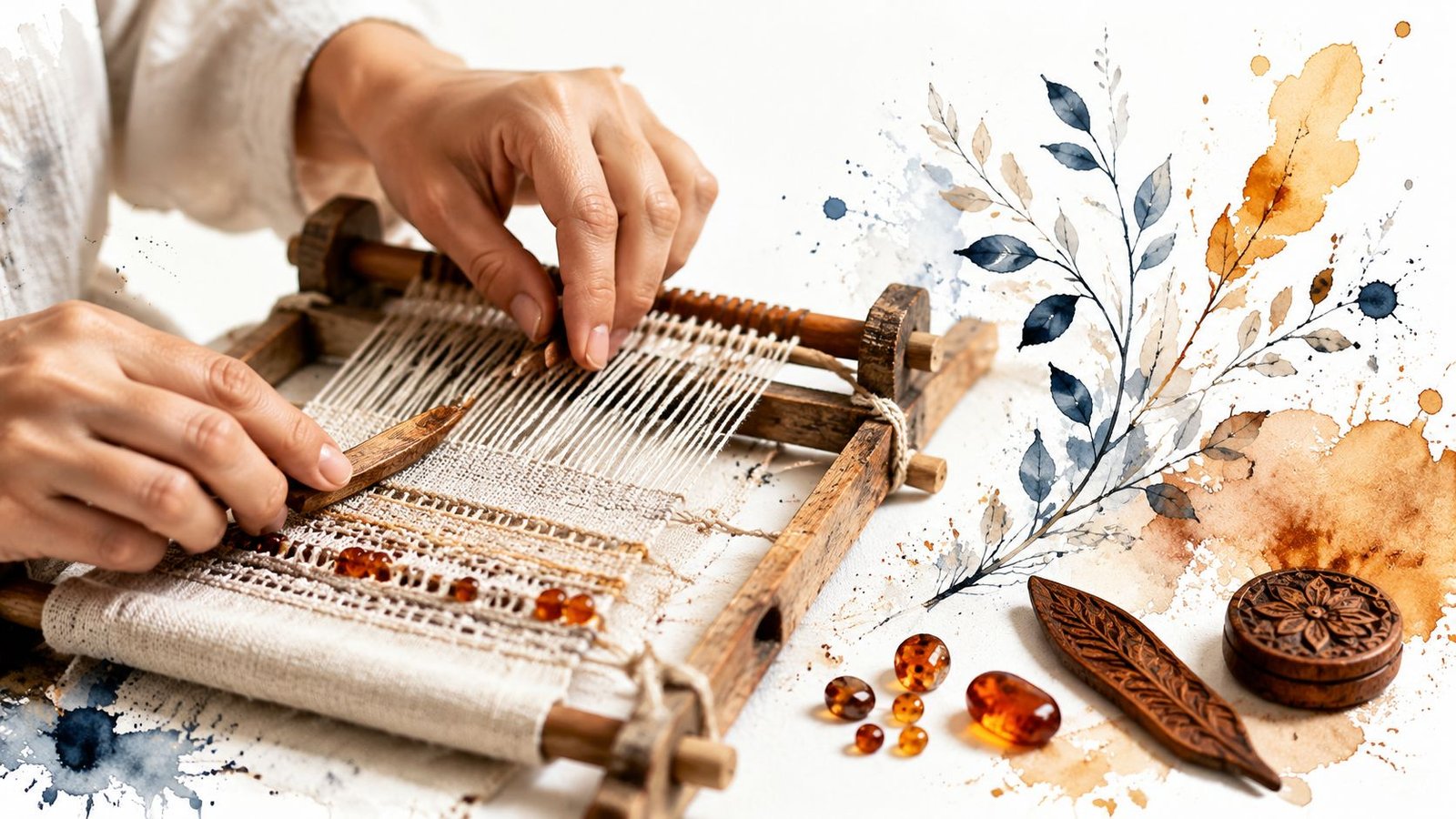
Vilnius rewards slow, tactile experiences. A craft workshop is one of the best examples. You stop looking at culture through glass and start working with it in your hands.
Private workshops can center on weaving, ceramics, amber, linen, woodcarving, or other regional traditions, often in family studios or working artisan spaces. That intimacy is the point. You're not attending a generic demonstration. You're learning from someone who has spent years preserving skill, symbolism, and process.
Hands learn differently than eyes
Craft sessions work beautifully for families, friend groups, and teams because they lower barriers. People talk differently when they're shaping clay or learning a pattern on a loom. Even quiet travelers tend to open up once they're making something.
There's also a practical gap in most existing Vilnius content. Much of the published advice centers on budget sightseeing and public attractions, while leaving out the concierge-style, bookable private experiences that many luxury travelers and corporate planners need, as discussed in Big World Small Pockets' article on Vilnius. In this context, a boutique planner becomes valuable.
For travelers who want help arranging the right artist, pace, and setting, La Sirena Vacations' travel planning services are designed around those high-touch details.
A few workshop habits help:
- Give it time: A rushed session feels performative. A longer session feels like learning.
- Ask about symbols: Traditional motifs often carry meanings tied to nature, family, or protection.
- Buy directly if you can: Taking home the artisan's own work supports living craft traditions.
8. Music Dance and Performing Arts From Folk to Contemporary
Some cities are best understood through architecture. Vilnius also asks to be heard. Music and performance reveal a side of Lithuania that many travelers miss if they only visit museums and viewpoints.
A strong evening might begin with a small folk performance in an intimate venue, continue with a conversation about instruments or regional songs, and end with a contemporary concert, experimental theater piece, or dance performance. The contrast matters. Lithuania's cultural life isn't frozen in folklore. It carries tradition forward while making new work from it.
Choose intimacy over spectacle
Private or semi-private performances often feel more memorable than large staged shows built for broad tourism. In a small room, you notice detail. You hear the texture of voices, the rhythm of dancers' steps, the way performers explain what a song means before they begin.
This is a wonderful fit for corporate retreats because it creates shared joy without forcing people into scripted interaction. It's also ideal for luxury leisure travelers who want atmosphere and authenticity in the same evening.
If you can, blend old and new. A folk ensemble gives you roots. A contemporary performance gives you the city as it is now. Together, they create a fuller portrait than either one alone.
The right performance doesn't just entertain you. It gives you a different vocabulary for the city.
9. Spiritual Journeys Pilgrimage Sites Sacred Spaces and Contemplative Experiences
One of my favorite Vilnius itineraries began with almost no talking. A private driver dropped a small executive group near the Gates of Dawn just after the morning light reached the chapel windows. No one rushed for photos. They stood, watched local worshippers pause beneath the icon, and let the city introduce itself through ritual rather than commentary. By the time we continued into the Old Town, Vilnius felt less like a checklist and more like a place people still inhabit with reverence.
That shift matters.
For travelers who want more than beautiful facades, Vilnius offers a richly layered spiritual map. Catholic churches, Orthodox sanctuaries, monastery courtyards, roadside symbols of devotion, and places of national remembrance all shape the emotional life of the city. A well-planned day can include private guiding, time for reflection between visits, and space to adapt the pace to the group. That boutique approach works especially well for discerning travelers and corporate retreats that want substance, privacy, and room to absorb what they are seeing.
The Hill of Three Crosses often becomes the turning point of the day. Reached at the right hour, it feels less like a viewpoint stop and more like an act of arrival. You climb through the trees, the city slowly opens below, and the white crosses come into view with all the weight they carry in Lithuanian memory. Guests often arrive expecting a panorama and leave talking about resilience, loss, and identity.
Sacred spaces reward patience. A rushed visit can flatten them into architecture. A slower one reveals candle smoke, whispered prayer, worn thresholds, and the habits of local life that have continued through occupation, independence, and change.
This kind of itinerary suits religious pilgrims, certainly, but it also resonates with travelers who want stillness and context. I often recommend it to leadership groups after busy conference days because silence can reset a room better than another polished dinner. For couples and private families, it creates a different kind of memory, one built around attention rather than activity.
Respect shapes the experience. Modest dress, quiet voices, and an understanding that some chapels remain active places of worship will take you much further than expertise ever could. The goal is not to master doctrine. The goal is to enter with care.
If you are building a slower, more intentional itinerary, this Europe vacation planning guide for thoughtful, custom travel offers a helpful starting point for matching pace and purpose to the people on the trip.
10. Nature Sustainability and Regional Food Systems Eco-Cultural Tourism
One of my favorite custom Vilnius days begins before the city is fully awake. A small group leaves the Old Town after breakfast, and within an hour the streets give way to pine forest, kitchen gardens, and farmyards where lunch is still growing in the ground. By the time guests sit down to eat, they have already met the people curing herbs, tending hives, baking rye, or explaining why certain berries, mushrooms, and grains still matter in Lithuanian regional cooking.
That shift in perspective changes the trip. Vilnius remains the anchor, but the surrounding land explains the rhythms behind the table. A private eco-cultural outing can be shaped around a regenerative farm visit, a wetlands walk with a local naturalist, a tasting with regional producers, or a long lunch built around ingredients from a single area. For discerning travelers and corporate groups, the value is not just fresh air. It is access, context, and conversation that would be hard to arrange without careful local planning.
The strongest version of this experience feels personal.
A family with teenagers might spend the day learning how seasonal food is gathered and preserved, then share a hands-on meal that turns curiosity into memory. A leadership team might leave the conference schedule behind for a few hours and meet growers and makers whose work puts sustainability into practical terms. Food professionals often respond to the detail. Soil, seasonality, seed varieties, smoke, fermentation, and regional sourcing become part of a living story rather than a restaurant talking point.
Data from Q1 2026 shows that Lithuania's accommodation sector saw 935,000 guests, nearly 20% more than the prior quarter, according to Infoerdvė's tourism report. Read as a current travel signal, not a timeless measure, it suggests broader interest in experiencing the country beyond its headline landmarks.
That wider curiosity makes sense here. Lithuania rewards travelers who slow down enough to notice how tightly land use, food traditions, and local identity still fit together.
Keep the itinerary light. Wear shoes that can handle damp paths, fields, or uneven forest ground. Leave space for the unscheduled parts of the day, the extra conversation in a smokehouse, the stop at a roadside stand, the quiet stretch beside water before lunch. Those are often the moments guests remember most clearly after they return home.
10 Vilnius Experiences: Side-by-Side Comparison
| Experience | Implementation Complexity 🔄 | Resource Requirements ⚡ | Expected Outcomes ⭐📊 | Ideal Use Cases | Key Advantages 💡 |
|---|---|---|---|---|---|
| Old Town Exploration with Local Historians | 🔄 Moderate, small-group logistics and private-access coordination | ⚡ Low–Moderate, expert guide, light transport, advance booking | ⭐ High cultural depth; strong personal narratives and contextualization | Cultural immersion, small groups, heritage-focused travelers | 💡 Personalized storytelling; private museum/studio access; flexible pacing |
| Jewish Heritage Journey: Memorials, Stories, and Remembrance | 🔄 Moderate, sensitive framing and curated site access | ⚡ Moderate, specialist guides, museum permissions, possible descendant meetings | ⭐ Profound emotional and educational impact; reflective outcomes | Diaspora visitors, educators, groups seeking meaningful cultural education | 💡 Deep historical context; curated memorial access; compassionate interpretation |
| Contemporary Art & Street Culture Deep Dive | 🔄 Moderate–High, studio scheduling and artist coordination | ⚡ Moderate, artist fees, workshop materials, flexible timing | ⭐ High creative inspiration; direct support for emerging artists | Creative teams, younger travelers, art professionals | 💡 Unfiltered studio access; opportunities for collaboration and original purchases |
| Lithuanian Culinary Traditions: Farm-to-Table Cooking & Dining | 🔄 Moderate, farm coordination and season-dependent planning | ⚡ High, farm access, kitchens, ingredient sourcing, dining logistics | ⭐ High sensory engagement; practical skills and strong team bonding | Food lovers, corporate team-building, slow-travel enthusiasts | 💡 Hands-on cooking with heritage producers; farm-to-table authenticity; recipes to keep |
| Soviet Legacy & Modernist Architecture Tour | 🔄 Moderate, site permissions and balanced historical framing | ⚡ Low–Moderate, knowledgeable guide, transport; photography options | ⭐ Nuanced historical understanding; strong visual/photographic outcomes | Architecture students, photographers, history enthusiasts | 💡 Balanced interpretation of complex past; compelling modernist design insights |
| Vilnius University & Academic Culture Experience | 🔄 High, university coordination, academic calendar constraints | ⚡ Moderate, institutional partnerships and advance planning | ⭐ Intellectual stimulation; networking and research exposure | Academic groups, corporate innovation teams, students | 💡 Exclusive access to collections, faculty meetings, inspiring campus settings |
| Traditional Craftsmanship & Heritage Workshops | 🔄 Moderate, artisan availability and materials preparation | ⚡ Low–Moderate, tools, materials, small-group facilitation | ⭐ Tangible takeaways; skill acquisition and cultural connection | Families, craft enthusiasts, creative professionals | 💡 Hands-on learning; supports local artisans; authentic, personal souvenirs |
| Music, Dance & Performing Arts: From Folk to Contemporary | 🔄 Moderate, artist scheduling and venue coordination | ⚡ Moderate, performance fees, venue arrangements, seasonal scheduling | ⭐ High emotional uplift; memorable cultural evenings | Performing arts fans, groups seeking cultural evening entertainment | 💡 Direct artist interaction; range from folk to avant-garde for breadth |
| Spiritual Journeys: Pilgrimage Sites, Sacred Spaces & Contemplative Experiences | 🔄 Moderate, sensitivity, site protocols, permission coordination | ⚡ Low–Moderate, transport, guide with spiritual connections | ⭐ Deep reflective and restorative outcomes; meaningful pause for groups | Spiritual seekers, wellness retreats, interfaith groups | 💡 Authentic rituals and pilgrimage sites; respectful contemplative programming |
| Nature, Sustainability & Regional Food Systems: Eco-Cultural Tourism | 🔄 Moderate, rural logistics and seasonal planning | ⚡ Moderate–High, transport, specialist hosts, outdoor gear | ⭐ Educational on sustainability; practical insights for food systems | Sustainability teams, eco-conscious travelers, families | 💡 Regenerative agriculture exposure; farm-to-table integration; environmental education |
Crafting Your Perfect Vilnius Journey
On one recent planning call, a client told me she wanted her team to feel the city rather than just pass through it. They began their first morning in a quiet Old Town courtyard with a historian who knew which doorway still carried traces of the Grand Duchy, paused for lunch with a chef serving seasonal Lithuanian dishes, and ended the day at a small performance where the applause felt close enough to share. By dinner, Vilnius no longer felt like a checklist. It felt personal.
That is the city's gift. Vilnius holds memory, creativity, scholarship, ritual, and everyday life close together, so a well-planned day can move from medieval streets to an artist's studio to a candlelit concert without feeling crowded. For discerning travelers and corporate groups, that closeness makes private, personalized experiences especially rewarding. The right host, the right pace, and the right sequence can turn a pleasant visit into something much more lasting.
Suggested Itineraries
- Half-Day Immersion: Start with a privately guided Old Town walk shaped around your interests, whether that means architecture, courtly history, or hidden courtyards, then continue into Užupis with an artist or cultural insider. The contrast feels lively and human, not staged.
- One-Day Cultural Journey: Begin with a Jewish heritage experience led with care and historical depth, then spend the afternoon in a workshop with a ceramicist, textile artist, or folk craft master. One half of the day asks for remembrance. The other invites your own hands into the story of the place.
- Three-Day Personal Escape: Devote the first day to Vilnius itself, with Old Town and a modernist or Soviet-era architectural route. Reserve the second for food, ideally with a market visit, a countryside table, or a cooking session hosted by local producers. Use the third for reflection and atmosphere: sacred spaces, a slower outing beyond the center, or Trakai paired with an evening performance back in the city.
Some travelers want momentum. Others want room to linger. Vilnius responds well to both, especially when the itinerary is built around who is traveling and why.
Practical Notes for Planning Well
- Best time to visit: Late spring through early autumn suits walking, private outdoor meals, and countryside excursions beautifully. Winter can be wonderful too, especially for travelers drawn to candlelit interiors, festive markets, and a quieter mood.
- Getting around: Old Town rewards slow walking. For farther neighborhoods and curated visits outside the center, a private driver or carefully timed transfers make the day feel easier and more relaxed.
- Currency: Lithuania uses the Euro (€). Cards are widely accepted, though small market purchases and artisan stalls can still make cash useful.
- Where to linger: Give your viewpoints time. The Higher Castle area is less about the photo than the slow realization of how green, compact, and layered Vilnius feels from above. The TV Tower offers a different perspective, one that places the historic center within the wider shape of the city.
- What to prioritize: Choose fewer experiences and let them breathe. A thoughtful conversation with a guide, a long lunch, or an unhurried hour in a memorial space often becomes the part people remember most clearly.
Your Custom Journey Begins Here
I have seen travelers leave Vilnius talking about very different moments. One couple remembered the hush of a university courtyard in late afternoon. A family kept returning to the story a craftswoman told while teaching them an old technique. An executive group, surprisingly, spoke most warmly about the dinner table conversation after a day that had been planned with care rather than packed too tightly.
That is why custom planning matters here. A heritage-focused visit should not feel like a design-centered incentive trip, and neither should resemble a family celebration built around food, music, and gentle pacing. Vilnius is easy to enjoy on the surface. It becomes richer when the journey is shaped around your interests, your energy, and the kind of connection you hope to make.
La Sirena Vacations approaches the city with that boutique sensibility. The team arranges private guides, thoughtful hosts, carefully paced days, and cultural experiences that feel grounded rather than generic. For travelers who value depth, comfort, and meaningful access, that difference stays with them long after the trip ends.
If you're ready to turn these ideas into a personalized Vilnius itinerary, La Sirena Vacations can help craft a journey built around your group, your pace, and the cultural experiences that matter most to you.