
You're probably here because a trip has grown larger in your mind than a booking form can handle.
It starts innocently enough. A few open tabs for flights to Valencia. A hotel shortlist in Buenos Aires. A saved note about family roots in Lithuania. Then the practical questions arrive all at once. Which neighborhood fits the pace you want? Which guide will open doors instead of reciting a script? What happens if a connection fails, a bag disappears, or someone in your group needs accessibility support that a listing barely mentions?
That's the moment when travel stops being a transaction and becomes something more personal. The best travel agency services don't just reserve rooms and issue tickets. They shape the rhythm of a journey, protect it when things wobble, and make space for the experiences you'd never find by sorting results from lowest price to highest.
Table of Contents
- Beyond the Booking Button The Heart of Modern Travel
- Our Philosophy What Curated Travel With Soul Means
- A Look Inside Our Travel Agency Services
- Journeys Brought to Life Sample Itineraries
- Who We Craft Journeys For
- How to Choose Your Perfect Travel Partner
- Your Next Journey Begins With a Conversation
Beyond the Booking Button The Heart of Modern Travel
A couple planning an anniversary in Argentina once had all the pieces, but none of the confidence. They'd found a beautiful hotel in Buenos Aires, a glacier excursion in Patagonia, and a restaurant list copied from social media. What they didn't have was flow. The city stay felt disconnected from the natural settings. Transfers looked fine until one short layover threatened to turn the whole journey brittle. One missed step and the trip would become a sequence of logistics instead of a celebration.
That's where modern travel agency services matter. Not at the moment of dreaming, but at the moment when dreams need structure.
A good advisor listens for the details that don't appear in search filters. One traveler wants long lunches and gallery afternoons. Another wants private tango instruction, but not a performative tourist show. A family may need rooms near one another, a slower pace, and clarity on accessibility before anyone departs home. These aren't extras. They're the very architecture of a meaningful trip.
Why human planning still matters
The travel world has become more digital, but it hasn't become simpler. According to Spherical Insights on the travel agency services market, the Global Travel Agency Services Market is projected to grow to USD 1,120.4 billion by 2035 at a CAGR of 8.64%, and full-service arrangements are projected to hold 60% of service offerings in 2026. That tells a clear story. Travelers still want help with journeys that are layered, emotional, and too important to leave to chance.
The more personal the trip, the less useful a generic booking path becomes.
Boutique planning answers a modern frustration. You don't need more tabs. You need someone who can translate your priorities into decisions, protect your time, and build a journey that feels like it belongs to you.
What the booking button can't do
A booking engine can confirm inventory. It can't sense tone.
It can't tell when a corporate retreat in Valencia needs a private setting for serious conversation in the morning and a warm, unfussy meal in the evening. It can't tell when a heritage trip through the Baltic States should leave room for an unplanned stop in a village churchyard, or when a Patagonia itinerary needs breathing space so the scenery doesn't feel rushed.
That's the quiet heart of this work. Travel agency services at their best aren't about adding complexity. They remove it, then replace it with intention.
Our Philosophy What Curated Travel With Soul Means
Curated travel with soul begins with a simple belief. A trip shouldn't feel assembled. It should feel understood.
That's why the work resembles a chef in a market more than a chain kitchen. The chef doesn't start with a fixed menu and force every guest into it. The chef tastes, adjusts, sources carefully, and builds a meal around season, place, and appetite. Thoughtful travel works the same way. The journey grows from the traveler outward.

A trip can be efficient and still feel empty
Plenty of people can book quickly. Fewer build experiences with emotional shape.
An algorithm may suggest the most popular route, the most photographed restaurant, the most frequently booked room category. A human curator notices different things. The traveler who hates changing hotels every night. The parent who wants cultural depth without exhausting children. The executive team that needs polish, privacy, and enough ease to connect once they arrive.
That distinction helps explain why high-touch planning remains durable. Mize's review of market share and traditional agency growth notes that OTAs capture 55% of the global booking market, while the traditional agency model is projected to grow from $143.9 billion in 2022 to $212.9 billion by 2032. The split makes sense. Straightforward bookings often go one way. Meaningful, complex, or high-stakes journeys often go another.
What curated travel looks like in practice
Curated doesn't mean ornate. It means deliberate.
- It matches the traveler, not the template. Some people want vineyard tastings and slow mornings. Others want history, mountain air, and fewer hotel changes.
- It values access over volume. One private guide who knows a neighborhood well can matter more than a packed schedule.
- It leaves room for feeling. A journey needs pauses, not just confirmations.
Practical rule: If every traveler could swap names on the same itinerary and it would still work, the journey probably hasn't been curated deeply enough.
A journey with soul also respects the unseen labor behind ease. Supplier coordination. Ticketing accuracy. Timing. Contingency planning. The calm confidence that comes from knowing someone thought beyond the glossy parts.
For travelers who care about authenticity, hidden corners, and experiences that feel rooted rather than staged, that human layer changes everything.
A Look Inside Our Travel Agency Services
The phrase travel agency services can sound broad until you see what it includes. Behind every well-executed trip sits a surprising amount of design, verification, timing, and problem-solving.
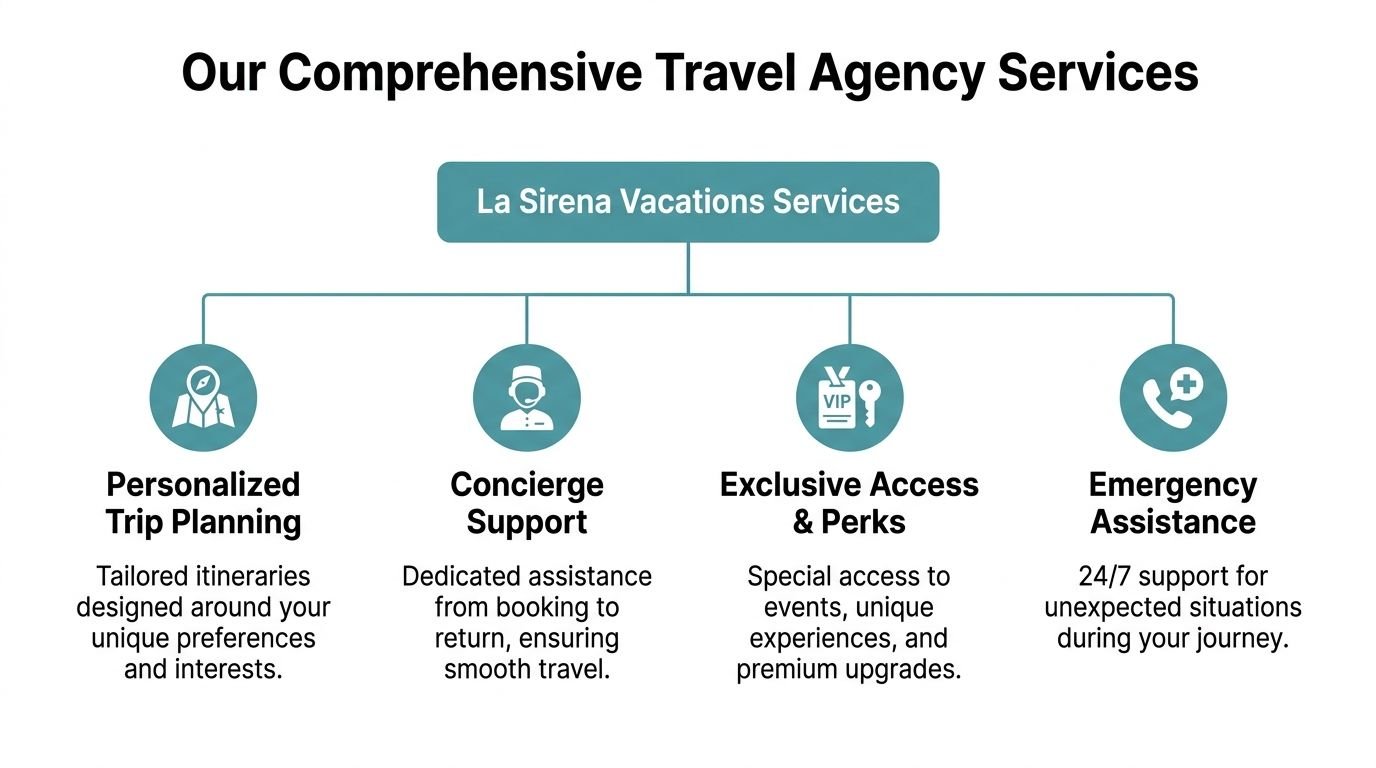
Personalized trip planning
Now, the work becomes intimate. Not sentimental, but precise.
A planner starts by learning how you travel. Fast or slow. Social or private. Food-first, history-first, or nature-first. For Europe trips especially, the difference between a rushed route and a graceful one often comes down to sequencing, transit realism, and matching each stop to the energy you want from the day. If you're sketching out ideas, this guide to planning a vacation to Europe is a useful place to frame the right questions before dates and hotels lock in.
Accessibility belongs here too. It should never be treated as an afterthought. Some travelers need step-free transport, room layouts that work in practice, or support that goes beyond a generic “accessible” label. Good planning checks the details before departure, not after arrival.
Corporate and group travel management
Groups amplify every small weakness in an itinerary. One vague transfer note becomes ten confused people in an arrivals hall. One poorly chosen restaurant can flatten the mood of an entire evening.
Corporate and group travel management solves for flow, accountability, and shared experience. It means building programs that move cleanly, respect budgets, and still feel thoughtful. In Valencia, that might mean balancing meetings with a private culinary experience. In Argentina, it could mean pairing business logistics with a memorable cultural evening. The point isn't extravagance. It's cohesion.
Guided tours and exclusive experiences
This is the part travelers remember years later.
Not because it's flashy, but because it feels personal. A private tasting in a vineyard where the conversation matters as much as the wine. A city walk shaped around architecture, memory, or cuisine instead of a generic script. A local host who knows when to talk, when to pause, and when to step aside so a place can speak for itself.
A well-chosen guide doesn't just explain a destination. They change your relationship to it.
That's where boutique agencies can create depth. They connect the traveler to people, not just places.
Concierge support when plans change
The true test of service often begins after departure.
Flights shift. Weather disrupts. Luggage wanders. Illness appears at the worst possible hour. Human support matters most when the traveler is tired, abroad, and under pressure. According to research highlighted by Sustainable Brands, 71% of underserved travelers say it's vital that staff are well-trained on diversity and inclusion issues. That matters in ordinary service, and it matters even more during disruption.
A dedicated advisor can step in as a live advocate. They can contact suppliers, push rebooking forward, clarify options, and help the traveler feel less alone in a stressful moment. That support is especially important for disabled travelers, multigenerational groups, and corporate travelers working under policy and timing constraints.
Here's the practical difference:
| Service moment | Automated path | Human-led path |
|---|---|---|
| Flight disruption | Queue, self-service prompts, limited context | An advisor reviews alternatives and speaks with suppliers |
| Accessibility concern | Generic listing details | A planner verifies needs in context before and during travel |
| Group coordination | Fragmented confirmations | One point of contact keeps the journey aligned |
For agencies handling complex itineraries, the service isn't just booking. It's stewardship.
Journeys Brought to Life Sample Itineraries
The easiest way to understand boutique travel agency services is to step inside a few journeys and feel how the pieces come together.
Valencia through taste and texture
A small leadership team arrives in Spain with a familiar problem. They don't want a sterile corporate program. They want something polished, local, and memorable without losing control of timing.
So the itinerary begins gently. A private transfer. A hotel chosen for calm rather than trendiness. The first evening is kept open enough for people to exhale, then anchored by a dinner that introduces the region through its ingredients, not through a rehearsed spectacle. The next day balances work sessions with a hands-on culinary experience that gets everyone out from behind their roles. Later, a vineyard visit shifts the group dynamic from transactional to relaxed.
The value isn't just the settings. It's the pacing. No one has to wonder where to go next, whether the table is ready, or how the return timing works. The structure is invisible, which is exactly why the experience feels easy.
Argentina for romance and wild scale
An anniversary trip asks for contrast. City energy. Quiet moments. A little elegance. A little awe.
Buenos Aires can hold all of that if it's handled carefully. A couple begins with a stay that gives them access to long walks, late dinners, and the pleasure of moving through neighborhoods at their own pace. One evening brings a private tango lesson, not for performance, but for connection. Another afternoon is left intentionally light so they can wander, stop for coffee, and let the city arrive gradually.
Then the journey pivots south. Patagonia changes the emotional register completely. The air sharpens. The horizon opens. Logistics matter more here, because remoteness leaves less room for sloppy planning. Transfers need to make sense. Excursions need to suit energy and ability. The reward is enormous. A milestone trip suddenly feels vast enough to honor the occasion.
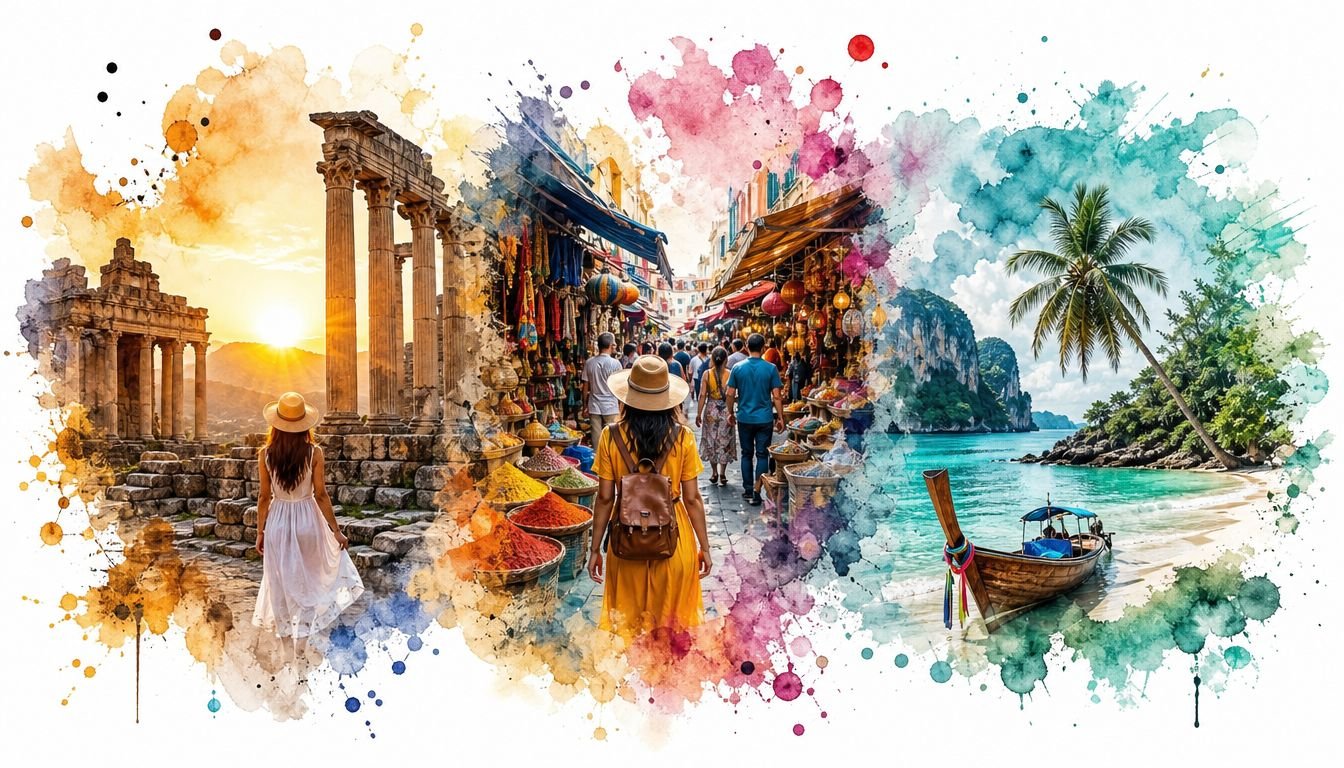
Later in the journey, a visual glimpse often helps travelers picture that shift from city intimacy to natural surroundings.
The Baltic States for memory and belonging
Some journeys aren't built around leisure first. They're built around meaning.
A family heading to the Baltic States might begin with questions that no standard package can answer. Which town records are still accessible? Which guide can help interpret local context rather than just recite dates? How do you move between places without turning a very personal trip into a tiring march?
Language becomes part of the answer. As noted on La Sirena Vacations' team information page, the agency employs staff fluent in Lithuanian, English, and Spanish, which supports smooth communication and more grounded local coordination in the Baltic region. That matters when a journey includes family history, nuanced conversations, and experiences where trust grows through clarity.
A heritage itinerary here might include a private walk through Vilnius, time in a smaller town tied to family memory, and a nature stop that gives the trip room to breathe. A guide can help bridge cultural context. A planner can keep the route humane. The family gets something richer than a checklist. They get a journey that acknowledges why they came.
Some of the most meaningful travel isn't about seeing more. It's about recognizing something that already belonged to you.
Who We Craft Journeys For
Not everyone needs the same kind of care. That's why the best travel agency services aren't defined by a fixed package, but by the traveler standing in front of them.
The corporate planner
This traveler is balancing responsibility on several fronts at once. Budget, timing, internal expectations, traveler comfort, and the quiet pressure of making the whole thing look effortless.
What helps most is reliability. Clear itineraries. Smart pacing. Suppliers who fit the tone of the event. Someone who understands that a corporate dinner shouldn't feel generic, and that one weak transfer can color the memory of an otherwise excellent program.
The luxury leisure traveler
Luxury, in practice, usually means privacy, discernment, and time protected from friction.
This traveler often doesn't want more things on the itinerary. They want the right things. The room with a sense of place. The guide who can read the room. The access point that opens a destination without making it feel staged. They're often happiest when the details disappear and the day unfolds with quiet confidence.
The cultural explorer
This is the traveler who wants substance. They care about texture, context, food traditions, hidden corners, and the stories beneath the postcard layer.
They usually respond best to itineraries that leave room for discovery. A market visit instead of another generic stop. A neighborhood conversation instead of a broad overview. A route shaped around meaning, not just highlights.
The group with mixed needs
Families, friends, and multigenerational groups are often the most rewarding to plan and the hardest to satisfy with a standard template.
- One person wants pace. Another needs rest.
- One traveler wants food and wine. Another wants history.
- Someone may need accessibility support. That changes transport, lodging, and daily rhythm.
The craft lies in building a trip where nobody feels like an afterthought.
How to Choose Your Perfect Travel Partner
Choosing a travel advisor isn't just about style. It's about trust under real conditions.
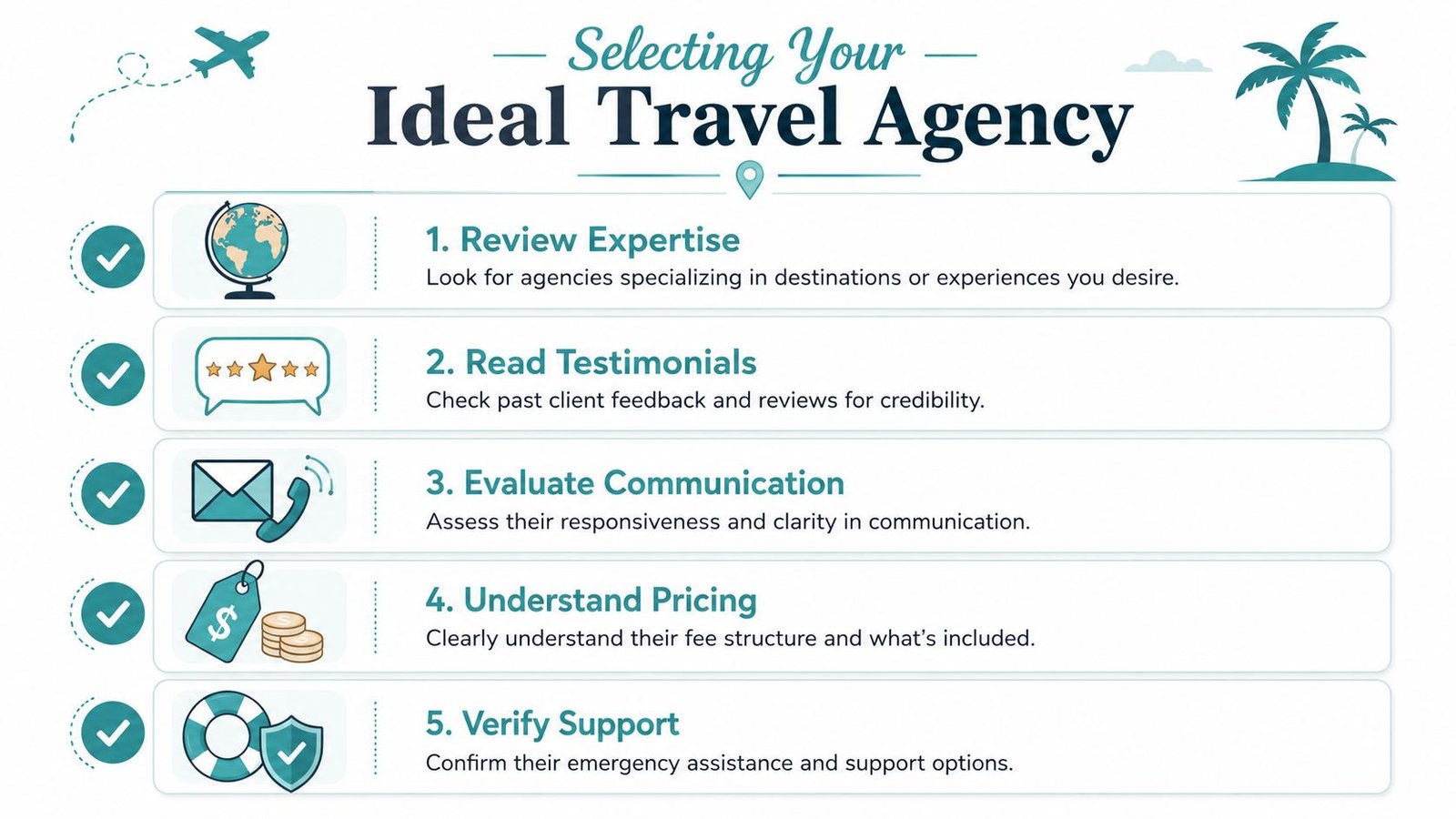
The right partner should make your trip feel lighter before you depart. They should also make you feel protected if something changes once you're away. A polished website alone won't tell you that. Better questions will.
Questions worth asking early
Try this short checklist when you're comparing agencies. If you want a deeper look at the value of professional planning, this explanation of why people use a travel agent is a helpful companion.
- Destination fit: Do they specialize in the places and travel style you want?
- Planning depth: Do they ask about pace, priorities, accessibility, and traveler preferences, or only about dates and budget?
- Support model: Who helps you if a flight is canceled or a supplier issue appears mid-trip?
- Clarity: Are fees, inclusions, and responsibilities explained plainly?
- Communication: Do they respond with care and specifics, or with recycled sales language?
Ask this directly: “If something goes wrong while I'm traveling, what happens in the first hour?”
Credentials matter
Professional accreditation isn't a decorative badge. It's one of the clearest signals that an agency operates within a serious framework.
According to La Sirena Vacations' registration details in the Valencian Community, La Sirena Vacations is registered in the Valencian Community, Spain under CV-AVC002748-V and meets IATA standards, which supports compliance with consumer protection obligations, financial solvency requirements, and the technical capacity needed for complex international ticketing and logistics.
You don't have to choose one specific agency to use that standard well. But you should look for the same level of legitimacy wherever you book.
Signs you've found a strong fit
A good agency usually reveals itself in small moments before money changes hands.
| What to notice | What it often means |
|---|---|
| They ask nuanced questions | They're building around you, not around inventory |
| They discuss support clearly | They understand service after booking matters |
| They know the destination in texture, not slogans | They can curate, not just reserve |
The best choice often feels less like buying and more like starting a capable collaboration.
Your Next Journey Begins With a Conversation
Travel becomes memorable when it feels personal on the front end and supported on the back end. That's the essential promise behind thoughtful travel agency services. Not more noise, not more options, but a better-shaped experience.
The most valuable part often isn't visible in the confirmation email. It's the judgment behind the itinerary, the restraint that keeps a trip from becoming overloaded, and the human presence available when something doesn't go to plan. Continuous, 24/7 concierge-style support throughout the journey gives travelers a practical safety net and a calmer state of mind, which is part of the service's value in itself.
Frequently Asked Questions
| Question | Answer |
|---|---|
| What's the difference between a travel agent and a tour operator? | A travel agent typically plans, coordinates, and books travel on your behalf, often combining multiple suppliers into one itinerary. A tour operator usually creates and runs specific travel products or tours. |
| Are travel agency services only for luxury travelers? | No. They're especially helpful for complex, meaningful, group, or multi-stop trips where coordination and support matter. |
| When should I start planning? | Earlier is usually better for trips with multiple destinations, private experiences, or group logistics. It gives more room to shape the journey well. |
| Can an agency help with accessibility needs? | Yes, and a good one should address those needs early, verify details carefully, and support the traveler throughout the trip. |
| What happens if something goes wrong during travel? | A high-touch agency can assist with changes, supplier communication, and practical next steps instead of leaving you to navigate disruption alone. |
If your trip matters to you, start with a real conversation instead of a booking form. The right questions at the beginning often shape everything that follows. If you're ready to talk through an idea, a milestone journey, or a complex group plan, you can contact the team at La Sirena Vacations.
Travel should feel like it has been composed, not assembled. If you want help shaping a journey through Spain, Argentina, or the Baltic States with thoughtful planning and personal support, start with La Sirena Vacations.