
You may be in that familiar place right now. You took the “premium” trip, stayed in a polished hotel, checked off the headline sights, and came home with good photos but a flat feeling. The schedule was efficient. The service was fine. Yet almost nothing felt personal, and very little felt connected to the place itself.
That disappointment is often what sends people searching for luxury travel packages in the first place. Not because they want more glitter, but because they want more meaning. They want the meal that happens in someone's family kitchen, the guide who changes the route because the light is perfect in a quiet neighborhood, the afternoon that isn't optimized for volume but for memory.
A well-designed journey should leave you with more than receipts, reservations, and a camera roll. It should change your sense of a place. It should slow you down enough to notice what most visitors miss.
Table of Contents
- An Introduction to Meaningful Travel
- What Luxury Travel Packages Truly Mean Today
- Decoding the Types of Curated Journeys
- Crafting Your Own Personalized Travel Story
- Sample Itineraries Journeys with Heart and Soul
- Booking a Bespoke Trip How to Partner with an Agency
An Introduction to Meaningful Travel
A rushed luxury trip often follows a predictable pattern. Airport lounge, beautiful room, private transfer, tightly packed days, one or two expensive dinners, then home. Everything looks grand on paper. Very little feels intimate once you're inside it.
That gap matters because travelers aren't just buying comfort anymore. They're looking for journeys that feel designed around who they are, how they move through the world, and what kind of memories they want to carry home. That shift helps explain why the global luxury travel market reached USD 1.6 trillion in 2025 and is projected to reach USD 3.0 trillion by 2033, outpacing the broader travel market.
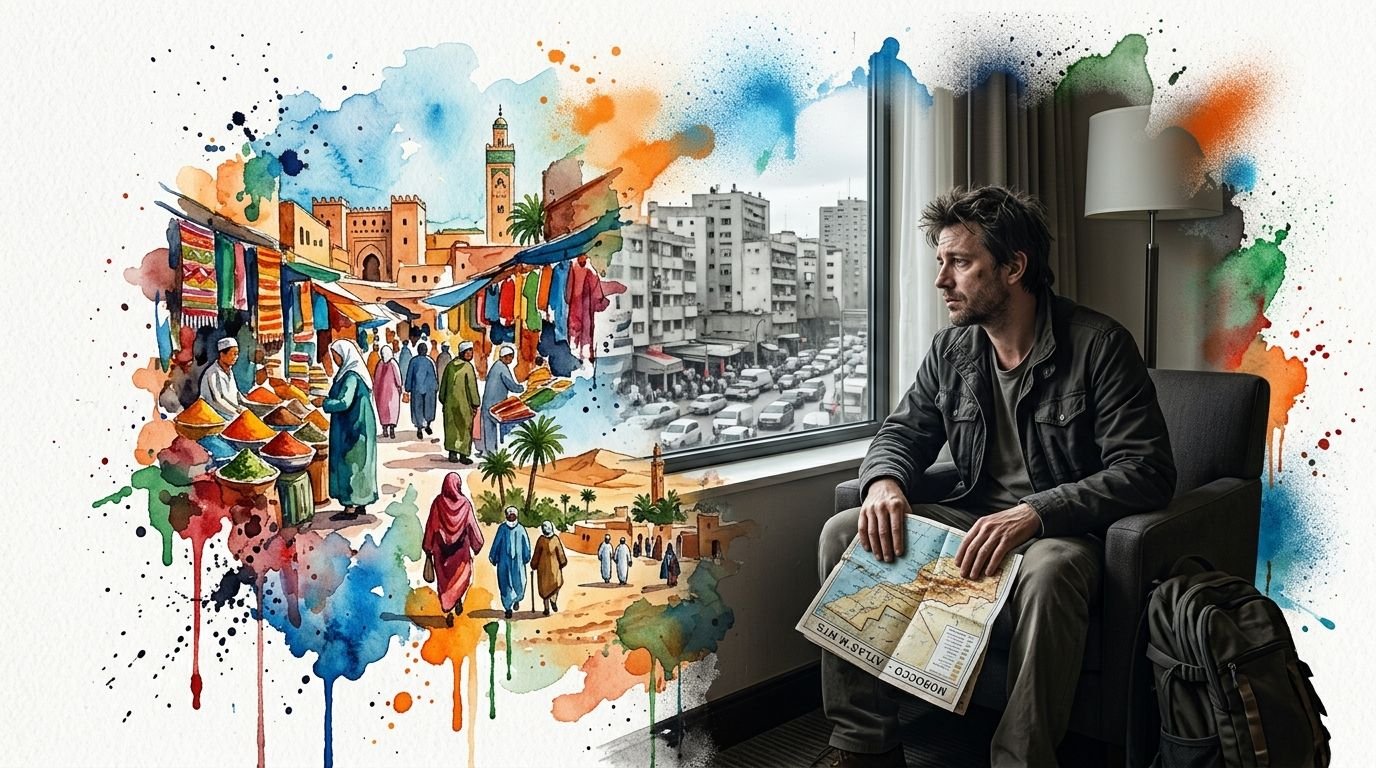
What people call luxury now often has less to do with marble lobbies and more to do with emotional fit. It's the difference between being managed through a destination and being welcomed into it. One trip gives you upgrades. The other gives you belonging.
A meaningful journey doesn't just remove friction. It creates connection.
The strongest luxury travel packages are built with intention from the first conversation. They account for pace, curiosity, privacy, energy, food preferences, tolerance for movement, and the kind of access that turns a destination from a backdrop into a lived experience.
A couple may want quiet countryside meals and architecture. A family may need soft adventure, room to breathe, and guides who can read the mood of the day. A company team may need polished logistics but also a sense of place strong enough to make the gathering memorable rather than merely efficient.
That's the core idea behind meaningful travel. The trip isn't “better” because it costs more. It's better because it reflects the traveler more faithfully. When that happens, the journey has heart. It stops feeling like a packaged product and starts feeling like a story you stepped into at exactly the right moment.
What Luxury Travel Packages Truly Mean Today
Luxury used to be easy to describe. Bigger suite. Better seat. More staff. Harder-to-get reservation. Those things still matter, but they no longer define the category on their own.
Today, the center of gravity has shifted. The modern traveler wants the trip to feel personal in structure, not just premium in finish. That's why Technavio's luxury travel market analysis describes a shift from material opulence toward experiential enrichment and hyper-personalization, especially among travelers aged 26 to 40.
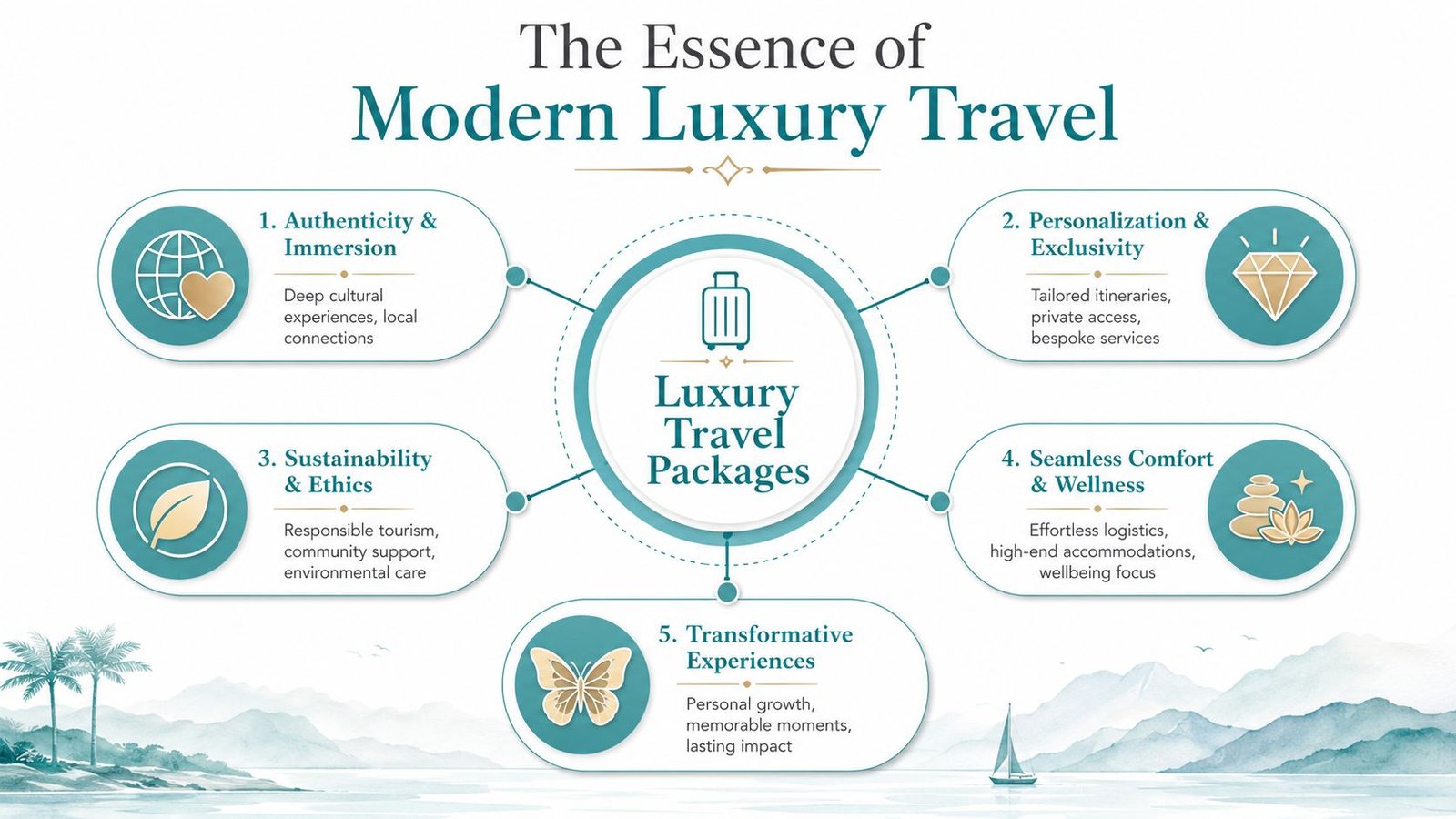
From display to depth
A modern luxury itinerary should answer questions that old-style travel rarely asked.
- What kind of contact do you want with local life? Some travelers want a private museum opening. Others want a neighborhood food walk with a historian.
- How do you want the trip to feel in your body? Some people want spa time and long lunches. Others want early starts, active days, and evenings kept free.
- What should be effortless, and what should remain spontaneous? The best planning doesn't over-control every hour.
The idea of hyper-personalization becomes useful. It isn't a buzzword when applied properly. It means the trip reflects your actual habits and values, not a generalized profile of “luxury traveler.”
For travelers exploring curated luxury destinations and travel styles, this distinction changes everything. A well-crafted itinerary doesn't just add private elements to a standard route. It reshapes the route itself.
How to tell bespoke from upgraded
Many luxury travel packages are upgraded versions of mass-market products. They can be comfortable, polished, and pleasant. They are not always bespoke.
A simple test helps.
| Signal | Upgraded Tour | Bespoke Journey |
|---|---|---|
| Itinerary structure | Fixed route with nicer inclusions | Route built around traveler priorities |
| Pace | Standardized | Adjusted to energy and interests |
| Experiences | Pre-selected highlights | Chosen for relevance and fit |
| Local access | Public-facing | Private, specialist, or relationship-based |
| Flexibility | Limited | High, within a strong planning framework |
Practical rule: If the only thing that changes is the hotel category, it isn't a deeply personalized trip.
True luxury has soul because it makes room for texture. The market visit that leads to lunch. The private studio visit that turns into a conversation. The extra night in one place because hurrying would weaken the experience. Those choices don't always show up as flashy line items, but they are often what travelers remember most.
Decoding the Types of Curated Journeys
Not all luxury travel packages are built to do the same job. Some are designed for immersion. Some are designed for group cohesion. Some exist to create space for reflection, learning, or renewal. The mistake many travelers make is choosing a format before clarifying what the trip needs to accomplish.
Cost structure helps explain this. AltexSoft notes that airfare and lodging make up 64% of package cost, while tours and unique experiences drive over 33% of segment revenue. In practice, that means the value often sits in the design of the experience, not just in the room category.
Private guided travel
This is the strongest fit for travelers who want depth, flexibility, and close attention. It works well for couples, families, friends, and small parties with specific interests.
The key advantage isn't privacy alone. It's adaptability. A strong private guide can read energy, shift timing, change sequence, and add context in a way that no static schedule can.
Private guided travel works best when you want:
- Cultural depth: History, architecture, food traditions, local craft, and conversations with people who know the place intimately.
- A shaped rhythm: Late starts, long lunches, fewer hotel changes, or full days built around one obsession such as wine or design.
- Selective access: Experiences that feel harder to replicate on your own.
Corporate and group journeys
Corporate and group travel has a different burden. It needs to be smooth enough to protect time, polished enough to reflect well on the organizer, and distinctive enough that attendees don't feel they've been moved through another generic event.
This format works well for leadership off-sites, client entertainment, incentive trips, and groups with mixed travel confidence. The planner's real challenge is balance. Too much structure and the trip feels rigid. Too little and the group loses momentum.
The strongest group journeys usually include:
- Shared signature moments: A private meal, a guided cultural encounter, a venue with local character.
- Built-in breathing room: People need time to process, mingle, or step away.
- Invisible logistics: Transportation, dietary coordination, timing, and support handled.
Bespoke retreats
Retreats sit in a different category. They are usually built around a theme rather than a destination alone. Wellness, creativity, cuisine, nature, leadership, or restoration can all anchor the journey.
What makes a retreat luxurious isn't always indulgence. Often it's coherence. Every part of the trip supports the central intention. Meals, environment, daily rhythm, and activities all pull in the same direction.
Some retreat travelers want silence and simplicity. Others want stimulation and expert-led learning. The design principle is the same. Everything unnecessary gets removed so the purpose of the trip can come into focus.
Comparing Luxury Travel Package Types
| Package Type | Ideal For | Primary Focus | Example Experience |
|---|---|---|---|
| Private Guided Tour | Couples, families, close friends | Flexibility and cultural immersion | A day with a local historian, followed by a private culinary experience |
| Corporate and Group Journey | Companies, associations, hosted groups | Cohesion, seamless logistics, memorable shared moments | A leadership gathering paired with curated regional food and culture |
| Bespoke Retreat | Wellness seekers, creatives, special-interest groups | Transformation, reflection, thematic depth | A multi-day itinerary centered on nature, craft, and restorative pacing |
The right format makes the trip feel effortless because it matches the traveler's purpose. The wrong format can still be expensive and well organized, yet never feel quite right.
Crafting Your Own Personalized Travel Story
Many travelers start in the wrong place. They begin with a destination list, a hotel wish list, or a social-media version of what the trip should look like. That usually leads to an itinerary that's visually impressive but emotionally generic.
A better starting point is more personal. Ask what you want to feel when you return home. Rested. Reconnected. Sharper. Inspired. More rooted in a culture you barely knew before. Those answers shape better journeys than a checklist ever will.
Start with the feeling, not the map
Before choosing cities or properties, define the emotional arc of the trip.
Consider these prompts:
- What feeling do you want to bring home? Calm, wonder, momentum, closeness, or renewed curiosity all create different itineraries.
- What are you tired of in travel? Early departures, rushed one-night stays, formal dining every evening, or over-programmed sightseeing.
- What do you want more of? Time outdoors, serious food, private access, hands-on craft, or unstructured afternoons.
“The best itineraries sound less like inventory and more like a portrait.”
When travelers answer those questions truthfully, the plan becomes clearer. A person who says they want stillness shouldn't be changing hotels every night. A traveler who loves conversation and food shouldn't be booked into an isolated resort with little local contact.
Build around pace, access, and appetite
Once the emotional goal is clear, shape the trip around three practical decisions.
Pace. Decide how many moving parts you can enjoy before the trip starts to feel like work. Some travelers thrive on range. Others need fewer bases and deeper stays.
Access. Be specific about what kind of exclusivity matters to you. That could mean private guiding, specialist-led visits, after-hours entry, or avoiding crowded scheduling.
Appetite. This includes more than food. It means appetite for history, walking, sensory intensity, social energy, and unpredictability.
There's also the budget conversation, which matters because customization has a real cost. Exoticca's referenced pricing notes that private guided tours and customized experiences from a boutique agency typically cost 25 to 40% more than standardized group packages, with a 10 to 14 day premium journey in Argentina or the Baltic States averaging $4,500 to $8,200 per person. That difference usually reflects expert guides, exclusive access, and concierge-level support rather than simple markups.
A useful planning framework looks like this:
- Non-negotiables: The few elements that define the trip for you.
- Nice-to-haves: Enhancements worth including if they fit naturally.
- Hard no's: Anything that makes travel feel draining or impersonal.
That's how a personalized itinerary becomes coherent. Not by adding everything, but by choosing what belongs and leaving out what doesn't.
Sample Itineraries Journeys with Heart and Soul
The appeal of luxury travel packages becomes clearer when you move beyond theory and look at how a trip can feel on the ground. What travelers want now isn't only comfort. It's character. That preference shows up in the data as well. Authentic cultural experiences and hidden gems are preferred by 68% of high-net-worth travelers, with 81% of luxury travelers in the Baltic States seeking non-touristed locations and 76% in Patagonia prioritizing wildlife encounters over standard sightseeing
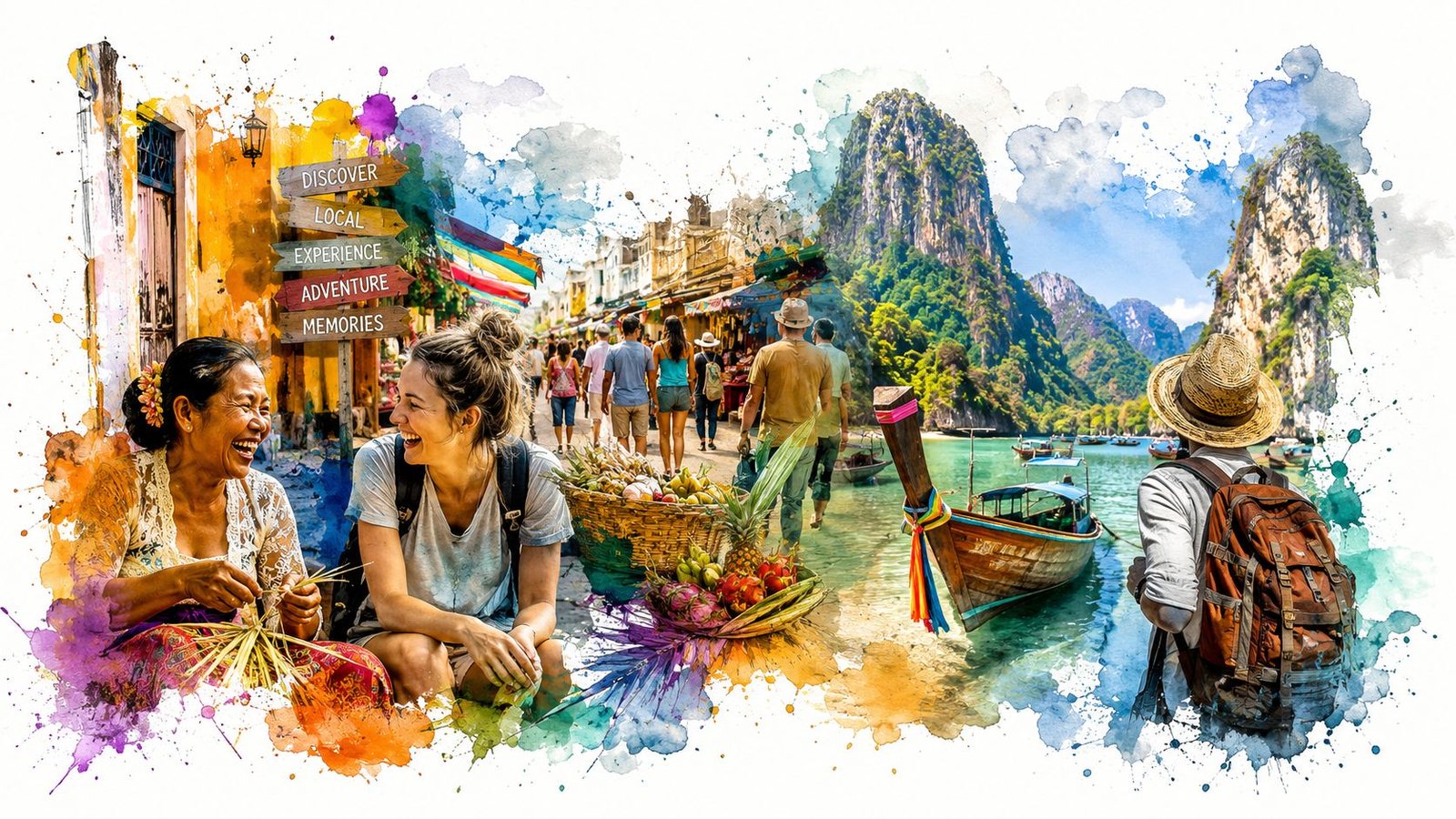
Travelers looking for European itinerary ideas with cultural depth often aren't asking for more volume. They're asking for better texture. These sample vignettes show what that can look like.
Valencia and the surrounding region
A meaningful luxury stay in Valencia doesn't need to revolve around status symbols. The region shines when the trip slows down enough to reveal its everyday beauty.
That might mean spending the morning in the city with a guide who understands how history, design, and food overlap. Then the day opens outward. You leave the polished center behind, drive into the countryside, and arrive at a farmhouse where paella isn't a performance but a tradition with rules, stories, and family memory behind it.
The luxury isn't only in privacy. It's in context. You taste ingredients where they belong. You learn why the rice matters, why the pan matters, why timing matters. By the end of the meal, you haven't just eaten well. You've understood something.
Good travel leaves you with a stronger sense of place than you had when you arrived.
For some travelers, Valencia's hidden strength is contrast. One day can hold modern architecture, market culture, coastal calm, and an intimate meal in agricultural land that most visitors never see.
Argentina beyond the obvious
Argentina rewards travelers who don't flatten it into a single mood. Buenos Aires has elegance, but it also has edge. Patagonia has grandeur, but its power often comes from silence.
A bespoke journey might begin in the capital with a private tango lesson that feels less like entertainment and more like an entry point into the city's emotional vocabulary. The next day could shift toward food, books, or architecture, depending on the traveler's interests.
Then the trip changes register. In Patagonia, the best days are rarely about racing from viewpoint to viewpoint. They're about spending time with a guide or local expert who knows how to read the land. A wildlife-focused outing, especially one shaped by local ecological knowledge, gives the region a completely different feel from standard sightseeing.
What stays with most travelers isn't the fact that they “did Patagonia.” It's the wind, the scale, the quiet, and the human knowledge that helped make sense of it.
The Baltic States in a quieter key
The Baltic States work beautifully for travelers who value understatement. Estonia, Latvia, and Lithuania can be elegant and polished without trying too hard. That makes them ideal for people who want refinement without theatricality.
A memorable Baltic itinerary often avoids overexposed routes. Instead of stacking capitals too tightly, it may create room for private artisan visits, forest environments, smaller heritage towns, and meals that reveal the region's depth slowly rather than all at once.
One of the strongest examples is a visit to an amber artisan's private workshop in Lithuania. On paper, it sounds modest. In reality, it can become one of the most intimate moments of the trip. You see process, hear family history, handle material that has shaped regional identity, and leave with a story attached to the object you bring home.
That's the pattern across the best bespoke journeys. The hidden gem isn't hidden because it's obscure for its own sake. It matters because it carries the spirit of the place more authentically than the obvious stop ever could.
Booking a Bespoke Trip How to Partner with an Agency
Booking a custom journey should feel like entering a partnership, not buying a template with upgraded finishes. The quality of that partnership often determines whether a trip feels graceful or brittle once real life enters the picture.
Support matters most when plans shift, energy changes, or something unexpected happens on the ground. That's why 24/7 real-time support is described as non-negotiable for 92% of high-end travelers, and agencies such as La Sirena Vacations, registered as CV-AVC002748-V, provide dedicated concierge access for custom itineraries. You can also review the scope of boutique travel agency services that support this kind of planning and in-trip care.
What a strong planning process looks like
A serious agency should do more than ask where you want to go. It should ask how you live, how you travel, what drains you, and what kind of access matters to you.
A good process usually includes:
- Discovery first: Real questions about pace, interests, food, comfort, privacy, and purpose.
- Thoughtful itinerary shaping: A route with internal logic, not a string of attractive bookings.
- Clear expectation setting: Honest guidance about trade-offs, travel days, seasonality, and what will feel effortless versus what will require energy.
- Live support during the journey: Someone who can step in when a reservation changes, weather interferes, or the plan needs adjusting.
Questions worth asking before you commit
Not every advisor works at the same depth. Before booking, ask questions that reveal how the trip is constructed.
- How do you choose local guides? You want to know whether they're merely available or truly excellent.
- How much flexibility is built into the itinerary? Some trips look custom but are rigid once deposited.
- What kinds of experiences are easiest for you to personalize? Food, art, nature, family travel, corporate programs, or specialist access.
- What happens if we need to change plans mid-trip? This question tells you how support works under pressure.
- How do you avoid generic luxury? The answer should be concrete and specific.
Booking insight: The best travel advisor doesn't just secure reservations. They protect the feeling of the trip.
A bespoke journey is never only about logistics. But logistics are what allow the emotional side of travel to unfold without strain. When the planning is careful, the support is real, and the fit is right, luxury travel packages stop feeling like products and start feeling like lived, memorable chapters of your life.
If you're ready for a journey that feels personal from the first conversation to the last day abroad, La Sirena Vacations offers a boutique, concierge-style approach to customized travel in Spain, Argentina, and the Baltic States. Their itineraries are built around culture, hidden gems, and meaningful experiences, with private guided tours, curated group travel, and dedicated support throughout the trip.