
On a warm evening outside Valencia, I once traded a polished hotel dining room for a family kitchen where saffron stained the cook's fingertips and the rice crackled at the bottom of the pan. That meal said more about luxury destination travel than any marble lobby ever could.
Table of Contents
- An Invitation to a Different Kind of Journey
- What Is Luxury Travel in 2026
- The Art of Planning a Bespoke Journey
- Curated Itineraries From Around the World
- Bespoke Experiences That Define a Trip
- Luxury Travel for Groups and Corporate Teams
- Why a Boutique Agency Is Your Greatest Asset
An Invitation to a Different Kind of Journey
Luxury used to be sold to us as distance. A suite high above the street. A driver behind tinted glass. A dining room so hushed you could hear cutlery before conversation. It looked impressive, but often felt strangely detached from the place you'd crossed the world to see.
I've come to believe the opposite. The most memorable journeys draw you closer.
A private cooking lesson in a Valencian home does that. So does an afternoon in an artisan studio where the maker explains why a glaze cracks a certain way, or a late dinner in Buenos Aires where the city doesn't fully wake up until the candles are already burning low. These are not flashy moments. They are intimate ones. They ask you to participate, to listen, to notice.
What people often mistake for luxury
Many travelers still equate luxury with things that can be photographed in a second.
- A famous address: A hotel name everyone recognizes.
- Perfect surfaces: Crisp linens, polished stone, a rooftop pool.
- Effortless access: Fast-track lines and smooth transfers.
Those things matter. Comfort matters. Ease matters. Privacy matters. But they are the frame, not the painting.
Luxury destination travel, at its most meaningful, gives you access to a place's inner life.
That's why the journeys that stay with people rarely sound like advertisements. They sound like stories. A fisherman explaining the weather by looking at the water. A grandmother correcting your technique while you fold pastry. A guide who knows which square is lovely at noon, and which one only reveals itself at dusk.
The journeys people remember
When travelers tell me about the trips they still carry years later, they don't begin with thread counts. They begin with encounters.
| What fades quickly | What stays |
|---|---|
| A generic five-star breakfast | A host teaching you how a local meal is really made |
| A standard sightseeing route | A private visit shaped around your curiosity |
| A crowded famous stop | A hidden neighborhood with a human story |
The heart of this philosophy is simple. A luxurious trip shouldn't just make you comfortable. It should make you feel welcomed, changed, and more awake to the world around you.
What Is Luxury Travel in 2026
A new definition of luxury
The shape of luxury destination travel has shifted. Younger affluent travelers, especially Millennials and Gen Z, are helping drive that shift by choosing experiences over material possessions, and leisure travel holds the largest market share in 2026 because of growing demand for experiential, cultural, and wellness-oriented vacations, according to the CBI luxury tourism market overview.
That change feels obvious once you've seen it in real life. People don't just want a beautiful room. They want a reason to remember where they were. They want mornings with texture and purpose. They want to return home with stories that belong only to them.
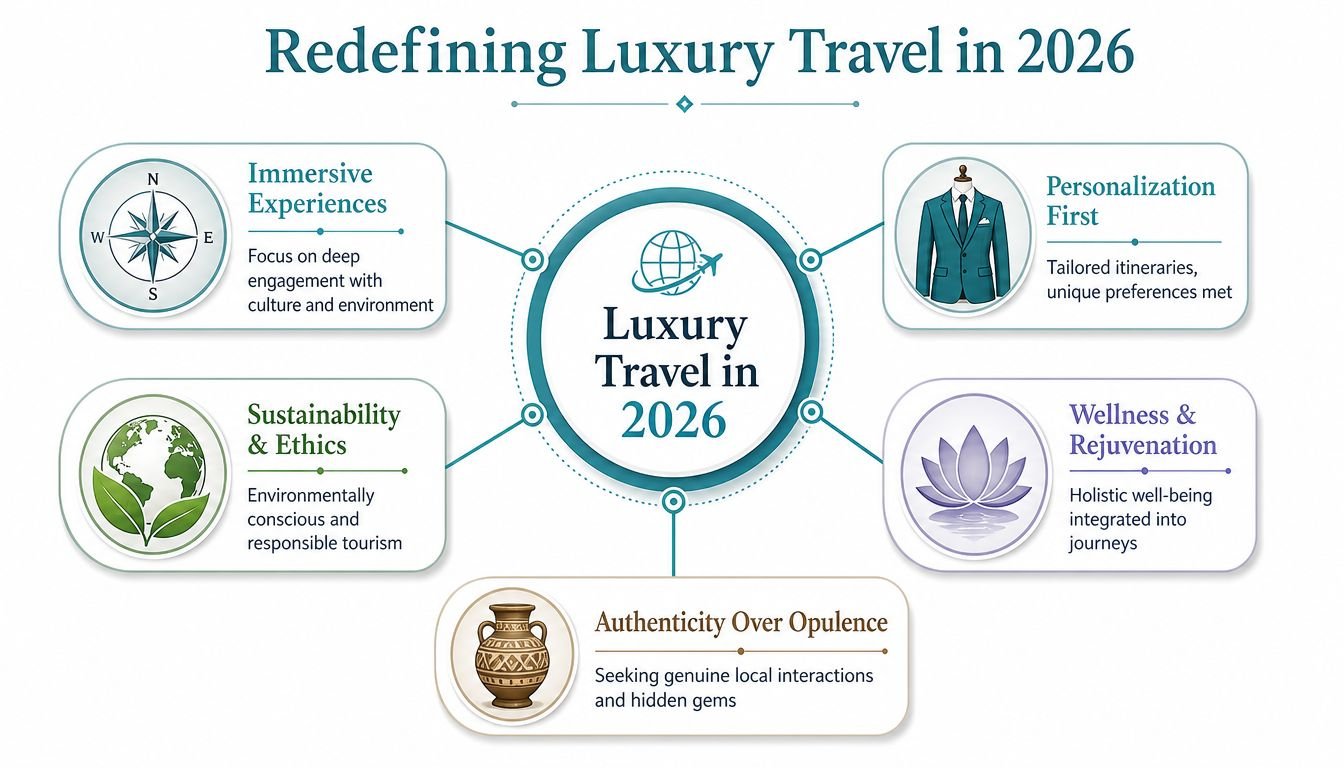
A modern luxury traveler might ask different questions than travelers did a decade ago. Not “Which property has the biggest suite?” but “Where can I learn something?” Not “What will look impressive?” but “What will feel alive?”
Why purpose matters more than prestige
A trip becomes richer when it begins with intent. Some travelers want cultural immersion. Others want restoration, family connection, food, architecture, craft, or a new skill. Place still matters, of course, but purpose gives a journey its spine.
Plan with purpose, not just place.
That idea matters because destination-first planning often creates shallow itineraries. Travelers end up ticking off landmarks without ever understanding why the trip mattered to them in the first place. Purpose-driven planning changes the sequence. You start with the emotional goal, then choose the setting that can support it.
What this looks like in practice
Here's how that shift changes the way a trip is designed:
- For the curious traveler: A city becomes a workshop. The focus is on historians, chefs, winemakers, artists, and local hosts.
- For the tired traveler: Luxury includes space, pace, and restoration. The itinerary breathes.
- For families or private groups: Shared experiences matter more than shared accommodation. A private table, a guide who can adapt, a day shaped around all ages.
Another important truth sits beneath all of this. Online booking platforms are built to sort inventory. They're not built to understand why a traveler wants to go. That's the dividing line between a trip that is expensive and one that is personal.
The Art of Planning a Bespoke Journey
The first conversation
A bespoke trip usually begins in a surprisingly simple way. Not with rates or room types, but with questions. What are you drawn to lately? What kind of days restore you? Do you want movement or stillness, depth or variety, structure or spontaneity?
That first conversation matters because people often ask for one thing when they want another. Someone says they want “Spain in style,” but what they mean is they want long lunches, ceramic workshops, market visits, and a place where they can hear themselves think. Someone asks for “Argentina,” but what they really want is music, wine, broad natural expanses, and evenings with character.
How a custom itinerary takes shape
After that, the planning becomes a creative collaboration rather than a search exercise. Good curators don't dump options into your lap and ask you to choose from a spreadsheet. They shape possibilities around mood, timing, and personality.
A thoughtful process often includes:
Clarifying the purpose
Is this a celebration, a reward trip, a family gathering, a leadership retreat, or a long-postponed personal dream?Building the rhythm
Every itinerary needs contrast. A lively city followed by countryside. A guided morning followed by unplanned hours. A memorable dinner after an easy day.Choosing meaningful access
The right guide, host, or local expert changes everything. Access isn't always about exclusivity. Often it's about context.
Practical rule: If every day of an itinerary could belong to anyone, it probably hasn't been tailored enough.
Support that travels with you
The best planning doesn't stop when the tickets are issued. It stays present throughout the journey. Boutique agencies like La Sirena Vacations offer 24/7 concierge-style support throughout the traveler's journey, with personalized help from the initial trip idea until return home and no pre-packaged “cookie-cutter” itineraries, as described on the La Sirena Vacations website.
That kind of support matters most in the moments travelers rarely see coming. A delayed arrival. A change in energy. A dinner that needs to move later because a museum visit ran long and became the emotional center of the day. When someone is available to adjust details in real time, the whole trip feels calmer.
Why this process feels different
DIY planning often creates one kind of fatigue before the trip even begins. Too many tabs. Too many conflicting reviews. Too many choices that all sound vaguely alike.
A bespoke process removes that noise.
- Less guessing: You're not left wondering whether a place fits your style.
- More coherence: The trip feels like a story, not a list.
- Greater peace of mind: Someone is watching the details while you stay present for the experience.
That's the hidden elegance of luxury destination travel. The trip starts long before departure, and good planning already feels like being looked after.
Curated Itineraries From Around the World
Luxury destination travel comes alive when it stops speaking in categories and starts speaking in scenes.

Valencia and the rhythm of Spanish life
Valencia rewards travelers who slow down enough to notice texture. The city has brightness, ceremony, and a kind of easy grace that never feels staged. One day might begin in a market with citrus piled high and end beside the rice fields, where a private paella lesson turns lunch into an act of heritage rather than performance.
What I love most here is the balance. You can spend the morning with architecture and the afternoon with a family recipe. You can walk through elegant streets, then slip into a quieter neighborhood where conversation matters more than polish.
For travelers who want a more personalized route through the region, a custom Europe trip itinerary can bring structure to the experience without flattening its spontaneity.
Argentina and evenings that linger
Argentina often enters the imagination in broad strokes. Tango. Malbec. Patagonia. But its real charm is in atmosphere. It's in how an evening unfolds, how a meal lengthens, how music can turn a courtyard into a world of its own.
A well-curated itinerary might pair urban intimacy with vast natural expanses. In Buenos Aires, a private tango lesson can feel less like entertainment and more like entry into a language of posture, pause, and trust. In wine country, the luxury isn't only the tasting. It's the conversation with the people who know the soil, the weather, and the memory of each vintage.
The country holds contrast beautifully. One moment asks for velvet, candlelight, and live music. The next asks for clean air, distance, and silence.
A moving image often captures that contrast better than description alone.
The Baltic States and quiet surprise
The Baltic States, comprising Estonia, Latvia, and Lithuania, are three former Soviet Union countries now members of the European Union, positioned on the brackish waters of the Baltic Sea where Scandinavian and European cultural spheres intersect, as outlined in Exoticca's overview of the Baltic States.
This region often surprises travelers because its appeal is subtle rather than loud. The luxury here is atmospheric. A forest path under tall pines. A chef-led dinner after a day outdoors. A medieval old town that feels composed rather than crowded. A design hotel that understands restraint.
The Baltics are also rewarding for travelers who want “off the beaten path” journeys shaped around purpose rather than prestige. That approach matters because many conventional luxury guides still focus too narrowly on famous names while leaving little room for the traveler's actual intent, a gap explored in the essay on planning luxury travel around purpose, not place.
Three destinations, three emotional tones
Each of these places offers a different kind of richness:
- Valencia: Warmth, culinary heritage, Mediterranean light.
- Argentina: Emotional intensity, artistry, dramatic scale.
- The Baltics: Stillness, layered history, understated beauty.
That's what good curation does. It doesn't force every traveler into the same template of luxury. It matches destination to longing.
Bespoke Experiences That Define a Trip
Small moments with lasting weight
Destinations matter, but the moments inside them are what turn a trip into memory. A traveler might forget the exact thread count of the sheets. They won't forget the local ceramist who opened the studio early, or the musician who explained a song before playing it, or the guide who knew when to step back and let a place speak for itself.
That's why bespoke experiences carry so much weight. They create intimacy. They sharpen attention. They make a place feel less consumed and more encountered.
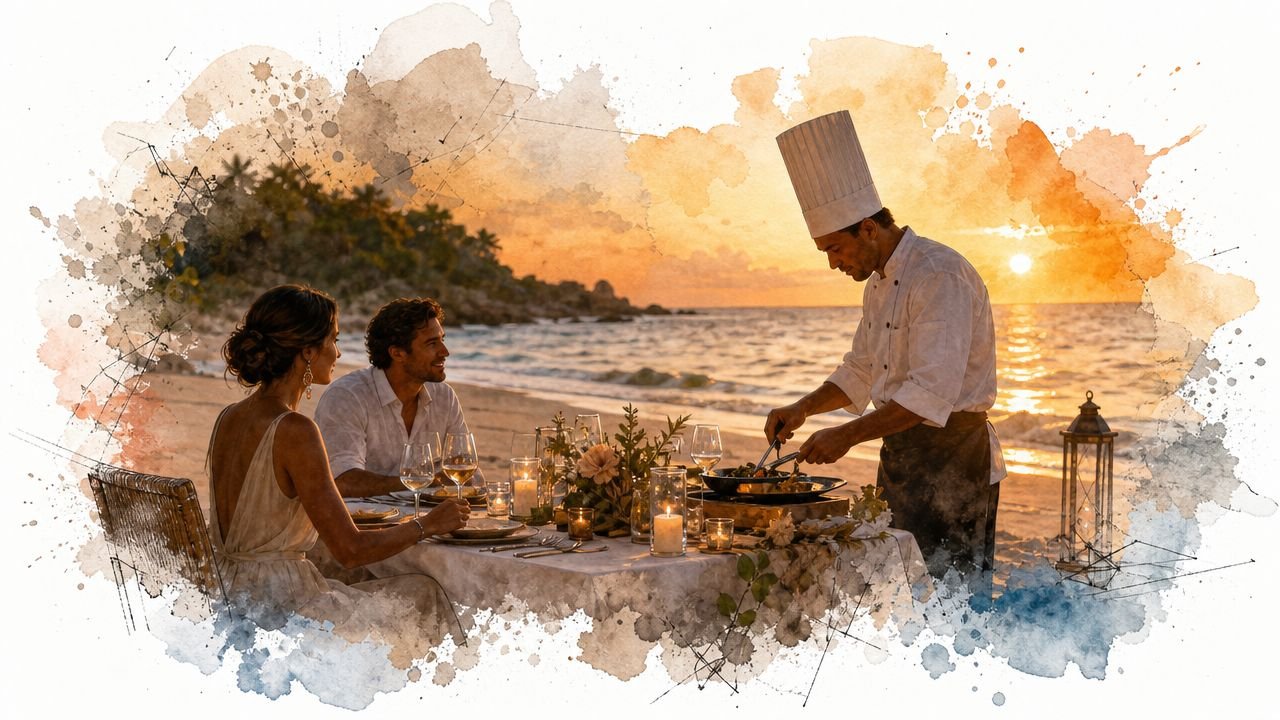
What bespoke really looks like
It doesn't have to mean extravagance. Often it means precision. The right experience at the right hour with the right person leading it.
Consider the difference between seeing and participating:
- Private culinary sessions: Not just tasting a regional dish, but learning why it's made that way and who taught the host to make it.
- After-hours cultural visits: Not just entering a museum, but walking through it with context and quiet.
- Hands-on craft encounters: Spending time with a textile maker, vintner, ceramic artist, or performer instead of buying a souvenir and moving on.
- Guided nature outings: A hidden coastal walk, a forest forage, a horseback route, or a vineyard path chosen for the season and the traveler's pace.
Some of the most luxurious experiences are the ones that can't be scaled.
There's also a practical side to this. Bespoke moments shape the emotional arc of a trip. They create pauses after movement, depth after sightseeing, and conversation after beauty. A family dinner means more after a day spent learning together. A private tasting lands differently when the itinerary has allowed room to arrive with curiosity instead of fatigue.
Why these moments outlast the itinerary
A custom trip earns its value in specificity.
| Generic add-on | Bespoke equivalent |
|---|---|
| Standard city tour | A guide matched to your interests in food, history, or design |
| Restaurant reservation | A meal tied to a local story or host |
| Scenic viewpoint stop | A walk or route timed for mood, season, and pace |
That is the soul of luxury destination travel. Not more things. Better moments.
Luxury Travel for Groups and Corporate Teams
Why groups need more than booking support
Group travel raises the stakes. More arrivals. More preferences. More moving parts. More chances for a promising trip to become a logistics exercise instead of a shared experience.
That's one reason curated planning matters so much in this space. The global luxury travel market reached USD 1.6 trillion in 2025 and is projected to reach USD 3.0 trillion by 2033, while Europe accounted for 33.8% of revenue share in 2025, according to Grand View Research's luxury travel market analysis. For companies and private groups, this isn't a fringe category. It's a serious area of investment.
When a business plans an incentive trip or an executive retreat, people aren't only buying transport and rooms. They're shaping morale, recognition, and the tone of time spent together.
What a better group itinerary does
A strong group program needs more than efficiency. It needs emotional intelligence.
- It removes friction: Airport coordination, transfers, pacing, and meal flow matter more when many people are involved.
- It creates shared memory: Team connection grows through experiences that invite participation, not passive observation.
- It respects different personalities: Some travelers want conversation. Others need quiet. Good itineraries hold both.
A corporate planner looking at group and corporate event planning support is often trying to solve two problems at once. The visible problem is logistics. The deeper one is meaning. How do you make the trip feel rewarding, distinctive, and worth everyone's time away?
The best group journeys feel seamless on the surface because someone thoughtful handled the complexity underneath.
Where curated travel shines for teams
In practice, that might mean a leadership group in Spain gathering for a long-table meal in a private setting instead of another banquet room. It might mean a friends' trip in the Baltics built around sailing, design, and regional food rather than generic sightseeing. It might mean an Argentina itinerary that gives a corporate group enough structure to connect, but enough softness to breathe.
Groups remember what they did together. They remember what they talked about after. That's where curation proves its worth.
Why a Boutique Agency Is Your Greatest Asset
Expertise you can actually feel
A boutique agency's value isn't abstract. You feel it in the shape of the days. In the way transitions make sense. In the fact that someone has thought not just about where you sleep, but about how the journey unfolds emotionally and practically.
Trust matters too. La Sirena Vacations is a registered travel agency in the Valencian Community, Spain, with official registration number CV-AVC002748-V, specializing in custom itineraries to its core destinations, according to its official registration listing.
A traveler doesn't need another endless menu of options. They need discernment. They need someone who can say, this place suits your pace, that guide suits your curiosity, this region makes more sense for your group than the obvious choice.
A more human way to travel
That's why boutique planning remains such a powerful model. It saves time, yes. It can open doors, yes. But more than that, it protects the spirit of the journey from being flattened into transactions.
A useful starting point for travelers weighing this path is to consider why using a travel agent can change the trip itself. The answer isn't convenience alone. It's interpretation, judgment, and care.
Luxury destination travel reaches its full meaning when someone helps align destination, purpose, pacing, and experience. Then the trip stops being a purchase and starts becoming a story you'll keep retelling.
If you're ready to shape a journey around meaning, not just mileage, start a conversation with La Sirena Vacations. The right trip doesn't begin with a booking. It begins with a point of view.